
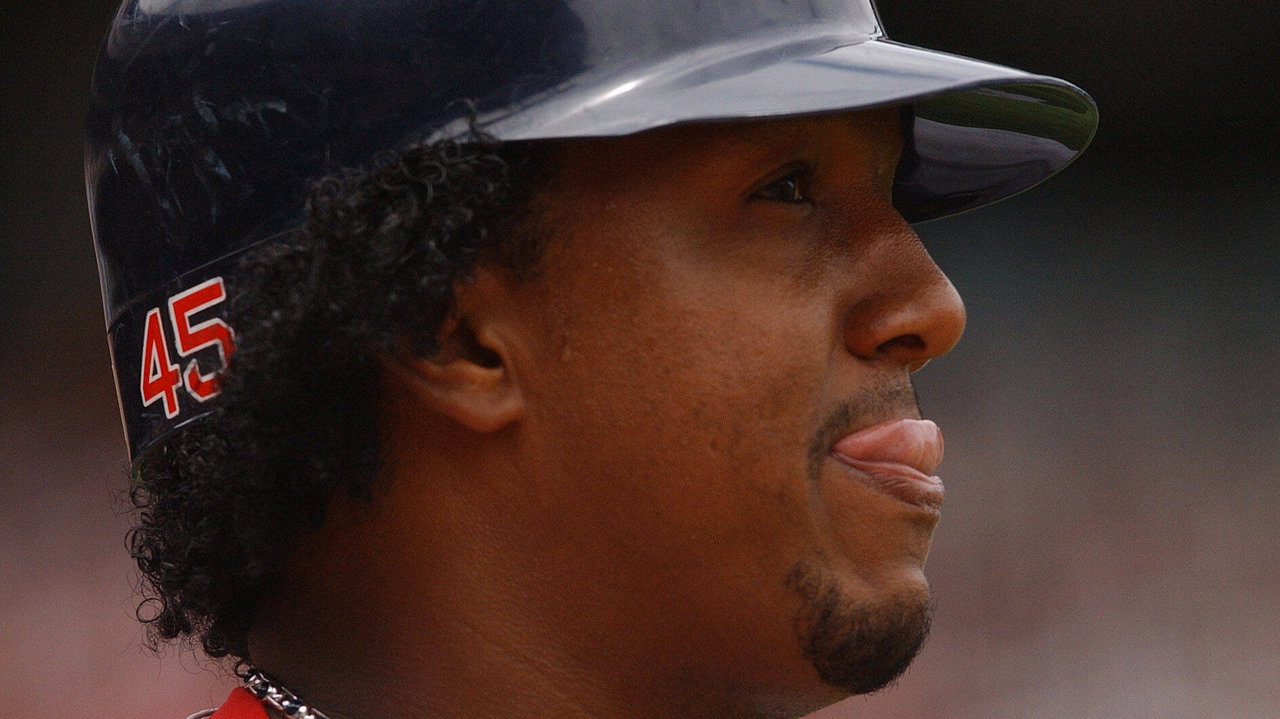
Baseball belongs to the fans as much as it does to the players and owners. Yet they are the ones who could end up paying the heaviest price in MLB’s looming labor war. With less than a month remaining before the current CBA expires on December 1, MLB and the MLBPA remain far from a consensus. The salary cap debate continues to threaten the peace. For Hall of Fame pitcher Pedro Martinez, the prolonged standoff is enough to frustrate even a regular baseball fan.
Watch What’s Trending Now!
Neither a salary cap nor a salary floor is what fans are demanding. They’re not even complaining about the sport’s multimillion-dollar contracts. Yet, if a lockout becomes reality, their love for the game could take the biggest hit. With MLB ready to postpone the proposed salary cap until 2028, Martinez believes it is time for both sides to put their differences aside. Especially when the league is in a position to protect the game rather than risk alienating its most loyal supporters.
“Honestly speaking, I’m pissed… I feel for the fans, and I know when it’s good, and it’s good, baseball is good right now,” Real GM quoted Martinez. “So stop the crap around and get something done, and don’t lock out baseball for the fans… Please, for the fans, both sides, figure out a good way to get it done, and do not lock out baseball.”
MLB is currently experiencing unprecedented momentum, highlighted by a strong business footprint. Franchise valuations are up to $9 billion. Robust regular-season attendance exceeds 71.7 million fans, and historic, record-breaking player contracts. However, the looming lockout could completely halt this momentum.
Across 2,425–2,429 dates, the league averaged roughly 29,589 to 29,540 fans per game in 2026. It was the highest overall attendance total since 2017. This represents the first four-year period of consecutive attendance growth for MLB since 2004–2007.
13 teams saw attendance increases while 17 experienced drops. The Tampa Bay Rays saw a major boost (up over 628,000 to roughly 1.41 million) following their return to Tropicana Field.
With such momentum, a lockout by December 2 would immediately freeze all Major League transactions. It will halt the frenzied winter free-agent market, stopping all trades involving 40-man roster players, and completely shutting down marquee offseason events like the Winter Meetings.
The 1994–95 MLB labor dispute remains the most catastrophic work stoppage in professional sports history. For the first time in 90 years (since 1904), the postseason and the World Series were entirely blotted out. The strike froze iconic, history-chasing pursuits. San Diego’s Tony Gwynn was robbed of a chance to hit .400 (he finished at .394). San Francisco’s Matt Williams was denied a shot at the single-season home run record (stuck at 43 HRs).
The Montreal Expos, who possessed the best record in baseball (74-40) and a loaded, young roster, were forced to dismantle their team in the aftermath. This triggered severe franchise erosion that ultimately led to the team’s relocation to Washington, a decade later.
The stoppage cost the league an estimated $580 million to $1 billion in lost revenue, including shattered television contracts and advertising defaults. The players forfeited roughly $230 million in combined salary.
Before the strike, MLB was on pace for historic regular-season attendance, averaging 31,256 fans per game. When baseball returned in 1995, irate fans boycotted the sport, causing average attendance to plummet by 20% to just 25,008 per game. It took a full decade, until 2004, for average attendance to cross the 30,000 threshold again.
Per Martinez, MLB is recently witnessing positive growth, and a sudden lockout would be the worst thing to happen at the wrong time.
Currently, MLB ownership groups have proposed a $258.2 million cap for the 2028 season. They also proposed a $180.2 million spending floor to level the playing field and curb the massive spending disparity between high-revenue and small-market clubs.
MLBPA, on the other hand, remains fiercely unified against any cap. They view it as an artificial restriction on player earning potential and an attack on guaranteed contracts. Instead, players advocate for raising luxury tax thresholds and penalizing teams that refuse to spend.
With no one ready to move from their stand, nothing but a lockout is certain. Hopefully, Martinez’s words will fall in the right place.