
The 1994 MLB lockout wiped out the World Series. Now it could happen again. With Fox Sports reporting 3.2 million viewers for the first two NLDS games between the Atlanta Braves and Los Angeles Dodgers, baseball is drawing fans in like never before. Yet, beneath the postseason excitement, growing tensions between MLB team owners and the MLB Players Association over a proposed salary cap threaten to overshadow the game’s success. And with the current collective bargaining agreement set to expire on December 1, the countdown to a potentially disruptive lockout has already begun.
Watch What’s Trending Now!
The last time MLB faced a lockout that wiped out games was in 1994, when a labor dispute ended the season prematurely and canceled the World Series. Now, as only four teams remain in the postseason, fears of another baseball shutdown are growing. Former Philadelphia Phillies legend Ryan Howard has weighed in on the looming crisis, warning of the damage a lockout could inflict on MLB while remaining hopeful that both sides can still find common ground.
“When it comes to that, you want what’s best for the game,” Howard told Pinstripe Alley. “When you look back at the lockout back in ’94, I think the game was in such an amazing place. Then once that happened, it hurt the game.”
MLB on Fox hit its best metrics since 2021, with regular-season games averaging 2.35M viewers, a 15% jump. FS1 climbed 11% to 359K. The 2026 WBC averaged 1.3M viewers (+156% vs. 2023), with Venezuela’s 3–2 final drawing 10.8M (peak 12.1M), the most-watched WBC ever.
These gains could evaporate if a lockout strikes.
The main sticking point behind the delay in the CBA negotiations is that MLB team owners are aggressively pushing to implement a hard salary cap and floor system, similar to models used in the NFL, NBA, and NHL. Owners frame this as a necessary step to ensure “competitive balance,” pointing to massive payroll disparities where elite large-market teams vastly outspend smaller-market franchises.
The MLBPA is vehemently opposed to a salary cap. The union has resisted a cap since the historic 1994 strike and views it as an artificial mechanism intended to suppress player earnings and limit the free-market system that has governed baseball for a half-century. As a result, a lockout is just about to happen.
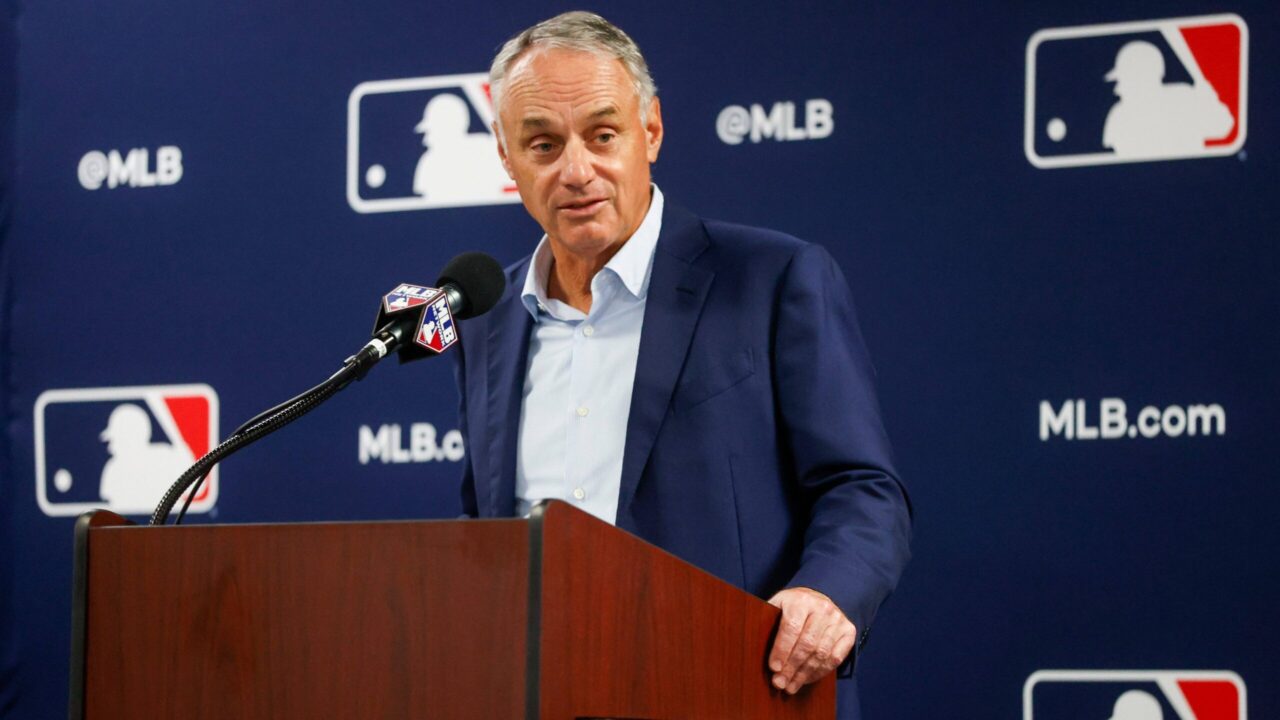
“Look, our goal is to make a deal. We want to make a deal; we want to play baseball next year. We’re planning on playing baseball next year,” MLB commissioner Rob Manfred said. However, the league is sending out a memo to the teams outlining lockout procedures, suggesting otherwise.
According to the guidelines shared, once the lockout begins, all major league transactions freeze immediately. Teams cannot execute trades, sign major league free agents, or process waiver claims. Team officials are ordered to avoid players “to the greatest extent possible”. If executives unexpectedly encounter a player, they must remain cordial but cannot discuss any baseball business.
This will certainly affect the league the same way it did back in 1994. Average league attendance plummeted nearly 20% in 1995 and took a decade to recover to pre-strike levels. The stoppage cost ownership an estimated $580 million and the players roughly $230 million in lost salaries, alongside crippled national television and advertising contracts.
Just as baseball reclaimed its audience, a lockout threatens to undo a decade of recovery.