Imago
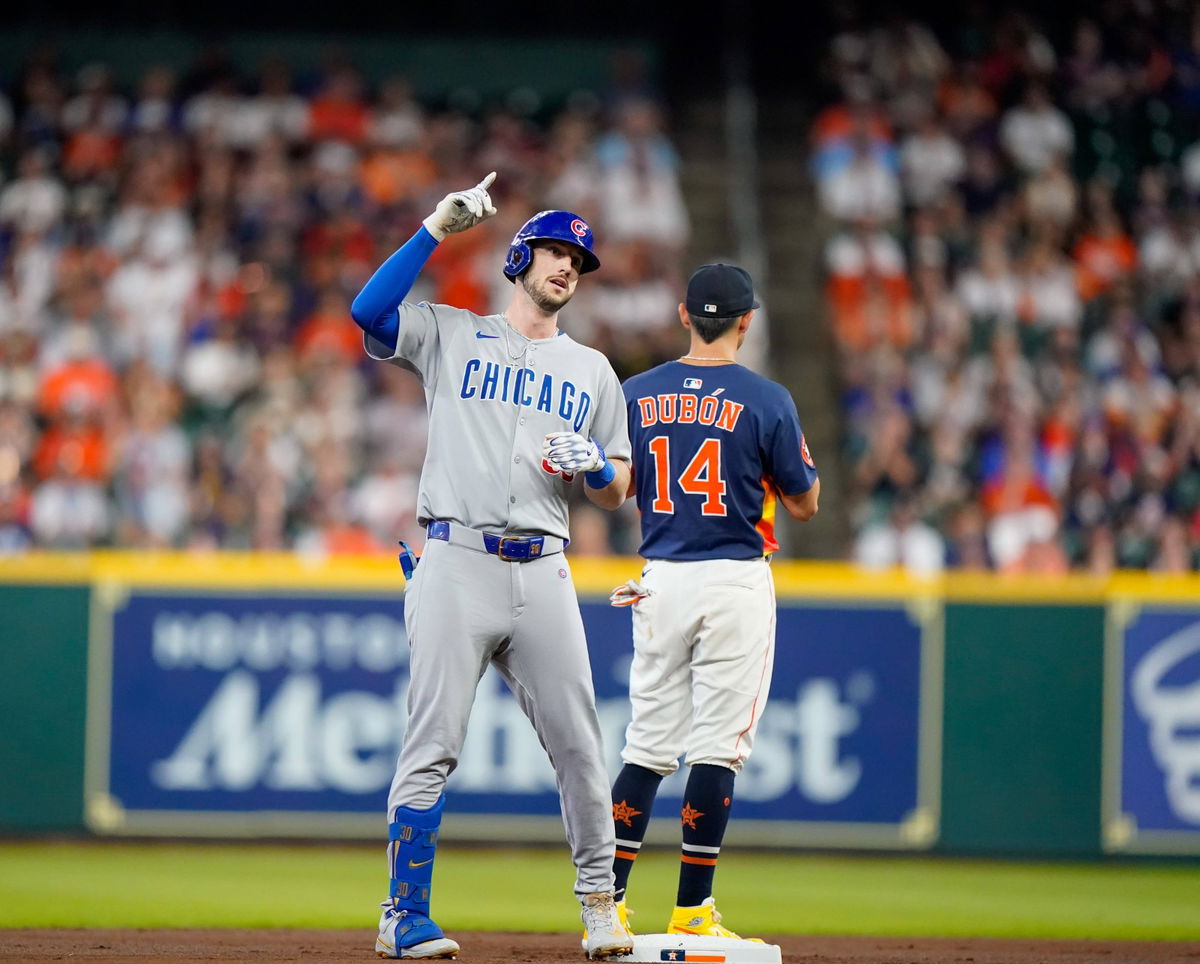
MLB, Baseball Herren, USA Playoffs-Milwaukee Brewers at Chicago Cubs Oct 9, 2025 Chicago, Illinois, USA Chicago Cubs right fielder Kyle Tucker 30 reacts after hitting a home run against the Milwaukee Brewers during the seventh inning for game four of the NLDS round for the 2025 MLB playoffs at Wrigley Field. Chicago Wrigley Field Illinois USA, EDITORIAL USE ONLY PUBLICATIONxINxGERxSUIxAUTxONLY Copyright: xDavidxBanksx 20251009_mcd_bb6_54
Imago
MLB, Baseball Herren, USA Playoffs-Milwaukee Brewers at Chicago Cubs Oct 9, 2025 Chicago, Illinois, USA Chicago Cubs right fielder Kyle Tucker 30 reacts after hitting a home run against the Milwaukee Brewers during the seventh inning for game four of the NLDS round for the 2025 MLB playoffs at Wrigley Field. Chicago Wrigley Field Illinois USA, EDITORIAL USE ONLY PUBLICATIONxINxGERxSUIxAUTxONLY Copyright: xDavidxBanksx 20251009_mcd_bb6_54
A lockout is never good for MLB, just ask the Montreal Expos. But if you look at how the offseason has gone in the past couple of years with the Dodgers’ differing contracts, it all seems to lead to a lockout. And this offseason’s Kyle Tucker signing made that clearer than ever.
Watch What’s Trending Now!
In a recent piece, Jeff Passan wrote, “THERE IS A group of fans who are angry at baseball.”
He continued, “They are inside of group chats that talk about how much money the Los Angeles Dodgers are spending after winning the past two World Series.”
The Los Angeles Dodgers have spent at levels unseen in MLB history, pushing their total payroll beyond $420 million for the 2026 season, far above every other franchise.
The Dodgers’ financial might is staggering.
Their spending exceeded the luxury tax threshold by the largest margin, making them one of nine teams that paid a combined record $402.6 million in CBT penalties in 2025. This cash-driven dominance puts them billions ahead of many competitors. Per Forbes, they raised roughly $752 million in revenue and spent $549 million on 2025 payroll plus taxes.
Fans see star after star like Edwin Diaz on the Dodgers’ roster, and it appears money buys a competitive edge.
That edge highlights a widening pay gap across baseball, with MLB’s payroll disparity at record levels.
In 2025, top-five payroll teams spent about $4.80 for every $1 spent by bottom-five clubs, the largest gap since at least 1985. The luxury tax was designed to bridge this, but it did not do much good.
Small-market teams like the Miami Marlins project a payroll of around $69 million in 2026, less than one-sixth of the Dodgers’. This stark imbalance fuels talk of more spending controls.
The Dodgers have also used contract structures that stretch pay into the future, creating flexibility.
Shohei Ohtani defers roughly $460 million of his earnings, lowering the present payroll impact. Kyle Tucker’s four-year, $240 million deal averages about $60 million per season, second only to Ohtani’s $70 million AAV.
Deferred money and bonus timing allow Los Angeles to manage luxury tax penalties while keeping top stars. This system works within MLB’s rules but strains competitive balance.
Imago
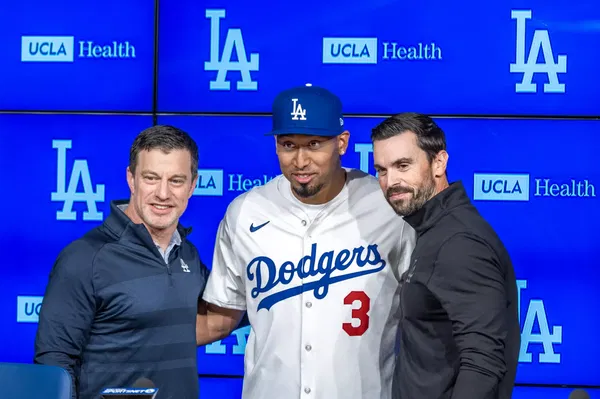
Dodgers president of baseball operations Andrew Friedman, left, and general manager Brandon Gomes, right, pose with star closer Edwin Díaz at an introductory news conference at Dodger Stadium on Friday. (Allen J. Schaben / Los Angeles Times)
The signing of Kyle Tucker triggered sharp reactions from other owners, intensifying calls for a salary cap.
One high-ranking official said many teams are “ready to burn the f—ing house down” if necessary to force change. Owners believe a cap could fix the imbalance and franchise value compared with other sports.
The Dodgers and Mets reportedly could be the only teams resisting a cap push. This moment has thrust labor talks toward a possible lockout in 2027.
Adding another layer, Tigers ace Tarik Skubal won a record $32 million arbitration ruling for 2026, far above Detroit’s $19 million offer. His case set new marks for arbitration-eligible players, eclipsing Juan Soto’s $31 million record.
Skubal’s back-to-back AL Cy Young seasons strengthened his claim, showing arbitration can now demand free-market value. This outcome signals that team control rules no longer guarantee savings for small-market clubs.
Many owners see this as proof that the current economic model is breaking down.
Meanwhile, the Los Angeles Dodgers, chasing championships with unparalleled spending, evoke comparisons to historic superteams like the 1998 Yankees and 2001 Mariners. Yet fans outside Los Angeles feel the dominance erodes hope in smaller markets, where offseason headlines focus on trading stars instead of signing them.
This sense of imbalance raises the emotional stakes for entire fanbases.
Even so, the Los Angeles Dodgers have done nothing outside MLB’s rules, and league leadership publicly affirms that dominance is legal. Their financial deals and contract management operate within the collective bargaining agreement. The legacy of their 2011 bankruptcy settlement and lucrative TV revenue deal continues to give them an economic advantage.
Yet, as league leaders gear up for new CBA talks, solving these economic strains is critical.
A lockout has never ended well for the sport’s momentum or fan trust.
A cautionary tale: The 1994 strike
MLB learned in Montreal that labor fights can erase seasons and franchises. The last time talks collapsed, an entire market disappeared, and baseball never truly recovered.
In 1994, the MLB players went on strike beginning August 12 and didn’t return until April 2, 1995, making it the longest work stoppage in MLB history at 232 days and canceling 948 games, including the entire postseason and World Series.
The dispute centered on owners pushing for a salary cap and players opposing it, leaving the community stunned as the season just stopped. For the first time since 1904, baseball had no champion.
The strike set off bitter feelings that took years to overcome.
The Montreal Expos were the hardest hit club in baseball when the strike halted play with a 74-40 record, best in the majors, and leading their division.
Many fans still recall the stunned silence in Olympic Stadium when the season was canceled on September 14, 1994. The team had young stars entering their primes and was on pace for perhaps 106 wins. Instead, that “best team” never got a chance for October baseball, leaving unfinished dreams for fans and players.
After the strike ended, the Expos were forced into a payroll fire sale as finances collapsed, trading core players and failing to re-sign key free agents.
That weakened roster finished 66-78 in 1995, and attendance dropped from roughly 24,543 to 18,189 per game. The loss of fan support and local revenue made rebuilding impossible for the small-market franchise.
Within a decade, the team was sold to MLB and relocated to Washington, ending baseball in Montreal after 35 seasons.
Across the league, baseball didn’t recover fan trust immediately after the strike, with attendance and TV ratings dipping noticeably in 1995. It took until the late 1990s and the home run boom for some fans to return in larger numbers.
But for Expos fans, that 1994 season remains a stark reminder of what might have been.
Written by

Edited by

Ahana Chatterjee