Imago
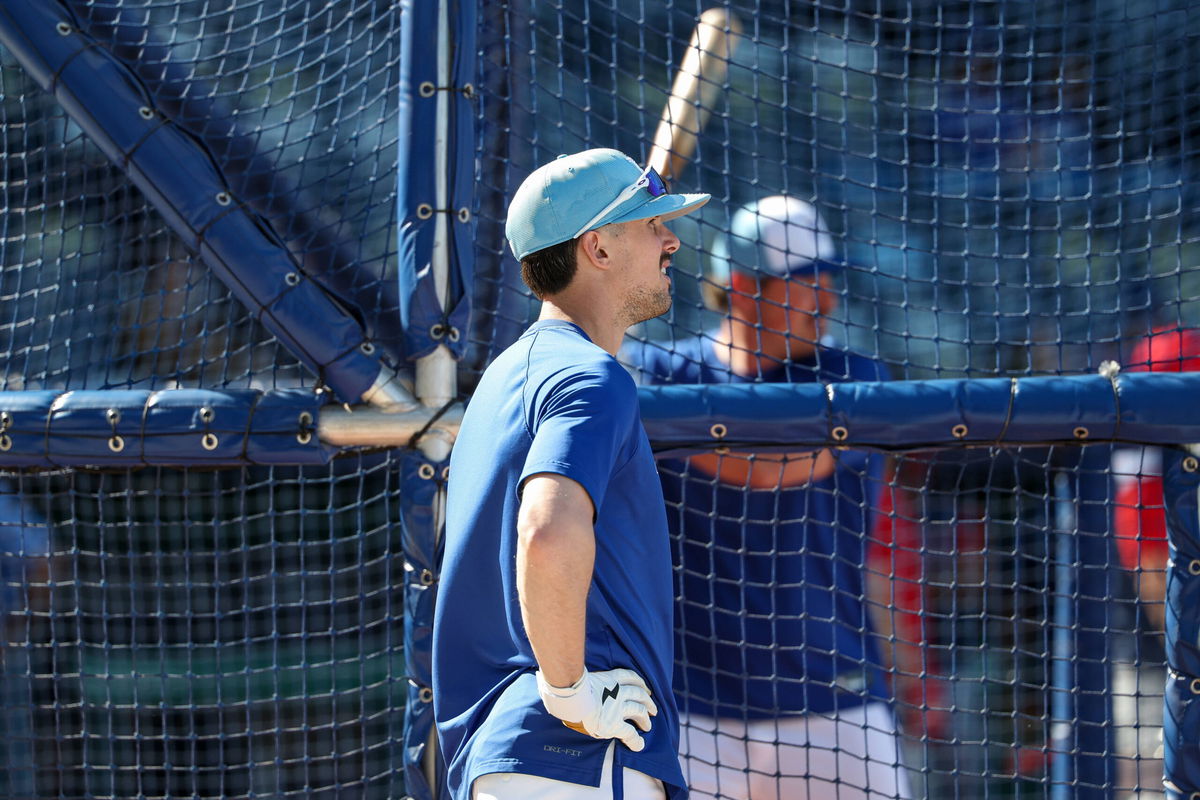
MLB, Baseball Herren, USA 2025: Red Sox Vs Royals MAY 09 May 9, 2025: Kansas City Royals first baseman Cavan Biggio 18 is seen during batting practice before a game against the Boston Red Sox at Kauffman Stadium in Kansas City, MO. David Smith/CSM Credit Image: Â David Smith/Cal Media Kansas City Mo United States of America EDITORIAL USE ONLY Copyright: xx ZUMA-20250509_zma_c04_049.jpg DavidxSmithx csmphotothree382284
Imago
MLB, Baseball Herren, USA 2025: Red Sox Vs Royals MAY 09 May 9, 2025: Kansas City Royals first baseman Cavan Biggio 18 is seen during batting practice before a game against the Boston Red Sox at Kauffman Stadium in Kansas City, MO. David Smith/CSM Credit Image: Â David Smith/Cal Media Kansas City Mo United States of America EDITORIAL USE ONLY Copyright: xx ZUMA-20250509_zma_c04_049.jpg DavidxSmithx csmphotothree382284
A pitch that looked like a fourth ball was called a strike. Former Blue Jays super-utility player, now with the Houston Astros, was a bit late challenging the call on the plate. The result? He was struck out instead of being rewarded with a walk. And all hell broke loose, pointing fingers at the absurd ABS rule.


“Another wrinkle within the new Automated Ball-Strike Challenge System is that players must challenge before making any other movements,” Jomboy Media posted on X.
Watch What’s Trending Now!
The Houston Astros were up against the St. Louis Cardinals this Sunday in a spring training game. The Astros were 1-1 in the fifth inning when Cavan Biggio was at the plate. Pitcher Michael McGreevy was on 3-2 when he threw the last one at Biggio.
The pitch was well below the strike zone.
Biggio was certain that it would be a walk when the umpire called it a strike. He tapped his helmet for a challenge, but the call stayed, resulting in strike three. The reason?
Cavan Biggio flipped his bat in style before he tapped his helmet.
The ABS rule suggests that the batter has to challenge the call before making any other movement. That’s why the Astros’ non-roster invitee’s challenge was denied.
The ruling cracked open a can of worms for the entire MLB community.
People were quick to point out that the umpire called it late. Some went even further, saying how the umpires can deliberately use the loophole to rig games. Implying, they would wait for the hitter to make some movement and then call it against them, nullifying their right to challenge.
Such claims might seem a bit far-fetched. But the numbers suggest otherwise.
According to Baseball Savant, there have been a total of 1,844 challenges in the 2026 spring training. Out of that, 976 calls (roughly 53%) were overturned, thanks to the ABS system.
Another wrinkle within the new Automated Ball-Strike Challenge System is that players must challenge before making any other movements
This would have been ball four to Cavan Biggio, but he flipped his bat before tapping his head pic.twitter.com/8qljYwEH90
— Jomboy Media (@JomboyMedia) March 23, 2026
While the challenge system has been a much-awaited addition to the game, several rules have already perplexed the clubs. Some teams have even barred their pitchers from using them to reserve the 2 challenges for the hitters, per MLB.com. In fact, a few clubs are likely to restrict challenging authority to only the catcher on the field, rather than the pitcher.
The strict rules are seen as counterproductive. The ex-2018 Eastern League MVP (Double-A New Hampshire Fisher Cats in the Blue Jays organization), Cavan Biggio, is one of the prime examples of that. And fans are now raining down fire on both the umpires and MLB authorities.
Fans erupt over Cavan Biggio’s denied challenge, mocking the rigidity of the rule
“Lmao loophole for umps to rig games,” feared one with a tinge of sarcasm.
If the umpires want to take a game to a particular club’s favor, they can surely build on this timing factor and ultimately jeopardize the game. Don’t you think?
“That is dumb. Ump makes a call so bad that he thinks he walks and he gets penalized for it,” wrote one fan.
The ABS guidelines suggest that the challenge must immediately come after the umpire’s call. Imagine the umpire is taking his sweet time for a dramatic punch-out. But the hitter cannot take a moment to reset his stance before challenging it.
“Lame. He was tossing his bat and then realized it was called a strike. Immediately after seeing it’s a strike he challenged,” one comment read.
Cavan Biggio had a split-second reaction to the call. But his bat flip had already denied the challenge. The numbers suggest that the Hawk-Eye tech works. But these incidents suggest that the rules do not.
“Needs to be a short time limit & not ‘first move’ @mlb,” a user made a strategic suggestion.
There are similar rules in the NFL where the coach can throw the challenge flag before the ball is kicked next. Same for the NBA, as the coach can challenge before the ball is given to a shooter for a free throw. The ‘challenge immediately’ rule feels absurd for MLB. Especially when the game itself does not have a specific time frame.
“So stupid. Freeze in place and tap your head! Don’t breath, don’t move your head or blink, just tap your head,” one user mocked the rules.
“This rule is absurd. A hitter gets screamed ‘Strike 3!’ on a pitch 3 inches off the plate, naturally reacts like any human would, and MLB punishes him by taking away his rightful challenge? The technology exists to fix bad calls—don’t let fragile ump egos and pedantic ‘no movement’ clauses rob players of obvious walks. Fix this before it decides a playoff game. @MLB,” criticized one.
The loopholes are apparent. MLB must take “immediate” steps to fix them before it’s too late.
The Astros lost the game 2-3 to the Cardinals. Had Cavan Biggio walked to first base, the outcome might have been different. Imagine such absurd calls in a League Championship Series or worse, the World Series. It would be extremely hard to bear the loss if it comes through a denied challenge.
Written by

Edited by

Ahana Chatterjee