Imago
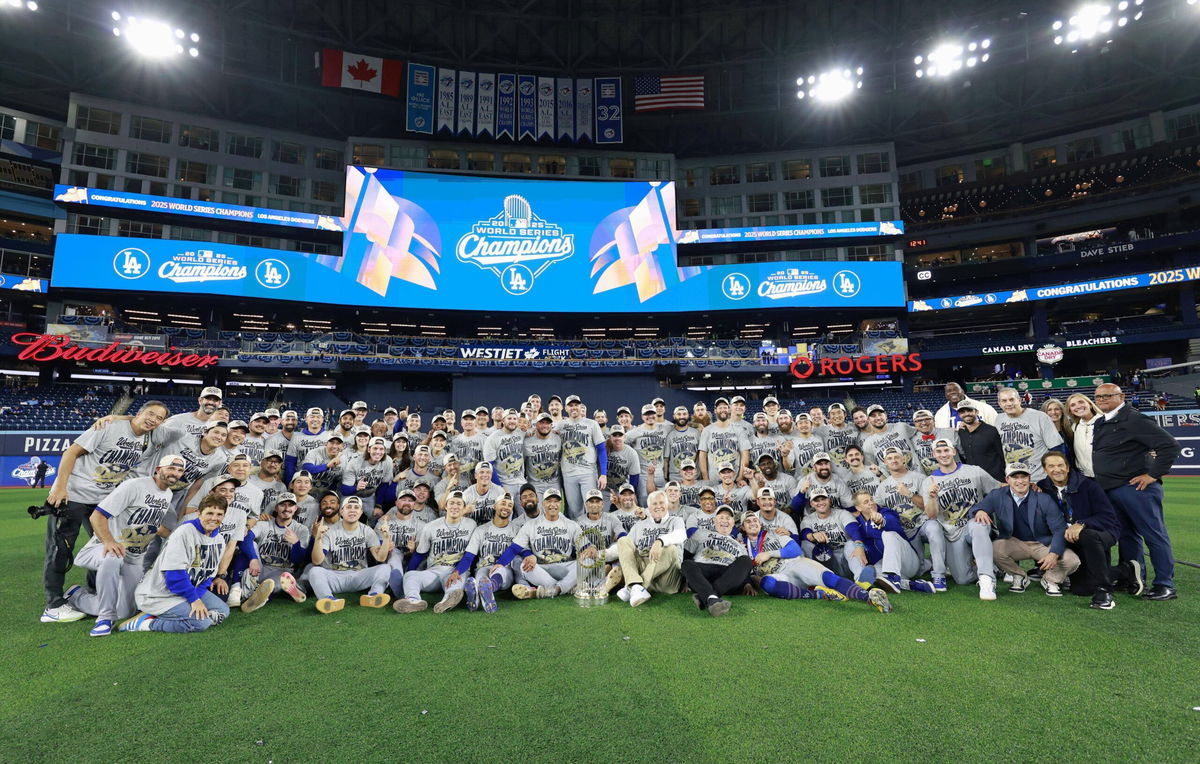
Baseball: World Series Los Angeles Dodgers players pose for a photo after winning Game 7 of the MLB, Baseball Herren, USA World Series against the Toronto Blue Jays at Rogers Centre in Toronto in the small hours of Nov. 2, 2025, the team s second consecutive series victory. Pool photo PUBLICATIONxINxAUTxBELxBIHxBULxCZExDENxESTxFINxFRAxGEOxGERxGRExHUNxISLxIRLxITAxLATxLTUxLUXxLIExMKDxNORxPORxPOLxROUxSVKxSUIxSRBxSLOxESPxTURxUKxUAExONLY A14AA0004998925P
Imago
Baseball: World Series Los Angeles Dodgers players pose for a photo after winning Game 7 of the MLB, Baseball Herren, USA World Series against the Toronto Blue Jays at Rogers Centre in Toronto in the small hours of Nov. 2, 2025, the team s second consecutive series victory. Pool photo PUBLICATIONxINxAUTxBELxBIHxBULxCZExDENxESTxFINxFRAxGEOxGERxGRExHUNxISLxIRLxITAxLATxLTUxLUXxLIExMKDxNORxPORxPOLxROUxSVKxSUIxSRBxSLOxESPxTURxUKxUAExONLY A14AA0004998925P
Every offseason leading up to Opening Day, there’s always one team that grabs everyone’s attention, and more often than not, it’s the Dodgers. They’re consistently the most aggressive when it comes to chasing marquee names. And at this point, it’s fair to put them in the same conversation as the Yankees in terms of brand power, especially for fans who are new to the game.
Watch What’s Trending Now!
What the Yankees benefited from for decades, riding on their history and legacy, the Dodgers are now building in real time. And nowhere is that more obvious than with Japanese stars, where the Dodgers have become the destination franchise.
So it’s worth taking a closer look at how the Dodgers are actually managing such a star-studded roster. And beyond the obvious financial burden, the bigger question is: what other costs come with loading up on this much talent, and what trade-offs are they quietly making along the way?
How old is the Los Angeles Dodgers: A look at its composition, total strength, and average age
One of the biggest trade-offs the Dodgers are making with a star-loaded roster is age. As of 2025, they reportedly had the oldest average roster in all of MLB. Their average player age sat at around 31.5 years, which is well above the league average of roughly 28.6. And the gap becomes even more noticeable when we compare them to the youngest team in baseball, the Marlins. Their roster averaged just over 27.4 years last season.
Now, what really stands out is the range within the Dodgers’ roster itself. The oldest active player is pitcher Blake Treinen at 37, while the youngest is Ronan Kopp at 23. Still, when we factor in key veterans like Freddie Freeman (36), Miguel Rojas (36), and Max Muncy (35), it’s no surprise the overall average keeps creeping upward.
So, does that experience come with benefits? Absolutely. A veteran-heavy core gives the Dodgers a high-performance floor, which helps explain why they’ve been contenders year after year for more than a decade. For instance, players like Freeman, Mookie Betts, and Clayton Kershaw, who just retired last year, knew best how the Dodgers operate. And guess what their secret recipe of success is? Team bonding!
But there’s a flip side. Older rosters tend to come with bigger injury risks. We saw that play out last season when players like Max Muncy, Clayton Kershaw, and Blake Treinen all missed significant time on the injured list.
Still, at the end of the day, the Dodgers remain the definition of a stacked roster, which comes with real consequences.
Have the Dodgers decided to change it? Understanding through the current signings, farm system, and more
Well, the Dodgers’ age profile is actually moving in the right direction now. This season, their average roster age has dropped to about 28.8 years, which is a noticeable shift from where they were last year. That puts them fourth overall in MLB, while the Padres now sit at the top with the oldest average roster for the 2026 season at roughly 29.2.
That change is largely driven by the Dodgers leaning younger with recent additions, bringing in players like Ezequiel Melbourne, Kyle Tucker, and Alex Freeland, among others. The roster is still loaded, but it’s clearly not as veteran-heavy as it once was.
That said, with so many big names fighting for spots, a question still lingers: Do young players actually get enough chances to play and develop? In the Dodgers’ case, the answer has mostly been yes.
Notably, several young players have already carved out either as everyday lineup pieces or important arms in the rotation. Andy Pages is the clearest example. Since his debut in 2024, he’s started 256 of a possible 305 games, trailing only the team’s biggest stars in total starts.
Another factor working in favor of the prospects is the Dodgers’ emphasis on workload management. With veterans in the lineup, injury prevention is always a priority, and that’s where younger players often step in. Take second base, for example. With Tommy Edman dealing with injury uncertainty, Alex Freeland, who appeared in 29 games during his 2025 debut, is projected to slide into that role.
So even with a crowded, star-studded roster, the Dodgers are finding ways to balance experience with opportunity, giving their younger players meaningful exposure when it matters.
How is it affecting the young athletes? Question mark for the likes of the Roki Sasaki and more?
Now, even though young players do step in for the Dodgers when veterans are unavailable, that opportunity is still pretty limited when we zoom out and compare it across the league. Why? Because at the end of the day, proven veterans are always going to get priority. Take Freeland as an example. He’s lined up to fill in for Edman. But if Edman were fully healthy, Freeland would likely be stuck on the bench.
That’s just the reality of how the Dodgers are built. The heart of their lineup is packed with established stars like Freddie Freeman, Max Muncy, Mookie Betts, and Teoscar Hernández. These guys soak up most of the everyday playing time, leaving only a narrow window for younger players to break through.
However, Roki Sasaki is the clear exception here. After an impressive run as a postseason reliever in 2025 with three saves and a 1.00 ERA over 10.2 innings, he’s set to move into the rotation full-time in 2026 as the projected fifth starter. But Sasaki was already a star before arriving in MLB, and he looked major-league ready the moment he joined the organization.
Then there’s Dalton Rushing. Despite being the Dodgers’ top prospect and earning a call-up in 2025, his path is still blocked at his natural position by All-Star catcher Will Smith. It’s another example of how tough it can be for even elite young talent to find consistent opportunities on a roster this loaded.
So while the Dodgers do integrate youth when they can, the system still heavily favors established stars!
A problem or a solution: The conclusion
So the big question now is, if it’s that hard to earn consistent playing time with the Dodgers, why do they still attract such a massive pool of talent? Then are players really choosing the Dodgers just for glory?
Let’s be honest, glory absolutely plays a role. When the discussion is about one of the best-funded franchises in MLB, a team that’s been in the World Series conversation year after year, it’s hard not to be drawn in.
But for young players, it’s not just about rings. Take what Roki Sasaki said after signing. Despite having multiple offers on the table, he chose the Dodgers because he believed in their player development system and their pro-player approach to managing talent. That matters, especially for players thinking long term.
And there’s also a bigger-picture opportunity that goes beyond the active MLB roster. With the Dodgers’ farm system reportedly thinner than it’s been in years, there’s real room for young players to stand out in the minors, develop, and eventually force their way into the big leagues.
So while cracking the Dodgers’ everyday lineup is tougher than almost anywhere else, developing within an organization like this still carries its own kind of prestige.
