Imago
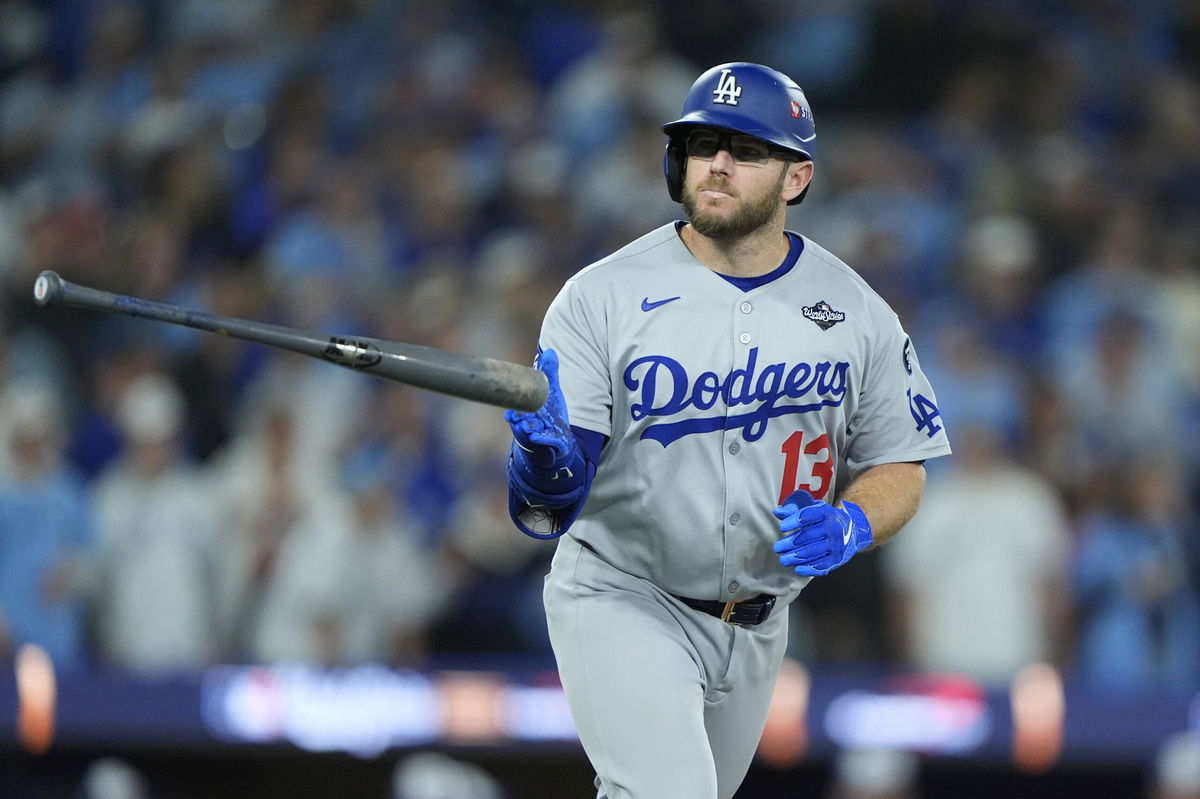
MLB, Baseball Herren, USA World Series-Los Angeles Dodgers at Toronto Blue Jays Nov 1, 2025 Toronto, Ontario, CAN Los Angeles Dodgers third baseman Max Muncy 13 runs after hitting a home run against the Toronto Blue Jays in the eighth inning during game seven of the 2025 MLB World Series at Rogers Centre. Toronto Rogers Centre Ontario CAN, EDITORIAL USE ONLY PUBLICATIONxINxGERxSUIxAUTxONLY Copyright: xJohnxE.xSokolowskix 20251101_lbm_ss9_189
Imago
MLB, Baseball Herren, USA World Series-Los Angeles Dodgers at Toronto Blue Jays Nov 1, 2025 Toronto, Ontario, CAN Los Angeles Dodgers third baseman Max Muncy 13 runs after hitting a home run against the Toronto Blue Jays in the eighth inning during game seven of the 2025 MLB World Series at Rogers Centre. Toronto Rogers Centre Ontario CAN, EDITORIAL USE ONLY PUBLICATIONxINxGERxSUIxAUTxONLY Copyright: xJohnxE.xSokolowskix 20251101_lbm_ss9_189
Remember when fans started to cry that the Dodgers are ruining baseball, and Dave Roberts promised to ruin baseball after beating the Milwaukee Brewers? Looks like the Dodgers have made it their mission to please all rivals and “Ruin Baseball” by signing top free agents. But according to Max Muncy, baseball is not being ruined, especially by the Dodgers.


In a recent interview, Max Muncy said, “I think for us as an organization, you can’t really worry about what is being said on the outside.” He continued, “The work stoppage thing… we’re not adding any more fuel to that fire. If that happens, it was always gonna happen.”
Watch What’s Trending Now!
In 2024, the Los Angeles Dodgers became World Series champions, sparking early talk that their spending overwhelmed baseball’s competitive balance, as their payroll ranked among MLB’s highest, and multiple teams also paid luxury tax that year.
When the Dodgers then won the 2025 World Series again and set a record with a $417.3 million payroll and $169.4 million competitive balance tax, fan criticism over “ruining baseball” grew even louder.
Those back-to-back titles and record costs coincided with the Dodgers signing elite free agents like Kyle Tucker for $240 million and reliever Edwin Díaz for $69 million. The Tucker contract alone has an average value near $60 million, among the richest ever in MLB history, and is a catalyst for salary cap debates.
This wave of spending has made the Dodgers a focal point in debates about competitive balance in the sport.
Despite the uproar, the Dodgers are not the only large spender shaping MLB’s landscape, as high payrolls are not unique to Los Angeles.
In 2024, the New York Mets led MLB payrolls at $333 million, topping the Dodgers, Yankees, and all other clubs, reflecting a broader trend to pay big for talent. The Mets’ spending included record totals in payroll and luxury taxes, evidencing that multiple franchises push financial limits to compete.
The average MLB salary topped $5 million in 2025, showing league-wide growth in player compensation over time. These facts show that large payroll commitments are a shared reality, not just a Dodgers phenomenon.
Max Muncy says the Dodgers aren’t adding any more fuel to a potential work stoppage.
“If that happens, it was always gonna happen.” pic.twitter.com/DCPaNJK6OF
— Foul Territory (@FoulTerritoryTV) January 28, 2026
The narrative that the Dodgers are ruining baseball also overlooks the struggles and choices of lower-spending franchises, whose limited budgets contrast sharply with those of elite teams.
In 2025, teams like the Miami Marlins and Chicago White Sox had payrolls under $90 million, barely a fraction of the top clubs’ spending. This created a gap between small-market and big-market clubs, contributing to competitiveness concerns felt by fans.
Even with the Dodgers extending huge contracts, many teams have chosen minimal investment instead of striving for contention.
These spending choices by smaller teams play a role in the frustrations fans feel.
Amid these financial tensions, discussions about a league-wide salary cap have intensified, with some owners pushing for limits to spending.
Reports indicate MLB ownership is ready to pursue a cap in negotiations before the collective bargaining agreement expires in 2026, potentially affecting the 2027 season.
Yet, players and union leaders argue that a cap could harm player earnings and that competitive balance should be approached differently.
The idea of a “cap and floor” to ensure spending minimums is also part of the discussion. This broader debate indicates the issue is structural, not solely tied to the Dodgers’ actions.
Given the facts, the Los Angeles Dodgers’ success and spending are consistent with how many top franchises build rosters, not evidence of them “ruining baseball.”
Their back-to-back titles reflect performance on the field, not a rule violation, and multiple clubs have high payrolls. At the same time, wide disparities between big spenders and small markets play a role in fan frustration.
The push for a salary cap reflects deeper financial concerns, not just fan anger about one team’s success. Evidence shows the Dodgers will continue building to win titles within MLB’s existing financial rules.
Dave Roberts joked about ruining baseball, but the Dodgers instead exposed how modern competition operates. Max Muncy’s words suggest baseball’s future hinges less on spending, more on collective resolve.
The Dodgers are spending money, and baseball is heading to a lockout, but is the MLB helping them?
The Dodgers’ record‑smashing payrolls have become baseball’s favorite bogeyman, even as Major League Baseball teeters toward a possible lockout under its expiring collective bargaining agreement in 2026. Despite Los Angeles’ back‑to‑back titles and record $169.4 million luxury tax in 2025, Max Muncy insists the Dodgers aren’t fueling a stoppage and that they’re simply playing within MLB’s rules.
In 2011, the Los Angeles Dodgers filed for bankruptcy under Frank McCourt after MLB rejected his proposed $3-billion Fox Sports TV deal, forcing a court-controlled sale that allowed bidders to know how much the league would take. MLB agreed to calculate the fair-market value of TV rights based on the rejected $3-billion deal rather than actual potential, giving Guggenheim leverage in its $2.15-billion purchase.
Commissioner Bud Selig later warned that this settlement could create a “Dodgers and the other 29 teams” problem, showing MLB recognized the unusual advantage.
This court-approved settlement became a key reason the Dodgers could spend on players like Kyle Tucker in 2026.
After Guggenheim acquired the team, it sold the local TV rights to Time Warner Cable for $8.35 billion, far exceeding the $3 billion used in the bankruptcy court settlement.
The league’s share was calculated from the lower $3 billion, letting the Dodgers retain tens of millions more than other teams, though MLB later adjusted to $130 million for the first year.
The annual average revenue now is $334 million, rising above $500 million by 2038, providing financial stability that other teams do not enjoy. This advantage allows the Dodgers to maintain a roster capable of signing high-priced stars without league interference.
Looking forward, MLB may try to centralize all local TV rights in 2028 for national streaming, aiming to redistribute revenue evenly among teams.
Dodgers ownership might demand compensation, such as exemptions from ticket revenue sharing or Japanese TV rights, before surrendering their local TV advantage. Meanwhile, MLB still faces collective bargaining with players, and negotiations could trigger a salary cap or even a lockout next winter.
The combination of historic TV deals and strategic ownership planning continues to shape the Dodgers’ competitive power over the next decade.
Max Muncy insists the Dodgers follow rules, yet Selig’s old TV settlement quietly fuels Los Angeles’ dominance. By 2038, MLB might finally balance power, but Walter’s SportsNet LA empire ensures the Los Angeles Dodgers still write their own playbook.
