
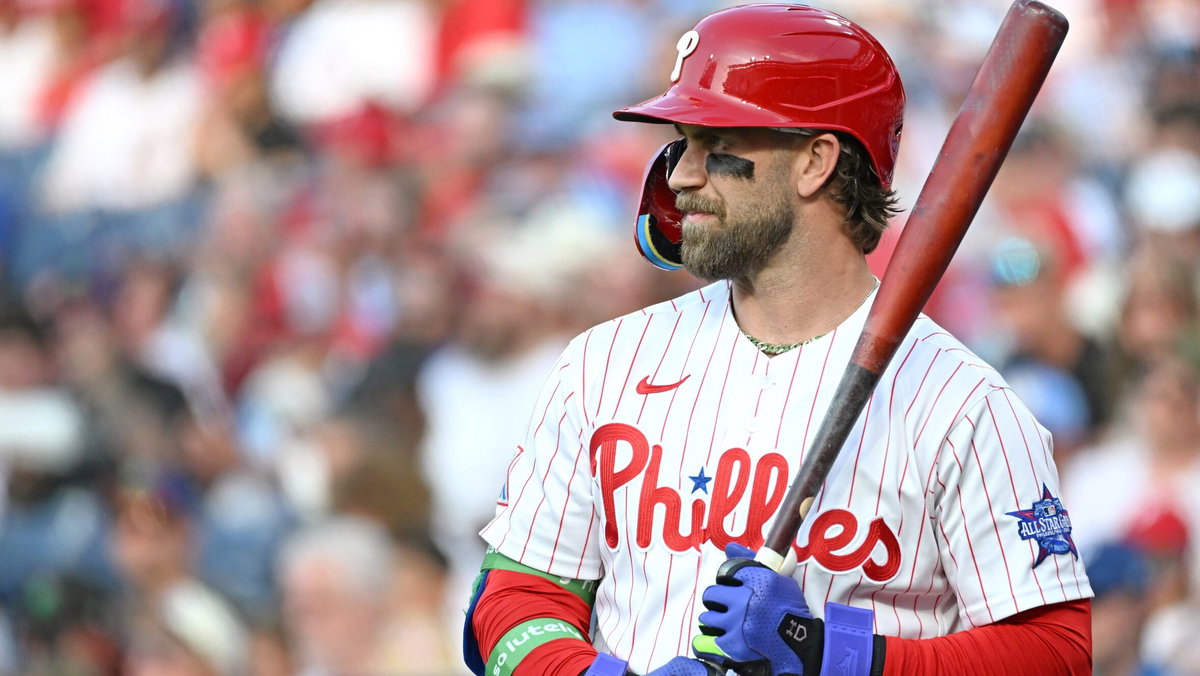
Home Run Derby was always projected as an exciting, fan-focused spectacle during the otherwise quiet All-Star break. Back in 2015, MLB tried to make it faster by introducing a clock. However, players swinging as much as they can within a stipulated time can lead to injury and fatigue risks. A fun event shouldn’t affect a player’s regular-season stats and availability. Bryce Harper shared his concerns, and so did the others. And now, MLB finally listened.
Watch What’s Trending Now!
MLB is reportedly removing the controversial clock-based format from its 2026 version.
“MLB is getting rid of the clock in the Home Run Derby,” Talkin’ Baseball quoted Evan Drellich. “Participants will get 20 swings in the first round and 15 in the final two. On the last pitch of each round, they keep going until they don’t hit a homer.”
Since its inception, HR Derby has always been a hitting show, putting the balls over the fence as much as a batter can. In 2015, the Derby introduced timed rounds instead of a strict “outs” system. Under the 2015 rules, batters were given five minutes to hit as many home runs as they could, with bonuses added for hitting exceptionally long distances. It looked fun and exciting, but it made the hitters get steamed out faster.


MLB is getting rid of the clock in the Home Run Derby, per @EvanDrellich Participants will get 20 swings in the first round and 15 in the final two. On the last pitch of each round, they keep going until they don't hit a homer

“I won’t do [the Derby] if I’m not an All-Star. I just want to be an All-Star, first and foremost. And I want to be healthy. I’m going to consider health big time because I feel great right now, and I don’t want to screw that up. So we’ll see,” Harper said last month.
However, the decision might not have come solely because of pressure from the players. It might have been “Netflix” calling the shots.
According to reports, Netflix played a pivotal role in the decision to move away from the clock-based format. Lo and behold, along with the major rule change, there is now a broadcast change too. For the first time since ESPN began airing the event back in 1993, Netflix will take over the coverage.
Historically, the worst-affected name in the HR Derby was surely Bobby Abreu in 2005. While a clock was not introduced back then, Abreu went on to hit 41 HRs in the Derby, but completely lost out in the regular season. After 18 homers in the first half of the season, he hit only six more in the entire second half.
So, it’s very expected that a slugger hitting 100-odd swings within three minutes in the first two rounds and two minutes in the final round would face fatigue. Veterans like Harper would not like to risk that, and MLB listened.
The 2026 event, to be held in Philadelphia on July 13, 2026, will probably feature no clock. There will be only 20 swings in the first round and 15 each in the final two rounds, with players being able to hit more if they hit a homer on the last pitch of each round. A subsequent miss would result in an out.
With limited swings and limited exposure, this could affect the run-scoring trend. Cal Raleigh won last year’s event with 54 HRs, but this year’s rules mean the winner could have fewer homers than Raleigh. Nevertheless, it will serve the purpose, as the players will participate and will not risk injury.
Notable names missing from the 2026 HR Derby, and a few new ones to enter
The eight participants of the 2026 HR Derby have yet to be finalized, but a few names have been confirmed to be missing the event. Raleigh, the reigning champion, will miss this year’s event. He already had an injury-riddled first half this season, which would keep him out of the event. MLB’s two biggest hitting names, Aaron Judge and Shohei Ohtani, will again miss.
Aaron Judge is currently out with a rib fracture and is highly unlikely to return by the All-Star break. Ohtani just had a bloodied blister in his throwing hand and is still suffering from knee inflammation. Moreover, the Los Angeles Dodgers would not risk him from overuse, considering he is already carrying a heavy workload as a two-way player. On the other hand, new names like the New York Yankees’ current top hitter, Ben Rice, shared their willingness to participate in this year’s event.
“If I were to get asked to go, I would love to do it,” Rice said, according to the New York Post. “I have not heard anything about it, but sure, I’d be interested. I’ve watched it every year. It would be fun.”
For now, the 2026 HR Derby would surely miss a few marquee names, but owing to the new format and new names, it would still be exciting as always.