Imago
Image Credit: Wilber Sanchez/X
Imago
Image Credit: Wilber Sanchez/X
Imago
Image Credit: Wilber Sanchez/X
Imago
Image Credit: Wilber Sanchez/X
The Rangers have joined a growing trend we’ve seen from teams like the Phillies and Reds: aggressively targeting top international prospects as part of their long-term plans. It’s easy to applaud the scouting departments for identifying elite talent early in the international market. But here’s the eye-opening part: teams are reportedly lining up multimillion-dollar agreements with players as young as 12.
Watch What’s Trending Now!
What these signings often share is a rare blend of advanced physical tools and projection. For example, the 12-year-old infielder reportedly linked to the Rangers is said to possess impressive raw power and strong defensive instincts, traits that make evaluators believe he could develop into a major long-term asset. On paper, it looks like a forward-thinking investment. Still, the optics raise eyebrows.
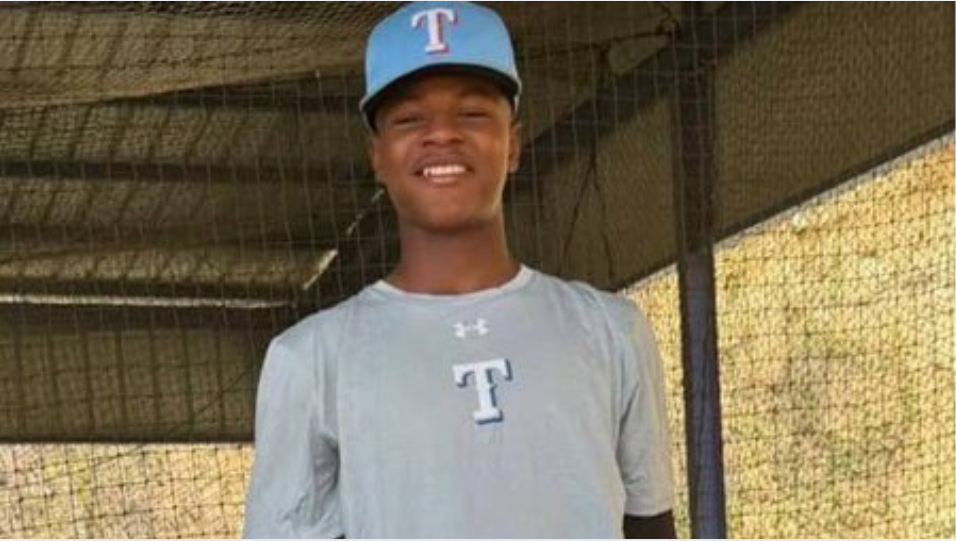
“The Texas Rangers have reached a pre-agreement with 12-year-old Dominican prospect Andel Pérez for a $4.0 million signing bonus. This is the highest amount the organization will award in the 2030 international class,” MLB insider Wilber Sanchez shared on X.
Los Texas Rangers han llegado a un preacuerdo con el prospecto dominicano de 12 años Andel Pérez por un bono de $4.0 millones.
Se trata del monto más alto que la organización otorgará en la clase internacional 2030.
“Es capaz de castigar lanzamientos de 95-96 mph. Desde el… pic.twitter.com/AqdJxOsLXb
— Wilber Sánchez (@wilberdata) February 28, 2026
Well, the Rangers’ $4 million commitment is the biggest splash so far for the 2030 international class. And they’re not alone in going big. The Phillies are said to have reached a record-setting $1.8 million agreement with an 11-year-old shortstop. The Reds? They’ve also reportedly offered $2.8 million of their future international bonus pool for a 12-year-old. Yes, 11 and 12 years old!


It sounds unreal, but that’s where the market stands right now.
So why are teams willing to invest that kind of money in kids who are still years away from being eligible to sign?
The common thread is obvious: elite, early-blooming talent. Sanchez raved about the Rangers’ young prospect, saying, “He is capable of punishing 95–96 mph pitches. From the infield, his throws to first exceeded 88 mph. Without a doubt, we are witnessing the birth of a future star.” If a 12-year-old is already firing 88 mph across the diamond, that is going to grab attention.
But this is where it gets complicated. The Rangers would not be able to officially sign Pérez until 2030, when he turns 16. A lot can change in four years. Injuries happen. Development can stall. Projection at that age is far from a guarantee, which makes the investment inherently risky.
There is also a broader concern. Players that young are not subject to the same testing protocols, and they are still developing physically and mentally. When teams commit millions to 12-year-olds, it raises legitimate questions about long-term risk and whether such an aggressive approach could backfire.
The Rangers’ farm system urgently needs youth power
Apparently, only time will tell whether spending millions on 12-year-olds will actually pay off for the Rangers. But the reality is that their farm system could use an infusion of young talent.
Right now, there is not much buzz in the pipeline beyond electric shortstop Sebastian Walcott and the upside of right-hander Winston Santos. That lack of depth is reflected in the rankings. According to USA Today’s latest farm system report, the Rangers rank 25th out of 30 MLB organizations.
So what is the plan moving forward?
Keep investing aggressively in the international market. The Rangers have already begun doing that by adding high-upside prospects like 17-year-old Dominican talent Elian Rosario. If they can continue stacking that level of talent into the system, taking a big swing on a name like Pérez might not seem so far-fetched after all.