
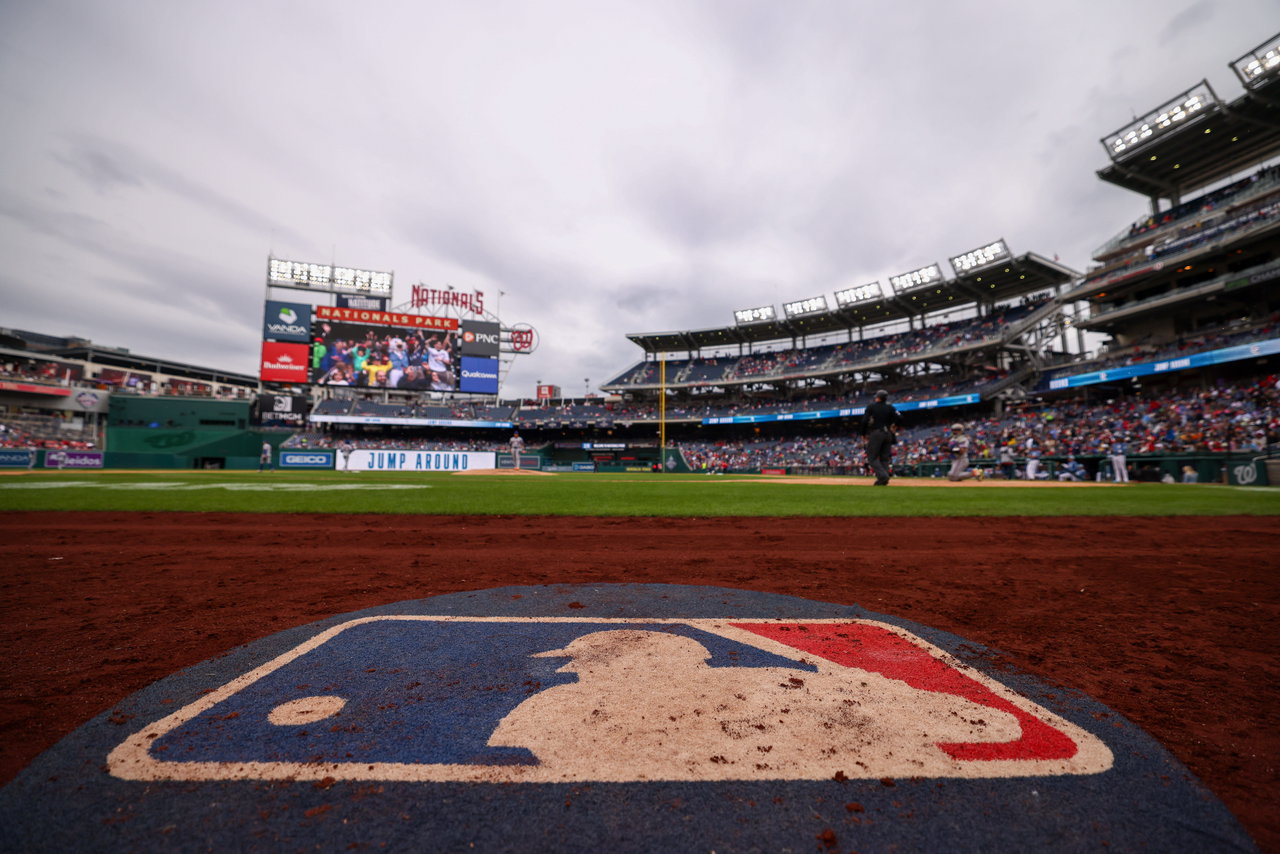
The MLBPA just agreed to pool all media revenue equally, a stunning concession that still may not prevent a lockout. Yet, the surprising twist brought a billion-dollar boost to small-market teams through enhanced media-revenue assistance. It is a rare moment of common ground in negotiations that have been clouded by growing tensions and the threat of a labor shutdown.
Watch What’s Trending Now!
However, this unexpected development may not be enough to keep baseball away from another bitter battle. While the MLBPA remains committed to reaching a new CBA agreement, its stance on one of the owners’ most contentious demands remains unchanged: a salary cap is still a non-starter.
“Today, players reaffirmed their commitment to reaching a fair deal by agreeing to the owners’ proposal to share all MLB media revenues equally across the 30 clubs. The MLBPA also maintained its previous proposal to transfer hundreds of millions in additional non-media revenues from high-revenue teams to low-revenue teams, along with critical proposals meant to ensure all subsidies are used by front offices to improve the product on the field. Over the course of the next CBA, the players’ revenue-sharing proposals will increase assistance to low-revenue clubs by over $1 billion,” MLBPA shared via X.
Under the outgoing CBA, teams keep around half (52%) of their local media revenue. They put the remaining 48% into a shared pool. Both sides are now aligned on pooling 100% of national and local media revenue. It includes roughly $1.8 billion in local TV money, split evenly among all 30 teams.
For reference, the Los Angeles Dodgers generate more local television revenue than any other MLB franchise. It is because of a 25-year, $8.35 billion contract with Spectrum (averaging roughly $334 million per year). They also have a unique bankruptcy exemption that shields roughly $100 million of that revenue from the league’s revenue-sharing pool. The next-highest local deal belongs to the Yankees (around $140 million+). Small-market clubs like the Brewers collect roughly $35 million.
Now, that combined pot is divided evenly by 30. Every club, whether in Los Angeles, New York, Milwaukee, or Miami, receives the same base media payout. So, it’s around $60 million per team from the $1.8 billion local pool alone, plus equal national TV shares.
Moreover, alongside equal media sharing, the players maintained their proposal to transfer additional non-media revenues from high-revenue to low-revenue clubs. This would boost annual support for small-market teams from roughly $700 million in 2026 to over $950 million in 2027, an increase of over $1 billion across the life of the new CBA.
However, while the MLBPA accepting the MLB team owners’ proposal sounds like a turning point in the ongoing CBA negotiations, the MLBPA has a few other proposals as well. Small-market owners typically go slow in spending the new funds on their rosters. So, the union’s proposal includes penalties for hoarding revenue-sharing subsidies. This is alongside $10 million to $20 million performance bonuses and extra draft picks for recipient clubs that win or sign free agents.
Yet a new CBA by December 1 is still far from reality.
The biggest flashpoint is still there between the MLBPA and MLB
The MLBPA has accepted the MLB team owners’ media-revenue split proposal, but their salary cap proposal is still a no-go. MLB team owners proposed a $258.2M cap and $180.2M floor for 2028, with a 50/50 revenue split. The MLBPA, on the other hand, vowed never to accept a salary cap under any circumstances.
MLB owners also offered a $1 million minimum salary, earlier free agency, and arbitration bonuses inside their cap proposal. But MLBPA interim executive director Bruce Meyer stated that the plan “doesn’t add a single dollar in overall player compensation”. Under a hard cap with a fixed 50/50 revenue split, raising pay for young or minimum-salary players simply takes money out of the pockets of veteran free agents.
Furthermore, the union argues MLB’s proposed 50/50 revenue split immediately slashes overall player compensation. It excludes roughly $400 million in amateur signing bonuses and relies on owners’ definitions of eligible baseball revenues and expenses.
In a free market without a cap, teams can bid aggressively for top talent (such as Tarik Skubal’s recent $450 million deal with the Mets). A hard cap limits how many teams can afford top free agents once their payroll hits the $258.2 million ceiling, reducing bidding competition and limiting players’ career choices.
So, while MLBPA accepting a proposal surely made way for further fruitful discussion, a new CBA in the next few days may still need a miracle to happen.