
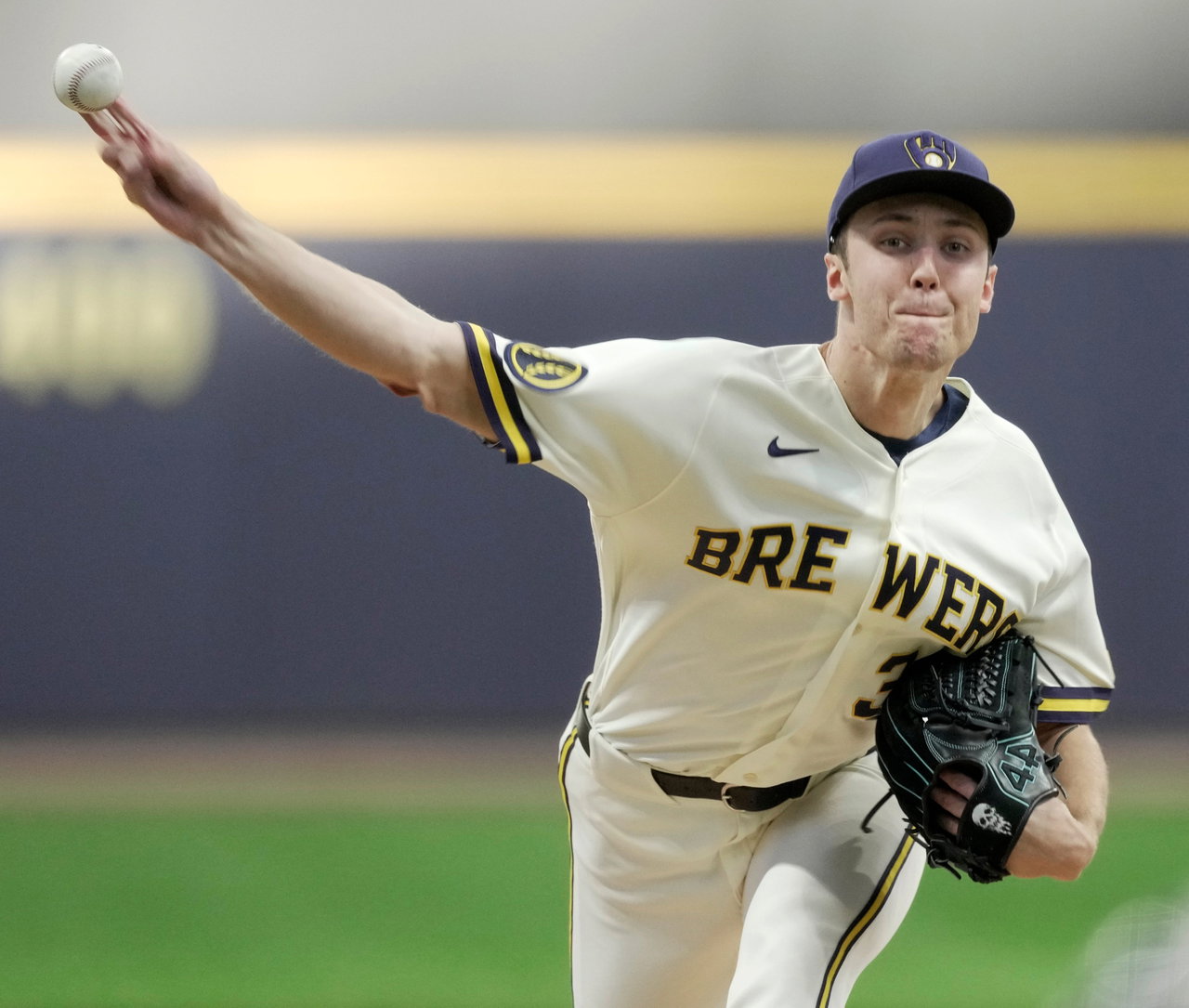
Milwaukee fans had waited 44 years to see their team win a World Series game at home. On Friday night, they got the celebration, the fireworks, Bruce Springsteen’s ‘Glory Days,’ and then an unexpected request to put everything on hold. The Brewers still had one out to get, and the Tampa Bay Rays were not ready to leave.
Watch What’s Trending Now!
Milwaukee eventually secured a 3-2 victory in Game 1, but the final score barely captures the chaos. Jacob Misiorowski opened the Fall Classic with a record-breaking fastball, William Contreras punished Tampa Bay’s aggressive baserunning, and Trevor Megill had to find his composure again after a replay review overturned what appeared to be the final play. The Brewers survived, but the Rays gave them plenty to think about before Game 2. But here is a list of other things that took place…
Brewers’ Timeless Ticket Controversy Adds Frustration to World Series Fever
The Brewers’ return to the World Series after 44 years brought enormous excitement to Milwaukee, but some longtime fans faced disappointment before Game 1 even began. The controversy centered on the team’s Timeless Ticket promotion, launched in 2015, when Milwaukee sold 1,000 personalized brass tickets for $1,000 each.
The offer promised holders a seat at any future Brewers home game, including a World Series matchup, and allowed them to purchase up to three additional seats separately. Many buyers held on to their tickets for more than a decade, hoping to use them for this very occasion.
However, when fans tried to redeem their tickets for the 2026 World Series, some were offered seats in the 400-level sections, despite better locations reportedly being available to the general public. The promotion promised the “best available seat,” leaving holders frustrated with the locations offered.
Danny Fochesato, one of the buyers, told The Sporting News that he had paid $1,000 11 years earlier and expected his loyalty to count for something. Another holder, Kyle Deaton, told a local Milwaukee news outlet that the seats offered were among the worst in the stadium.
The backlash prompted the Brewers to acknowledge their mistake. Team president of business operations Rick Schlesinger said the organization had made errors in its internal communications about fulfilling redemption requests. Although the team had accommodated all holders with seats, Schlesinger admitted that it had failed to live up to the spirit of the promotion and apologized. The resolution allowed Timeless Ticket holders to keep their World Series tickets and retain their option to redeem the promotion for a future game.
The dispute unfolded amid extraordinary demand for Milwaukee’s first World Series home games since 1982. According to The Athletic, resale prices on TickPick averaged $2,836 for Game 1 and $2,905 for Game 2, making both among the most expensive World Series games on the marketplace’s records dating back to 2012. Merchandise and road-game watch parties also sold rapidly as fans scrambled for a chance to share in the Brewers’ postseason run.
Milwaukee eventually beat the Tampa Bay Rays 3-2 in a dramatic opener, giving the home crowd a night to remember. Still, the Timeless Ticket controversy exposed an uncomfortable side to the celebrations: some supporters who had invested in the franchise years before its World Series return felt let down by the very promotion designed to reward their long-term loyalty.
Trevor Megill Had to Get the Final Out Twice
The ninth inning delivered the kind of ending that makes a postseason game unforgettable, even before the result becomes official.
Milwaukee led 3-1 when Tampa Bay mounted a late rally against closer Trevor Megill. Jonathan Aranda and Chandler Simpson hit consecutive singles, Jorge Mateo and Simpson pulled off a double steal, and Junior Caminero drew a walk to load the bases with one out. Suddenly, the Rays had a chance to turn a quiet final inning into a nightmare for the home crowd.
Liam Hicks hit a grounder toward the right side. Second baseman Brice Turang collected it and started a double play through rookie shortstop Cooper Pratt, who relayed the ball to first baseman Jake Bauers. The Brewers appeared to have completed the play, fireworks filled the air, and Springsteen’s ‘Glory Days’ played over the stadium speakers.
Then, Tampa Bay challenged the force-out at second.
Replay showed Pratt’s right foot had come off the bag as he received the throw. The ruling changed, the inning continued, and a run crossed the plate to make it 3-2. Milwaukee now had runners at second and third with two outs, and Megill had to return to the mound after believing the game was over.
The closer responded by striking out Jonny DeLuca with a knuckle curve. This time, the celebration could continue.
Manager Pat Murphy praised Megill’s ability to reset after the interruption. “We talk about it all the time: When there’s a challenge, do not walk off the mound,” Murphy said, according to MLB.com’s account of the remarkable finish. “He kept his composure, and that was the biggest at-bat of the game.”
What did Megill say about it?
Well, at first, Megill expected the challenge to focus on what happened at first base. “Maybe a bobble or something. But it was pretty clear once the replay went up that it was going to be the play at second base.”
The sequence also showed why replay can be brutal for a team on the verge of a win. Milwaukee had to absorb the emotional swing, but Megill delivered the pitch that mattered most.
Jacob Misiorowski Opens the Fall Classic With a Record
Before the ninth-inning drama, Misiorowski gave the World Series its first major headline with a fastball that reached 103.5 mph. The Milwaukee right-hander threw it to Tampa Bay’s Yandy Díaz on his very first pitch of the game, setting a new World Series pitch-velocity record in the pitch-tracking era.
The previous mark was 103.2 mph, recorded by Aroldis Chapman for the Chicago Cubs during the 2016 World Series. Misiorowski’s opener made his power clear immediately, but the Brewers needed more than a radar-gun reading from their young starter.
He delivered five innings, allowing one earned run on four hits, with one walk and three strikeouts. Tampa Bay did make solid contact. Junior Caminero crushed a double at 112.7 mph in the fourth inning, sending the ball over center fielder Garrett Mitchell’s head. Liam Hicks then grounded out to bring Aranda home and cut Milwaukee’s lead to 2-1.
Misiorowski did not dominate every matchup in his usual fashion, yet he limited the damage and handed the game to the bullpen with the Brewers still ahead. That distinction mattered. A pitcher can light up the radar gun and still struggle to control a postseason lineup. Misiorowski found enough outs to keep Milwaukee in front.
His World Series record also came on the heels of an extraordinary regular season. He had reached 105.5 mph against the Chicago Cubs in June, a higher mark than Friday’s record pitch. The 103.5 mph delivery was the fastest pitch in World Series history, not the hardest of his career.
As MLB.com reported after his World Series debut, Misiorowski’s opening fastball was only part of the story. His five innings gave Milwaukee a foundation for the win, even without his usual avalanche of strikeouts.
The Rays’ Aggression Backfired Against William Contreras
Tampa Bay built its identity around pressure on the bases. In Game 1, that strength became a costly problem.
The Rays entered Friday’s game with an 11-for-11 record on stolen-base attempts in the postseason. They also finished second in the majors in steals during the regular season. Their willingness to run had helped them reach the World Series, so abandoning that approach after one difficult night was never likely.
The trouble was the opponent behind the plate. Contreras threw out Victor Mesa Jr. attempting to steal third in the fifth inning, ending a potential rally with Yandy Díaz at the plate. Mesa had reached on a single and tried to advance with two outs. Misiorowski delivered a fastball at 103 mph, and Contreras made the throw to erase him.
One inning later, Aranda singled against reliever Abner Uribe. With Chandler Simpson batting and a full count, manager Kevin Cash sent Aranda toward second. Simpson could not hold up his swing on a slider that would have been ball four, and Contreras threw Aranda out to complete a strikeout-throwout double play. Junior Caminero, one of Tampa Bay’s most dangerous hitters, waited on deck.
Mesa admitted his decision had been poor.
“Easy to say now, but it was not the best move,” he said. “I understand that was not the smartest move. Learn from that, and I apologize or whatever to my teammates because, obviously, I’m trying to make something positive, and it wasn’t done in that way.”
Cash also accepted responsibility for the second play, explaining that he trusted Simpson to make contact but that Uribe’s slider proved difficult to handle. Simpson, however, insisted the team would not abandon its identity.
“That’s us,” he said. “We can’t run away from that because that’s who we are. Just because we got stopped a couple of times on the basepaths, we can’t shy away from that.”
The Rays do not need to stop putting pressure on defenses. They do need to choose their moments more carefully, especially against a catcher who showed he could shut down their running game.
Christian Yelich and Jackson Chourio Give Milwaukee Just Enough
Milwaukee did not need a home run to take control of Game 1. Its first-inning attack supplied the early advantage, and a seventh-inning insurance run proved essential.
Jackson Chourio opened the bottom of the first with a single against Tampa Bay starter Nick Martinez. Christian Yelich followed with an RBI triple to put the Brewers ahead. William Contreras then drove in Yelich with a single, giving Milwaukee a 2-0 lead before Martinez could settle into the game.
For Yelich, the hit carried extra significance. The Brewers captain had gone years without an RBI in the postseason before breaking through earlier in this year’s playoffs. His triple also marked his first World Series at-bat, a notable milestone for a player who has spent much of his career as one of Milwaukee’s central figures.
Tampa Bay answered in the fourth, but Milwaukee’s offense remained patient. Chourio delivered another timely hit in the seventh, driving Cooper Pratt home to make it 3-1. That run looked like insurance until the Rays’ ninth-inning rally turned the final moments into a tense fight for survival.
The Brewers’ offense was not overwhelming, but it did its job early and added a run at the right time.
Milwaukee’s Bullpen Finishes the Job, but Game 2 Brings a New Test
Misiorowski’s exit after five innings left Milwaukee’s relievers with a narrow lead to protect. Abner Uribe, Aaron Ashby, and Megill handled the remaining work, and their ability to limit Tampa Bay’s offense proved just as important as the starter’s record-breaking fastball.
Ashby continued his postseason scoreless streak, and Megill eventually delivered the final strikeout after the replay delay. The Rays had a genuine chance to steal the opener, but Milwaukee’s pitching staff prevented the late rally from becoming a comeback.
Still, the result does not make Game 2 any less important. Tampa Bay will turn to Drew Rasmussen, while Milwaukee is scheduled to start Logan Henderson. The Rays can take confidence from the fact that they kept the opener close despite their baserunning errors, but they will need better execution in scoring situations.
For Milwaukee, the challenge is to carry the composure it showed in the ninth inning into the next game. The Brewers have their first World Series win since 1982, but the opening night also exposed how quickly a comfortable finish can unravel.
The fireworks went off too early once. Milwaukee will be hoping it has no reason to delay the celebration again.