
How does it feel to take an early lead in a World Series game only to end up losing? Ask the Tampa Bay Rays. On October 24, they got off to a dream start in Game 2 of the World Series. Their fans began to believe the Rays would win and even the series. A 4-0 lead in the top of the first inning was certainly enough to raise expectations. However, the Milwaukee Brewers had other plans.
Watch What’s Trending Now!
The Brewers initially struggled to keep up as the Rays raced ahead. American Family Field fell silent as Tampa Bay built its four-run lead. But the Brewers eventually turned things around, winning 5-4 to take a 2-0 lead in the ongoing World Series. So, how did Milwaukee pull off the comeback? And what moment involving the Rays left fans furious?
How did the Brewers win despite falling behind early?
The Rays came out firing in the top of the first inning, taking a 4-0 lead behind RBI singles from Chandler Simpson and Junior Caminero, followed by a two-run home run from Liam Hicks.
As Evan Closky, 10 Tampa Bay Sports Director, noted on X, those four runs marked the most the Rays had scored in a single inning in a World Series game in franchise history. However, their early momentum did not last.
The Brewers responded immediately in the bottom of the first, scoring two runs to cut the deficit in half.
In the bottom of the fourth, Rays first baseman Jonathan Aranda misplayed a dribbler off the bat of David Hamilton, allowing the ball to roll through his legs and Cooper Pratt to score. Shortly after the Brewers loaded the bases, Rays starter Drew Rasmussen was pulled from the game.
With Tampa Bay clinging to a 4-3 lead, Victor Mesa Jr. hit a single to left field. However, Jackson Chourio threw out Liam Hicks at home plate to end the inning.
In the sixth inning, Sal Frelick launched a deep solo home run to center field, tying the game at 4-4.
Then, in the bottom of the seventh, Brice Turang reached base before Cooper Pratt delivered a go-ahead RBI single off Rays reliever Kevin Kelley, giving Milwaukee its first lead of the night.
Milwaukee’s bullpen took care of the rest, with Abner Uribe and Aaron Ashby combining to keep Tampa Bay off the board in the final innings and secure the 5-4 victory.
It goes without saying that several people criticized the Rays’ performance. One of them was Ryan Bass.
The MLB TV reporter wrote on X, “Again, a hit away from a different outcome, but #Rays beat themselves tonight. Pitching, defense, and timely hitting let them down.”
Meanwhile, fans continued to debate another major moment from the game: Yandy Diaz’s check swing in the ninth inning.
Fans call out umpiring over Yandy Diaz’s swing
The controversy surrounding Yandy Díaz in Game 2 of the World Series centered on a game-ending check-swing call in the top of the ninth inning.
The Rays were trailing 5-4 with two outs in the inning, and Jonny DeLuca was at third base as the potential tying run. At the plate, designated hitter Yandy Díaz faced Brewers reliever Aaron Ashby and worked the count to 3-2.
Ashby threw a curveball low and into the dirt. Díaz began his swing but appeared to try to hold up. Home plate umpire Jim Wolf initially ruled the pitch a ball, which would have given Díaz a walk and put runners at first and third.
However, Brewers catcher William Contreras immediately appealed to first-base umpire James Hoye. Hoye ruled that Díaz had swung and crossed the barrel, calling him out on strike three to end the game. That decision sparked an immediate debate among fans and analysts.
The official MLB rulebook does not establish an exact spatial boundary or rigid definition for a check swing. Instead, the decision relies on the umpire’s judgment of whether the batter attempted to strike the ball. Broadcast replays showed a close call, leaving fans, analysts, and reporters divided over whether Díaz had committed to the swing or held back in time.
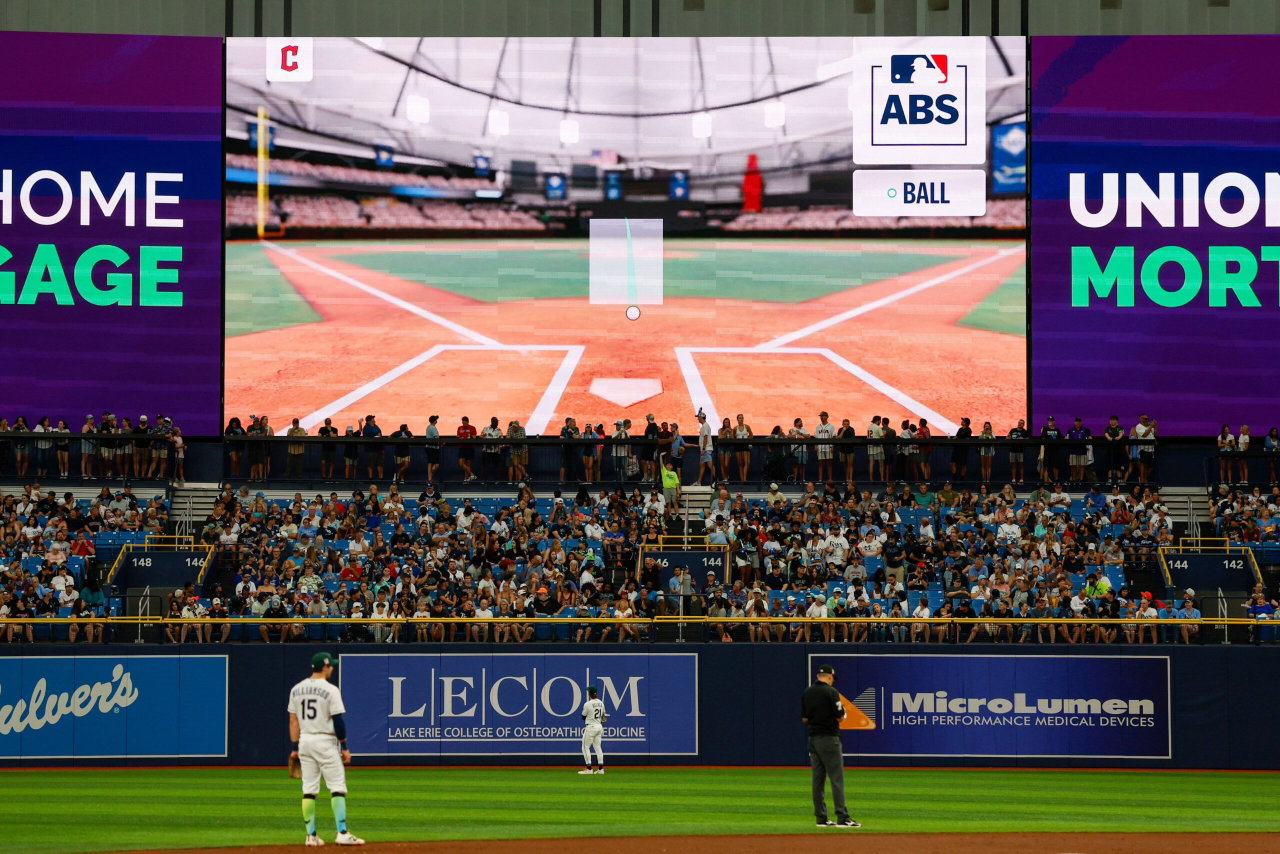
Ending a World Series game on a subjective check-swing decision that cannot be challenged through replay review sparked strong reactions from fans and commentators. Some also pointed out that automated check-swing technology, which is being tested in minor league systems alongside the ABS challenge system, could eventually help resolve such disputes.
Díaz initially started walking toward first base, expecting to receive a walk. After the game, he acknowledged that he felt he had held back but said he had to accept the umpire’s decision. Still, the debate continued: Did he swing or not?
Baseball analyst John Martinello wrote on X, “I don’t care if you think Yandy Diaz went or not, James Hoye should not be ending this baseball game with a check-swing judgement call. The next challenge system will be here before you know it.”
The comment criticized Hoye’s judgment on such a crucial play. Another fan shared a similar reaction.
The comment read, “MLB you should be ashamed! BRUTAL NON-SWING by Yandy Diaz for the final out of Game#2. James Hoye you blew this one big time.. Pathetic. Fans deserve better.”
Another fan went a step further and posted, “James Hoye I pray you never experience joy again.”
However, another person reminded fans that the umpires have the final say on whether a batter has swung.
“Now, fair is fair. Yandy Díaz didn’t swing at the pitch, but it’s worth remembering that it’s up to the umpire’s call. Which is why umpire from 1st James Hoye appeared, he wanted to go rest.”
At the same time, another fan delivered a harsh verdict: “Without question. James Hoy isn’t qualified to umpire a little league game.”
Despite the backlash, Hoye has built an extensive postseason resume, including assignments in multiple World Series. He was appointed to three World Series crews—in 2019, 2022, and 2026. Notably, MLB selected him as the crew chief for the 2026 World Series.
The Brewers’ comeback habit draws attention again
Overcoming a 4-0 deficit in Game 2 was not an isolated achievement for Milwaukee. It closely mirrored the team’s performance earlier in the playoffs. In Game 4 of the NLCS, the Brewers also fell behind the Los Angeles Dodgers 4-0 before rallying for a 6-4 victory to complete their series sweep.
With their 5-4 win in Game 2, the Brewers recorded their seventh comeback victory of the 2026 postseason. That puts them just one win short of the MLB record for most comeback victories in a single postseason, with eight set by the 2015 Kansas City Royals.
Before this postseason run, Milwaukee had a 1-19 record in franchise history when trailing by four or more runs in postseason games. The Brewers have now overcome a four-run deficit twice in October.
Opponents and analysts have described Milwaukee’s ability to come back as the result of a strategic approach rather than pure luck. The Brewers make opposing starters work by forcing them into deep counts early, as shown by Sal Frelick’s nine-pitch at-bat before his game-tying home run. They also capitalize on defensive mistakes and take advantage of bullpen matchups in the later innings.
Once Milwaukee takes the lead, its late-inning relievers have consistently limited opposing teams’ chances to respond. As a result, even an early multi-run lead has proved far from safe against the Brewers.
The Brewers and Rays will meet again for Game 3 of the World Series. Stay tuned for more updates.