
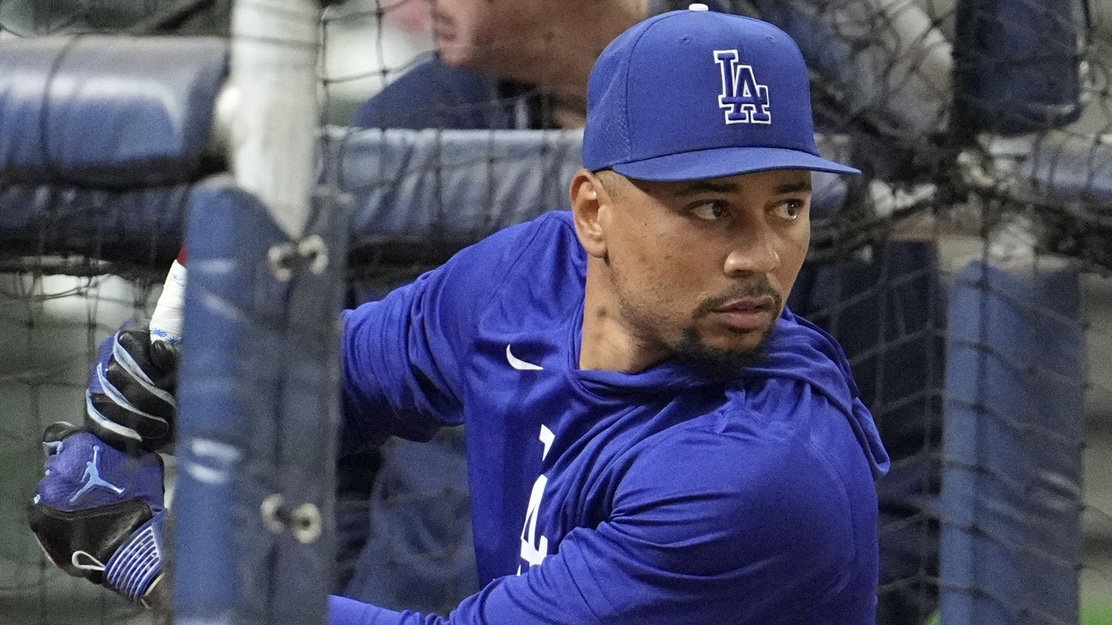
An 8-for-54 slump is enough to mess with any hitter’s head. But for Mookie Betts, the real damage was happening off the field. After his batting average dropped to .157 in May, the Los Angeles Dodgers superstar took a drastic step. He deleted all the social media apps from his phone. The result? He immediately found his swing again.
Watch What’s Trending Now!
“Mookie Betts says he deleted social media from his phone after receiving negative comments from fans amid an 8-for-54 slump,” reported Dodgers Nation via Instagram.
The hate was getting too much. Betts addressed the situation himself. “You have to fail so much to figure out what’s right… Having [the fans’] support system would definitely expedite it,” he said, while talking about comments from fans.
Since the start of 2025, Bett’s offensive numbers have slowly dipped. He finished the 2025 season with an average of .258, and his bat power had reduced drastically compared to previous years. And in 2026, that slump has just continued.
The star batter is hitting just .182 and struggling to find rhythm, and injuries have not helped him either. And this slump in form is starting to frustrate Dodgers’ fans, and they are starting to vent their frustration. However, it wasn’t just the fans that were going after him. The sports media piled on, too.
On his Fox Sports radio show, The Odd Couple, host Rob Parker openly criticized Betts for deleting his apps, arguing that true greats don’t use the internet as an excuse for bad performance.
Mookie Betts admitted that the hate messages online were affecting his sleep and mental focus during the stretch. Even so, he made it clear he is not trying to hurt the team and is only trying to work through the struggles. The pressure has not only been about numbers, but also about expectations built around championships. Since joining the Los Angeles Dodgers in 2020, Betts has helped LA win three World Series titles.
View this post on Instagram
While the fans are showing frustration, the Dodgers’ clubhouse is showing patience. Teammates, coaches, and manager Dave Roberts have publicly backed Betts through his rough patch. Roberts even adjusted the batting order, moving Betts to the cleanup spot instead of his usual two-hole role. That change immediately showed results when Betts went 3-for-5 with two home runs and five RBI against the Colorado Rockies in a 15-6 win.
It was his first three-hit game of the season since his time off from injury. But there is also a logical reason as to why Betts might actually be struggling.
His transition to a full-time shortstop has increased the defensive workload compared to his outfield days. That shift reduced time available for batting, and an oblique strain injury also forced him to miss more than a month. These disruptions have played a big role because Betts simply has not gotten consistent time at the plate. But even during this struggle, he has still proved himself with his defensive value and Gold Glove-level play at shortstop.
Even with all the criticism and inconsistency, that game against the Rockies was a sign that Betts can still do it. And as Betts said, “I truly believe I’m a better player now. I just need to find that cue to keep up with what’s going on.”
For now, Betts is not at his peak, and that is a fact. What he does next to get out of the slump is the real question. And it looks like the Dodgers’ offensive woes are just about one pitch.
The Dodgers might be struggling with fastballs
The Los Angeles Dodgers are not struggling per se, but they seem to have a little gap in their armour that the opposition is using to rip through the team. Dave Roberts believes that the team is mainly struggling because they are not hitting fastballs. Since the San Francisco series, the Dodgers have averaged under four runs per game.
LA feels the pressure as the star-studded lineup continues struggling despite high expectations from them. Roberts points directly to timing issues against fastballs as the core offensive concern.
Roberts says hitters are late on fastballs and fail to scare pitchers. Many hittable fastballs in the zone are missed, fouled, or have weak contact.
Against the Marlins, the Dodgers saw 37 fastballs; 30 were strikes, and only three were hit. Fastballs are the easiest pitches in baseball, yet the Dodgers are not able to convert them into impactful at-bats. Another example is against the Astros. The Dodgers faced 58 fastballs, 43 strikes, and only two hits came in the entire game. In that series, the Dodgers had an average of .047 against fastballs, even with names like Freeman, Pages, Teoscar Hernandez, and Ohtani.
Even their best batter. Shohei Ohtani is batting .189 against four-seam fastballs this season.
Fastballs set the tone of the at-bat and shape the counts and the pitcher’s decisions on how he will handle the batter. When hitters get hits off such pitches, the pitcher starts using off-speed pitches. But if hitters fail to attack pitchers, the pitcher gains control of the at-bat and will have an advantage over the batter.
So, the Dodgers will need to be more aggressive on fastballs early in the counts in the coming games. The talent on the Dodgers roster is unquestionable, but when we see the team go through stretches like this, questions start to appear.
Bottom line, the Dodgers’ success depends on turning fastballs into hits and maybe into homers.