
The current CBA expires in approximately 25 days. While the immediate consequences involve the stoppage of all free agency and trade talks, the looming lockout could create problems far beyond players and team owners. While owners and players fight over salary caps, hundreds of front-office workers face a different threat entirely. A sports business reporter has sounded an alarm about who really pays the price
Watch What’s Trending Now!
Forbes’ Maury Brown explained on X how employees working behind the scenes could face layoffs during the winter. He also mentioned that personnel involved in Spring Training could be affected if a lockout delays/cancels Spring Training in 2027.
“People across the front offices will be laid off this winter. It will also affect folks that work Spring Training,” Brown wrote in his post.
His remarks point to the wider economic consequences of a labor dispute.
Although players and owners are the central parties to be affected in the CBA negotiations, the suspension of baseball operations can affect hundreds of employees whose jobs depend on the regular functioning of MLB. During a lockout, teams halt free-agent signings and trades—the core work of front offices—forcing cost-cutting measures.
As Maury mentioned in his post, the prior 2021-2022 lockout, which included a 99-day work stoppage, affected several employees across the league. In February 2021, due to the aftermath of the COVID pandemic, MLB laid off more than 55 employees during restructuring.
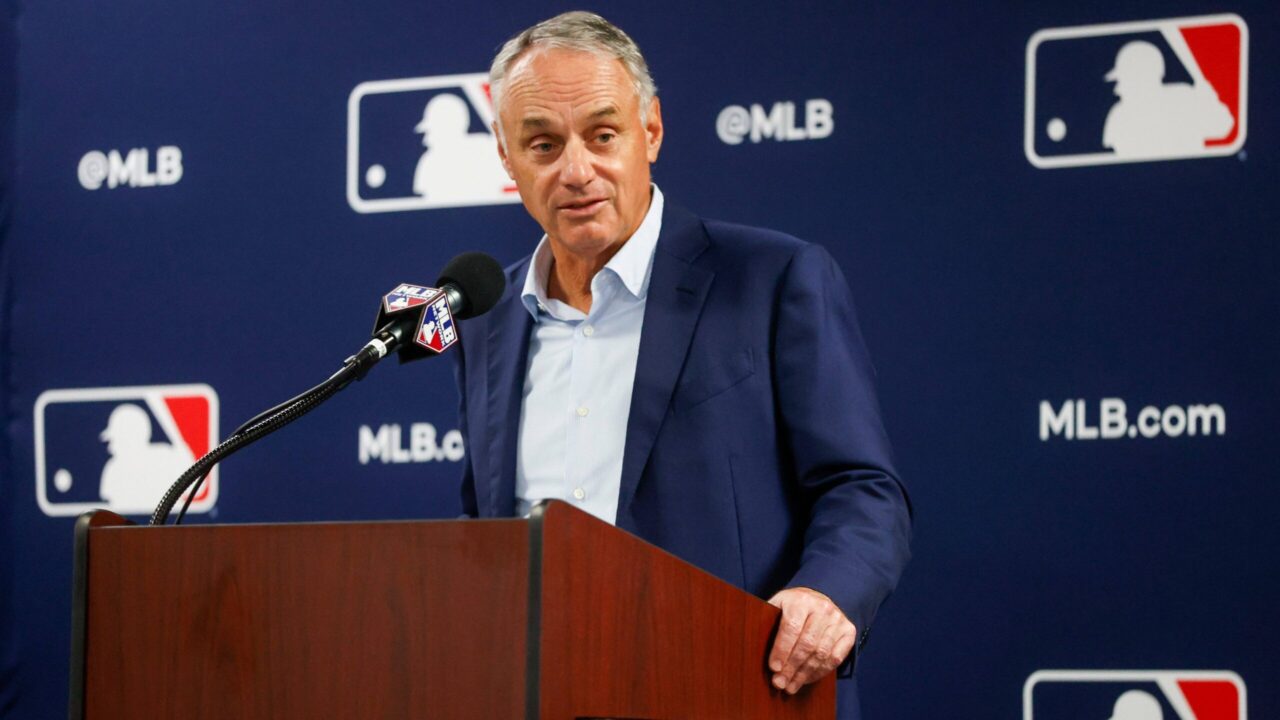
So, when the lockout eventually came, MLB Commissioner Rob Manfred announced that front-office furloughs were not expected. However, the delayed Spring Training affected seasonal and part-time workers. As a result, the commissioner announced a $1 million assistance fund for them.
Brown believes the upcoming lockout could produce a similar outcome, regardless of whether the league eventually secures a salary cap or not.
If the two sides fail to reach an agreement before December 1 at midnight, the owners are expected to initiate a lockout beginning December 2.
For front offices, the timing could hardly be worse. The offseason is traditionally one of the busiest periods for baseball executives, with free-agent negotiations, trades, roster construction, and organizational planning taking place simultaneously. A lockout would freeze major-league transactions and limit communication between teams and players on 40-man rosters.
That disruption could leave departments with fewer immediate responsibilities. Scouting, player development, baseball operations, and administrative personnel could all face uncertainty. These roles are seasonal; their workload peaks during the offseason. A lockout that freezes transactions eliminates their immediate responsibilities.
If the lockout extends to March, Spring Training employees could also be affected. Their work depends heavily on camps opening on schedule and players reporting to prepare for the upcoming season. A prolonged delay could shorten the schedule and leave seasonal workers out during the winter and early spring.
There is already reason to worry about the Spring Training calendar. MLB’s scheduled exhibition games are expected to begin on February 19, 2027, but that timeline depends on a new labor agreement being reached in time. If negotiations extend beyond the reporting period, teams could be forced to compress their preparations.
Meanwhile, the owners have proposed a delay in imposing a salary cap.
MLB Owners Propose Salary Cap Delay
MLB owners have proposed delaying the implementation of a salary cap until the 2028 season as negotiations over a new CBA intensify. The revised proposal would give franchises an additional offseason to adjust their payrolls before entering the salary cap and floor system.
In their latest proposal, the owners want a hard salary cap of $258.2 million and a salary floor of $180.2 million imposed in the league starting in 2028. The owners initially wanted to implement the system in 2027. But several teams already have significant financial commitments that would make an immediate transition difficult.
MLB spokesman Glen Caplin explained that the revised timeline would allow clubs a full offseason to prepare for the new system without delaying other proposed player benefits.
Under the league’s calculations, eight teams, including the Los Angeles Dodgers, New York Mets, New York Yankees and Philadelphia Phillies, would need to reduce their combined payrolls by approximately $528 million to comply with the proposed ceiling. Meanwhile, 12 franchises would have to collectively increase spending by $636 million to reach the salary floor.
However, the players’ union has strongly opposed the proposal. The MLBPA believes introducing a salary cap would restrict player earnings, weaken guaranteed contracts, and undermine the existing free-agent market.
With the current CBA expiring on December 1, the possibility of another lockout continues to grow. Although owners have offered a delayed implementation, the fundamental disagreement over a salary cap remains unresolved.
The revised proposal could give franchises more preparation time, but it has done little to bridge the growing divide between the owners and the players.