
Pitchers Chris Sale, Zack Wheeler and Yoshinobu Yamamoto all share one representative, and he just drew a hard line. Agent Joel Wolfe of The Team opposes a proposed $258.2 million cap that would force eight clubs to shed $528 million. His message was blunt.
Watch What’s Trending Now!
That truce began behind the center-field fence, where league officials corralled agents together and cap-sport reps compared how their NBA clients fared. In an interview with The Athletic’s Ken Rosenthal and Evan Drellich, Wolfe made his stance unmistakable.
“We have heard a lot of the same stories,” Wolfe said in an interview with The Athletic reporters Ken Rosenthal and Evan Drellich. “Over our dead bodies are we going to accept a cap and further restraints on salaries.”
According to Sportico, the NBA’s final 2025-26 financial report revealed that players took a 5.5 percent reduction in agreed salaries, while the Los Angeles Lakers were sold in August for $12.5 billion, marking a 25 percent increase over the previous year. Agents see pay shrinking as franchise values soar.
Wolfe was not alone in drawing that contrast. In the same Athletic report, Scott Boras, the agent for pitcher Tarik Skubal, outfielder Juan Soto and first baseman Bryce Harper, tied the fight to franchise equity. “In our sport, we’re saying, we’re not letting that happen. That’s what this is about.”
Boras is pointing at what a cap costs, and the math supports him. Union officials told ESPN that players would lose more than $1 billion under the proposal. MLB has tied earlier free agency and a $1 million minimum salary to cap acceptance, and with the CBA expiring December 1, a lockout would freeze all signings and trades.
That financial gap explains the players’ stance, but agents say the commissioner’s handling of the process has hardened it.
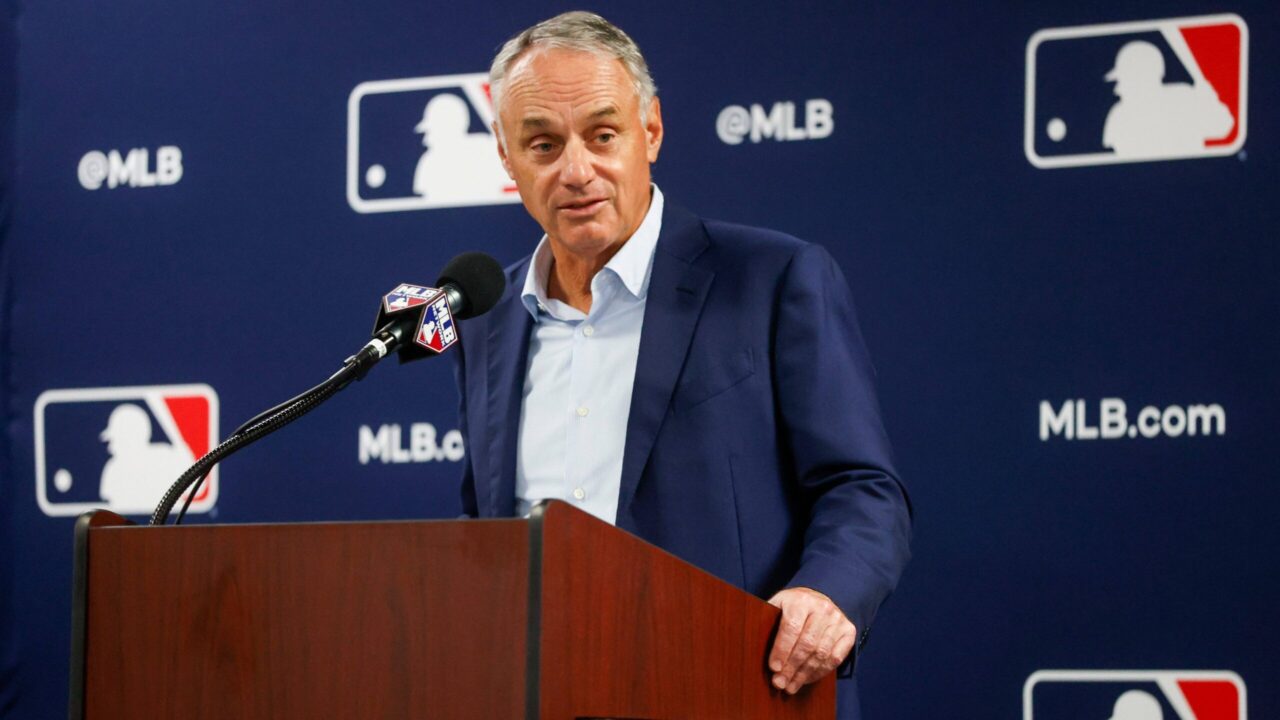
Rob Manfred’s lockout plan is uniting MLB players and agents
Commissioner Rob Manfred has made the calendar a lightning rod. Free agency began on Monday, the CBA expires on December 1, and a lockout would halt all signings and trades, stopping the Hot Stove right as the market starts to pick up.
“I find it incredibly obtuse and offensive that the commissioner’s office is scheduling a lockout like it’s some sort of wedding or bar mitzvah,” Wolfe said in The Athletic report, taking aim at the commissioner’s office. Manfred has previously called a lockout a positive that creates bargaining leverage.
“I haven’t seen this level of solidarity among the players since 1994, and I’ve never felt as strongly about the players’ resolve to stand up to MLB’s disingenuous arguments,” said Seth Levinson, an agent at ACES, in The Athletic report.
The 1994 comparison cuts deep. Players struck for 232 days that year, and the World Series was canceled, while the 2021 lockout ran 99 days.
Owners insist a cap would level the field, but the postseason results make that pitch harder to sell. The Milwaukee Brewers hoisted the trophy with the 19th-highest payroll, and players noticed.
During the postseason, Brewers closer Trevor Megill dismissed the competitive balance argument. “It’s all hogwash, right? You don’t need tons of money to make it to the World Series,” Megill said. “You just need the right people. There’s no cap. No cap, no floor, it’s not happening.”
The Brewers, the smallest media market, won the World Series over the Tampa Bay Rays 4-1, 28th in payroll, becoming the first small-market champion since the 2015 Kansas City Royals. Under MLB’s projections, 12 clubs, including the Brewers, would need to add a combined $636 million to reach the floor.