
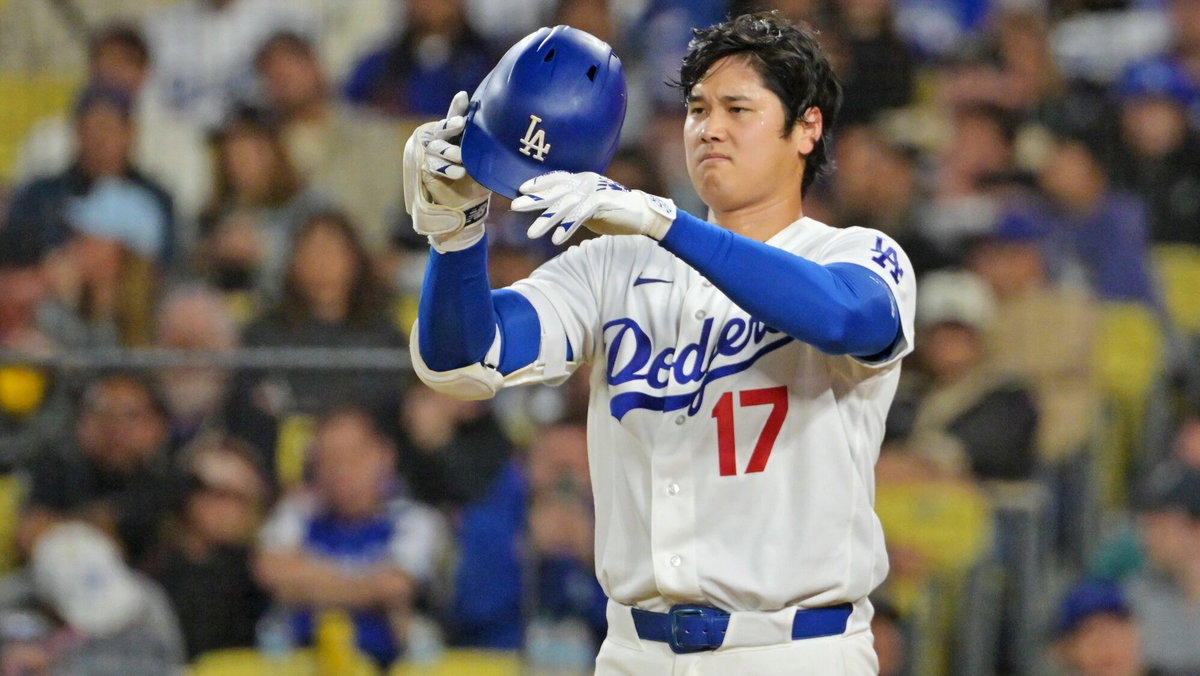
Shohei Ohtani will not need offseason surgery and is expected to pitch again in 2027. Dodgers president Andrew Friedman confirmed the news after the Dodgers’ season ended against Milwaukee. Ohtani also made his position clear, saying, “Yes, definitely,” when asked about pitching next season. But Bill Plaschke has a problem with the superstar’s stubbornness.
Watch What’s Trending Now!
“This past season offered unassailable proof that Shohei Ohtani can no longer serve as both a full-time hitter and full-time pitcher… They need to pull him off the pitching mound permanently… if he insists on continuing this detrimental charade, they need to seriously consider trading him,” wrote Bill Plaschke, calling out Shohei Ohtani.
Los Angeles Times columnist Bill Plaschke believes the Dodgers must reconsider Shohei Ohtani’s two-way future. Plaschke argued that Ohtani should stop pitching if it continues to hurt his performance at the plate. He even suggested considering a trade if Ohtani refuses to change his approach.
But Ohtani’s determination to keep doing both is nothing new. His time in Japan shows how that same determination once helped a team win.
Before joining MLB, Shohei Ohtani challenged baseball’s usual path while entering professional baseball in Japan. He wanted to skip Japan’s professional league and sign directly with an MLB team.
Yet, the Hokkaido Nippon-Ham Fighters selected him first overall in the 2012 draft. Instead of asking him to choose one role, they offered something different. Their development plan promised opportunities to become both a pitcher and a hitter.
Ohtani accepted that NPB offer for that reason only, spending 5 seasons with the Fighters before moving to LA. The club had taken a risk, but it gave his ambitions room to grow. That decision also required changes to how the team handled his daily schedule.
The Fighters needed to protect Ohtani’s pitching routine while keeping his bat available between starts.
He generally rested the day after pitching and prepared for his next start. During the games between starts, he usually appeared as the DH. This meant the team had to plan batting practice, recovery, and lineups around his pitching schedule.
Shohei Ohtani explained his routine, saying, “On the days I think I’m going to DH, I take batting practice.”
His early numbers showed that the plan needed patience, especially while he adjusted to professional baseball.
In 2014, Ohtani went 11-4 with a 2.61 ERA and hit .274 with 10 home runs. A year later, he won 15 games, posted a 2.24 ERA, and struck out 196 batters. But his batting average fell to .202, showing that his progress was not even.
Then, in 2016, both sides of his game hit the top level.
Ohtani hit .322 with 22 home runs and 67 runs batted in that season. On the mound, he went 10-4 with a 1.86 ERA and 174 strikeouts. The Fighters won the Japan Series, giving their unusual development plan a championship result.
That success followed Ohtani to MLB, where he continued refusing to separate his two roles.
In 2021, he hit 46 home runs while batting .257 across 155 games. He also went 9-2 with a 3.18 ERA and recorded 156 strikeouts. The following season, he hit 34 home runs and drove in 95 runs. He also won 15 games, posted a 2.33 ERA, and struck out 219 batters.
In 2023, Shohei Ohtani hit .304 with 44 home runs and recorded a 3.14 ERA before the UCL injury in his right elbow. Those seasons showed what he could deliver when healthy enough to contribute both ways. For the Dodgers, that rare combination helped justify their massive commitment to him.
Ohtani’s $700 million contract reflects that value, but availability remains part of the equation.
His 2024 season showed how productive he could be while focusing entirely on hitting.
He batted .310, hit 54 home runs, stole 59 bases, and helped the Dodgers win the World Series. He returned to pitching in 2025, making 14 regular-season starts as the Dodgers went back-to-back.
Yet his 2026 season showed how quickly injuries can disrupt that balance.
Ohtani finished with an 8-2 record, a 1.79 ERA, and 95 strikeouts across 14 starts. His final pitching appearance came July 3, after knee and biceps problems interrupted his season. The Dodgers still had his bat, but the injuries affected his offensive production too.
At the plate, Shohei Ohtani finished 2026 batting .275 with 30 home runs and 81 runs batted in.
Those numbers were lower than his 2025 totals of 55 home runs and 102 RBIs. His postseason struggles continued before that three-run homer against Milwaukee in Game 4.
That swing ended a 25-game home run drought, but the Dodgers still suffered a series sweep.
The team had seen both sides of Ohtani’s value, along with the cost of losing his pitching.
Friedman described the injury sequence as “an unfortunate game of whack-a-mole.”
He explained that one thing improved, but another problem came up just as quickly and made things difficult for Ohtani and the team. His 2026 season became a reminder that injuries can affect more than one aspect of the game.
Now, the Dodgers must find a way to protect Ohtani without asking him to abandon pitching.
After winning consecutive World Series titles and getting swept in 2026, if the Dodgers want to be a dynasty, they will have to keep him fit. With teams like the Brewers and Rays improving, the Dodgers will have very little room for error.
Friedman said, “I’m not only expecting him to pitch, but we’re also excited about him pitching.”
He also admitted that keeping Ohtani at his best for October remains a challenge.
Shohei Ohtani himself said he would revisit his treatment and training after an unsatisfying finish.
The Dodgers need to balance his preparation, recovery, and workload throughout the regular season. Plaschke’s concerns deserve attention, but trading Ohtani is not the answer. His history in Japan shows that a carefully managed two-way role can produce championship results. The real question is whether the Dodgers can build a plan that keeps him healthy.