
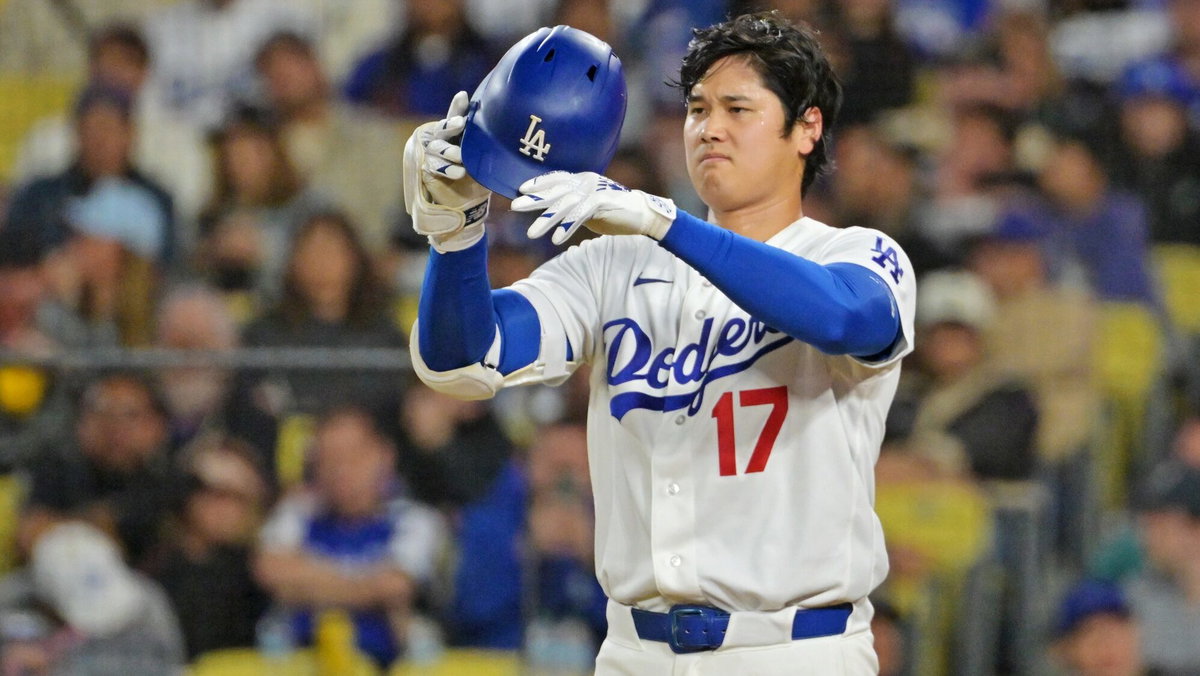
Since returning from his injury, Shohei Ohtani has not been the same and is batting with a .188 average in the postseason. This has now raised the question of whether his initial knee and bicep injury are fully healed. Bob Nightengale thinks we might see Ohtani in surgery during the offseason.
Watch What’s Trending Now!
“I wouldn’t be surprised at all when the season’s over… He doesn’t look right. You know, he’s hitting opposite-field singles, that sort of thing. Just the power’s not there,” said reporter Bob Nightengale in his interview with Foul Territory.
Shohei Ohtani’s struggles at the plate are becoming a serious concern for the Los Angeles Dodgers. Against the Milwaukee Brewers in NLCS Game 1, he managed a bloop-single and a harmless pop-up. He made contact, but neither swing showed the power that usually makes him dangerous.
The Dodgers eventually lost 2-1, leaving their offense searching for answers before Game 2.
With the series already slipping away, Shohei Ohtani’s power could become crucial. His quiet performance since returning from his injury has only increased the pressure on a lineup that needs more production.
He went 2-for-13 against the Braves in the NLDS, recording 4 strikeouts across the series. His recent struggles also included just 1 RBI in the last 23 games he has played. Those numbers help explain why Dave Roberts moved him down to fifth in the lineup.
Even after returning from injury, Shohei Ohtani has not consistently produced the results Los Angeles expects.
Ohtani’s left knee and right biceps injuries could be affecting the mechanics behind his swing, limiting his ability to generate power. Discomfort in his knee may affect his balance and lower-body drive, while the biceps strain could interfere with the strength and control of his swing. That combination could explain why he is making contact without driving the ball with his usual authority.
Instead of the powerful hits fans expect, Ohtani has produced weaker contact, raising questions about whether his body is allowing him to swing freely.
His Game 1 performance against Milwaukee showed why the Dodgers cannot ignore these concerns.
Ohtani opened the 2nd inning with a walk before scoring on Andy Pages’ second-inning single. However, his own hit later offered little evidence that his power had returned. In the eighth inning, Brewers left-hander Aaron Ashby challenged him with sinkers inside the strike zone.
Ohtani swung late at the final pitch and popped it up, ending the opportunity. For Dodgers fans, the problem was not simply getting on base, but making meaningful contact.
Shohei Ohtani returned to the lineup on September 23 after his knee and biceps problems forced him onto the injured list. He resumed hitting gradually, starting with swings off a tee before advancing through batting practice. The Dodgers kept him off the mound for the remainder of the season, allowing him to focus on hitting. Yet his return has not brought back the strong swings that made him one of baseball’s biggest threats.
With each strikeout, confidence questions mount.
Ohtani has struck out 4 times in 5 postseason games. He has spent years delivering extraordinary performances, making this prolonged struggle unfamiliar territory for him and Dodgers fans. If he begins pressing for results, finding a comfortable swing could become even harder.
Roberts, however, continues to believe his superstar can turn things around.
“If he’s in the batter’s box, he’s still a threat,” Roberts said before Game 1.
He added, “He swung the bat well against [the Brewers] last postseason. Their memories — those pitchers’ memories are long. Now it’s just up to Shohei to understand that and control the strike zone.”
Still, the Dodgers need more than encouragement as their offense tries to recover from Game 1.
Milwaukee held Los Angeles to just 1 run, despite Jacob Misiorowski needing 35 pitches to escape the second inning. The Dodgers loaded the bases during that frame, but Enrique Hernández grounded into an inning-ending double play. Milwaukee’s bullpen then shut Los Angeles out over the final 4.2 innings.
Freddie Freeman explained the missed opportunity, saying, “I thought we had a great plan. We executed against Misiorowski really well … We did our job there, just didn’t get the big hit tonight.”
Now, Game 2 gives Shohei Ohtani another chance to give the Dodgers’ offense a much-needed spark.
He does not need to hit a home run, but stronger contact would offer encouraging signs. A hard-hit ball could help him settle down and make opposing pitchers think twice. If Ohtani starts driving the ball again, the Dodgers could become a far more dangerous offense in this series. Otherwise, the defending World Series champs’ three-peat venture may be affected.