Imago
Courtesy: Minor League baseball via X
Imago
Courtesy: Minor League baseball via X
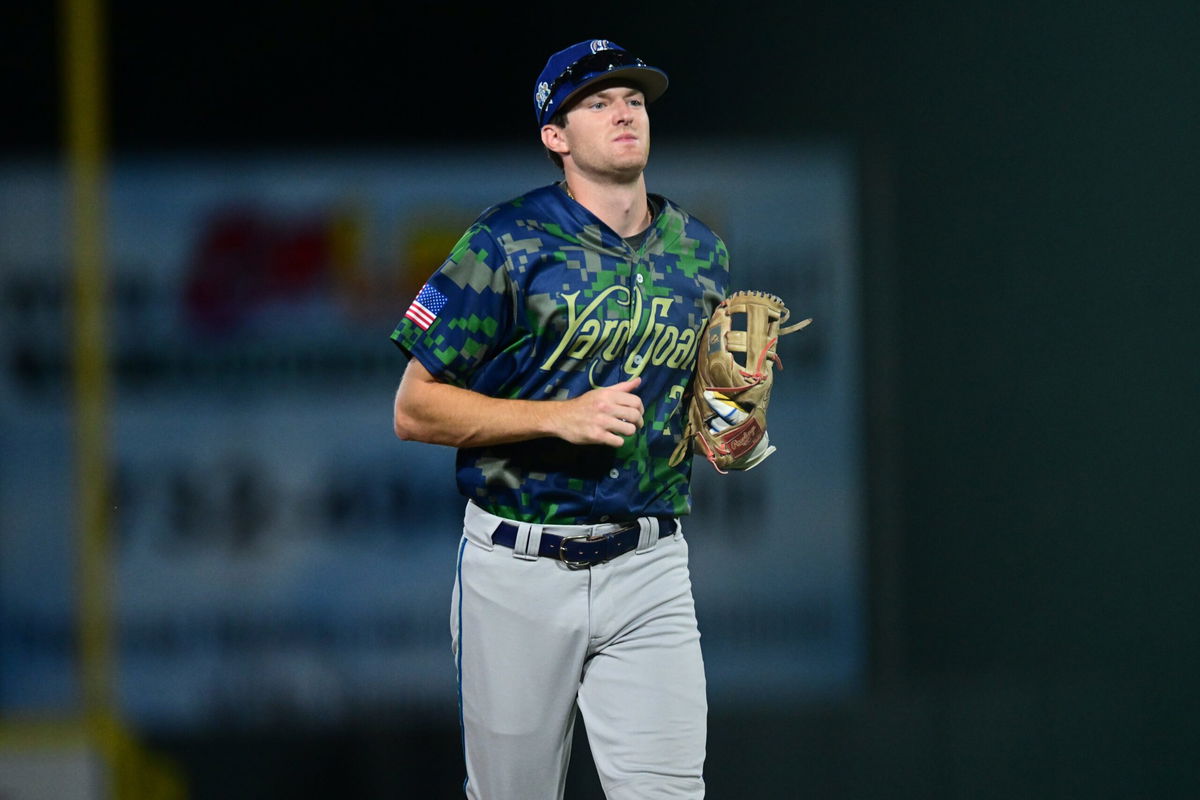
Four months ago, one of the youngest prospects from the Colorado Rockies was unable to speak. He couldn’t even move the right side of his body. And he was almost sure that life would soon be undone. Now, that young talent is swinging at baseballs and has just given a full-fledged interview since his surgery.


His first reaction after learning about the brain tumor was, “I’m going to be dead soon. This is unbelievable.”
Watch What’s Trending Now!
Braylen Wimmer opened up to The Athletic after what seemed like a very long and eventful four months for the 25-year-old. He mentioned how hard he worked to get back to full recovery.
“I’m lucky it all came back,” he expressed.
Wimmer was traveling to Scottsdale Stadium in the team bus on November 1, last year. He suddenly had a seizure and was taken to the hospital.
After a few hours of waiting, a CT, followed by an MRI, he was diagnosed with a brain tumor. What he assumed to be a panic attack and tried to laugh off was actually a Grade 2 astrocytoma.
Grade 2 astrocytoma is a slow-growing but invasive primary brain tumor that arises from star-shaped cells called astrocytes. They are classified as malignant (cancerous) because they infiltrate nearby healthy brain tissue, rather than staying contained, and can progress to higher-grade tumors. Because of their slow growth, they often allow the brain to adapt, which means symptoms can be subtle or develop over a long period.
The tumor was located in the area that controls speech and motor skills (the frontal and temporal lobes of the brain).
Wimmer had to go through an awake craniotomy to get rid of it. The doctors kept him awake by discussing baseball, family, and festivals during the surgery on November 19. But he lost his speech and partial movement following the procedure.
That was the hardest part of his recovery.
His health deteriorated as well. Wimmer dropped from 210 lbs to 172 lbs. Peyton Gray, his girlfriend, and Jill Wimmer, his mother, used flashcards and whiteboards to keep the communications going.
With all the help, young Wimmer did rather well with all the help, as he started taking one-handed swings on November 25. And that was less than a week after his surgery. It was an emotional point for him.
“Wow, I almost have a past life and a new life now,” he thought to himself. “It felt like the first time I ever hit a baseball. I can still do it.”
But these low-effort swings proved effective for his gradual progress.
Just eight months ago, the Rockies had to promote him to Double-A Hartford after dominating with High-A Spokane in the first half of the season. That impression led the franchise to send him to the Arizona Fall League.
The 23-year-old 8th round pick was hitting a combined .296 at High-A Spokane and Double-A Hartford before his Fall League fell short (.222 in 17 games). But now, he’s back at it.
Braylen Wimmer is now expecting to be ready for the season when Minor League camp breaks.
The biggest news is that his March 4 MRI didn’t show any recurrence of the tumor. But the real story isn’t just his return. It’s much deeper than that.
The mindset that made everything possible for Braylen Wimmer, post-surgery
Wimmer’s shift in perspective originated from the most unusual place. He was lying on the operating table. Awake.
The doctors were performing the surgery while trying to keep him awake. It was way more difficult than anything he had ever faced on the field.
As the pressure mounted, Wimmer decided to trust the process. For him, it was more of a mental test than a physical one. And the same mindset helped him with the recovery.
It usually takes around 8-12 weeks for a standard recovery. But athletes require almost 6 months to return to their full strength.
Xavier Isaac from the Tampa Bay Rays has just returned to spring training after a similar surgery from almost 8 months ago. The only other example of a speedy recovery comes from U.S. Open champion golfer Gary Woodland, who returned in roughly 4 months.
Braylen Wimmer had some help, too. And not just from his family and girlfriend.
Ryan Sharp, from Piedmont, had suffered from the same thing. He is now recovered and is fully healthy a decade later. As they went out for dinner, both realized that their connection runs deeper, from being diagnosed with the issue in their 20s to the procedure they underwent.
He shared everything from his experience, diet charts (fasting, cutting out sugar), and advice (using a hyperbaric chamber) that helped Wimmer get back on his feet quicker than he initially expected.
Chris Forbes, Colorado’s senior director of player development, a multi-time cancer survivor who is currently undergoing treatments, was present for Wimmer’s surgery. He made sure that Wimmer gets all the help he needs, walking through treatment options together. Forbes advised him to stay present and not worry about things like chemotherapy if the doctors had not mentioned it.
And now, Wimmer is back where he intended to be. It showed that Braylen Wimmer didn’t just have an ambition, he had the purpose to reach it. It is now a story that will serve many others on and off the field.
Written by

Edited by

Ahana Chatterjee