
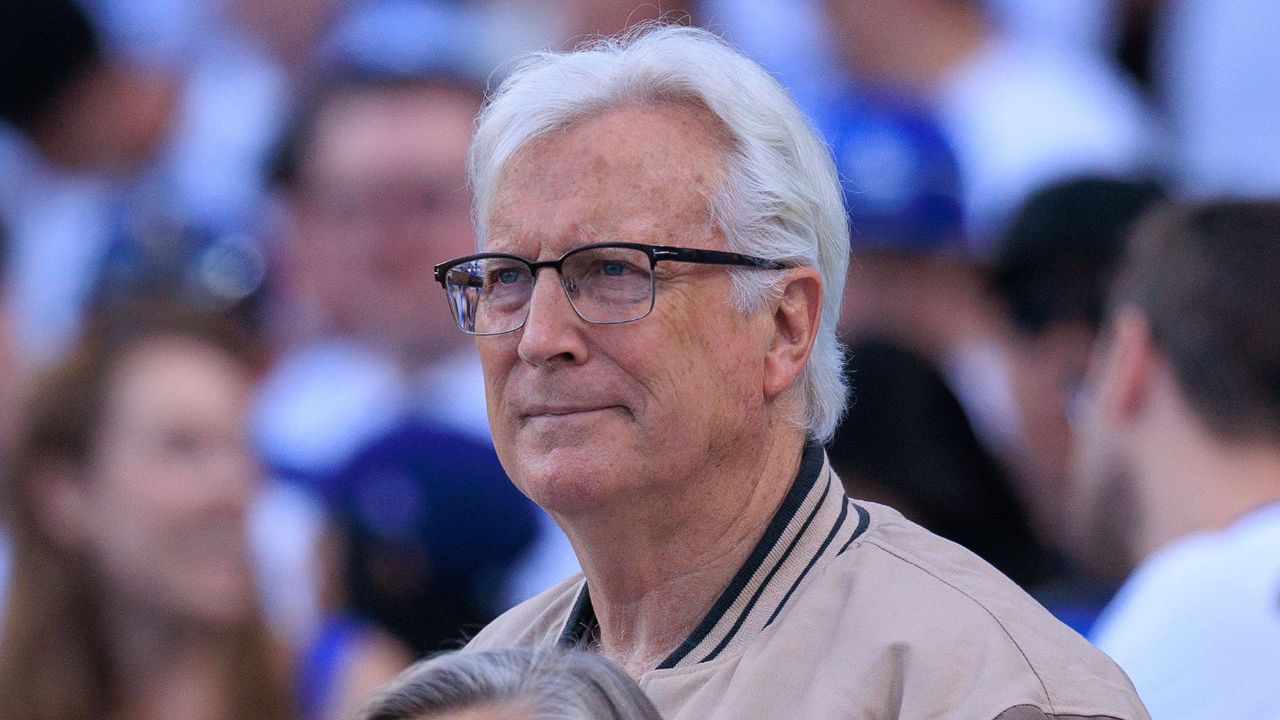
The Dodgers’ $2 billion-plus sale in 2012 looked like a blockbuster. Inside MLB’s ownership circles, though, the number raised a different question: why did the price suddenly jump? David Samson, then-president of the Miami Marlins, revisited the deal on the Pablo Torre Finds Out podcast.
Watch What’s Trending Now!
He recalled several groups competing for the Dodgers during their Chapter 11 bankruptcy, with Mark Walter and Guggenheim Partners, Steven Cohen, and another bidder all around $1.5 billion. Then the final figure crossed $2 billion.
“The first question that everyone in the owner’s room asks, what happened?” Samson recalled.
In 2012, Samson was well into his tenure, having been president for over a decade.
“In 2012, I was the president of the Miami Marlins, one of 30 teams in Major League Baseball, one of the 30 teams who vote on all sorts of things, including anytime a team is sold,” he further explained on the podcast. “You get a memo written by the commissioner’s office that explains every deal. But what’s always more interesting at owners’ meetings or the conversation that happens on the side of what is really going on. The Dodgers were in Chapter 11 bankruptcy back in 2012 because the owner was Frank McCourt, who was involved in a divorce from his wife, Jamie McCourt. They’re arguing, figuring out how to split up assets, and baseball wanted to get out from under the McCourts. So there was a sale process.”
At the time, Walter was hardly a familiar name in sports ownership.
“Had you heard of Mark Walter before he bid on the Dodgers?” Torre asked.
“I had not. He didn’t have a sports empire at that time. We assumed that Magic Johnson was a celebrity endorser,” Samson answered.
Then came the twist. Samson said MLB gave Guggenheim a special arrangement capping the amount of Dodgers broadcast revenue subject to revenue sharing. In effect, the new owners could retain more television money than they otherwise would have.
That changed the economics of the purchase. If the Dodgers could keep more of their broadcast revenue, paying a higher price for the franchise suddenly made more sense. The arrangement also set the stage for SportsNet LA, the Dodgers’ regional television network launched in 2014.
All in all, when Mark Walter’s Guggenheim Group took control, MLB oversight, which would have been strict, changed controversially since federal bankruptcy court had tightened the league’s options.
For smaller-market owners, the deal could have been difficult to swallow. Torre pointed to that frustration.
“And that very special arrangement, you’d imagine, would be very infuriating to say the Miami Marlins,” Torre said.
“So why would we not be furious?” Samson replied.
Yet the size of the Dodgers’ coming television revenue offered another reason to accept it.
What happened next made the 2012 decision even more consequential. Walter built a sports portfolio that included interests tied to the Lakers and Chelsea FC, while the Dodgers became one of baseball’s biggest financial forces.
Some Wall Street Journal and Forbes reports about Walter’s wider business empire have brought fresh attention to the original purchase. They have described federal scrutiny of his finances and moves involving other sports assets. Bill Simmons even speculated that the Dodgers could eventually follow suit.
“He’s already shed himself of the Lakers. He’s selling his Chelsea stake reportedly right now… And my guess is the Dodgers are going to be next,” he said.
The possibility matters because the Dodgers carry more than $2.1 billion in guaranteed and deferred obligations, with payments extending years into the future. Any ownership change could therefore reach into the heart of the franchise.
The Athletic has revisited the questions surrounding Walter’s original funding. Melody Gutierrez, Evan Drellich and Ken Rosenthal reported that some MLB owners had privately questioned his use of insurance money to help finance the purchase.
However, for now, there is no indication Walter plans to sell the Dodgers. But as scrutiny of his business empire continues, the story of how he bought baseball’s crown jewel is being viewed through a very different lens.