What Is Tatsuya Imai’s Height? Reports Show Major Disadvantage for New Houston Astros Pitcher

ADD US ON GOOGLE
Jan 1, 2026 | 6:16 PM EST

Imago
Credits: Blue Jays Nation
Imago
Credits: Blue Jays Nation
Imago
Credits: Blue Jays Nation
Imago
Credits: Blue Jays Nation

Tatsuya Imai takes the mound for the Houston Astros, and the chatter isn’t about his slider or fastball. Analysts are squinting, calculators out, debating whether the latest addition to Houston’s rotation will even cast a long enough shadow to intimidate hitters. In a league obsessed with size, every inch suddenly matters, and everyone’s measuring.
Watch What’s Trending Now!
What is Tatsuya Imai’s height? How is it different from other baseball elites?
Tatsuya Imai stands at 5’11, making him noticeably shorter than many elite pitchers in Major League Baseball. Most top starters, like Paul Skenes, Shohei Ohtani, and Kodai Yamamoto, range between 6’2 and 6’4, providing leverage and a longer release point. Historically, pitchers 6’4 held persistent advantages from 2008 through 2015, though performance varied widely outside that height.
Despite his 5’11 frame, Imai has maintained a fastball velocity over 91 mph and strikes out more than one batter per inning.
This shorter stature places Tatsuya Imai outside the typical height trends, yet he competes effectively on the mound. Taller pitchers historically enjoy better margins in control, angle, and perceived intimidation, but Imai’s 92 K in 72 innings show tangible production. Between 2016 and 2018, height became a less rigid predictor of success, suggesting skill can offset physical differences.

Imago
Source: MLB.com


For Astros fans watching him, his presence challenges the assumption that only tall pitchers dominate in the rotation.
What is the ideal height for pitchers? A look at Reports
Scouting reports and data show the average MLB pitcher height is 189.24 centimeters in 2025. Pitchers around 6 feet 4 inches historically have advantages in leverage and release point, affecting pitch movement and deception. Medical assessments suggest durability is influenced more by mechanics and workload than height alone, emphasizing consistent training and recovery.
Reports indicate that height does not directly determine velocity, as pitchers under 6 feet regularly reach 90-plus miles per hour. Mechanics, arm slot, and stride length are stronger predictors of speed and injury risk than stature alone. This demonstrates that while taller pitchers may generate longer release points, shorter pitchers can achieve similar effectiveness through precise technique and control.
Where does Tatsuya Imai Stand as compared to the top Japanese pitchers?
Tatsuya Imai stands noticeably shorter than many of Japan’s baseball giants when compared with their listed heights in the majors. Shohei Ohtani is recorded as around 6-feet-3-inches tall, giving him leverage both on the mound and at the plate as a two‑way force in MLB.
Kodai Senga, listed at about 6-feet-1-inch, is nearer Imai’s stature yet still taller, and both sit below the stature of some elite Japanese pitchers who have transitioned to MLB success.
Shohei Ohtani’s 6-foot-3-inch frame and electric fastball help him generate high velocity and power that set him apart among international stars across the league. Senga’s 6-foot-1 height has not held him back from producing near‑elite strikeout totals and effectiveness out of the rotation.
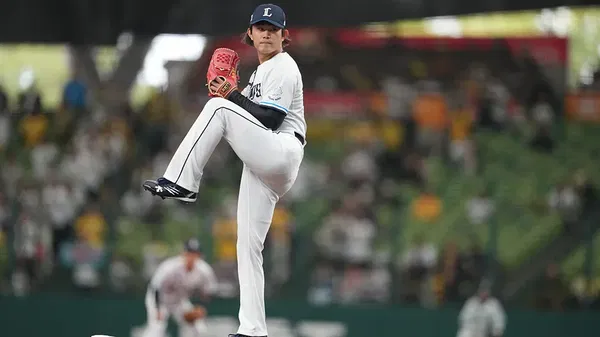
Tatsuya Imai at 180 cm brings a smaller profile to the mound relative to his peers, yet his projection in the Astros rotation reflects measurable skills and potential value.
Imago
Source: IMAGO
History shows that some shorter pitchers can thrive despite size norms favoring taller arms in today’s game. Marcus Stroman and others have succeeded with precise mechanics and strikeout ability at or below average height among MLB starters.
These exceptions reinforce that while height differences exist among elites like Ohtani, Senga, and Imai, performance also strongly depends on command, sequencing, and pitch quality.
How do International Pitching Standards Put Tatsuya Imai in Perspective
Tatsuya Imai’s stature gets clearer when we place him beside the world’s best arms, especially given how international pitching standards lean toward height. MLB’s pitchers average about 6 feet 2.5 inches tall, and most of the top starters on SwStr% leaderboards from recent years stood at least 6 feet 3 or taller.
This trend shows that taller pitchers often hold advantages in release extension and pitch effectiveness, even though success still comes through command and movement.
Looking at history, giants like Randy Johnson used their tall frames to power elite velocity and strikeout totals over long careers. While height isn’t a direct cause of spin rate or movement, taller pitchers have tended to dominate curveball and four‑seam effectiveness in modern MLB data.
At 180 cm, Tatsuya Imai stands below that typical profile, but this gap highlights how his success will hinge on precision and repertoire rather than leverage alone, reflecting a broader shift in international pitching standards.
Can Tatsuya Imai Outsmart Taller Pitchers? Experts Predict His Chances
Tatsuya Imai’s pitching profile suggests he might outsmart taller starters by using deception, command, and varied stuff rather than pure size. Scouts note his four‑seam fastball sits 95–97 mph with late armside run, and his slider generated a roughly 46 percent swing‑and‑miss rate in NPB, showing elite whiff potential even without a height advantage.

Imago
Credits: Reddit
His improved control, reducing walks to 2.5 per nine innings and striking out over one batter per inning, gives him a strong foundation to challenge taller pitchers’ leverage and release extension.
Experts also point out Imai’s low three‑quarters arm slot and unique offspeed mix can add deception that taller pitchers don’t inherently possess. His changeup, splitter, and Vulcan variation all posted strong whiff rates, indicating technique can offset a height disadvantage through pitch sequencing and movement.
While taller pitchers often benefit from downhill plane and extension, Imai’s advanced command and pitch variety suggest he has a credible chance to succeed against them if his skills translate to the major leagues.
Tatsuya Imai may stand shorter than Ohtani or Senga, but his arsenal demands attention. Scouts agree his deception, velocity, and pitch variety could make taller starters second-guess every swing. If Imai keeps refining command, Houston might prove that size isn’t the only metric that matters.