Imago
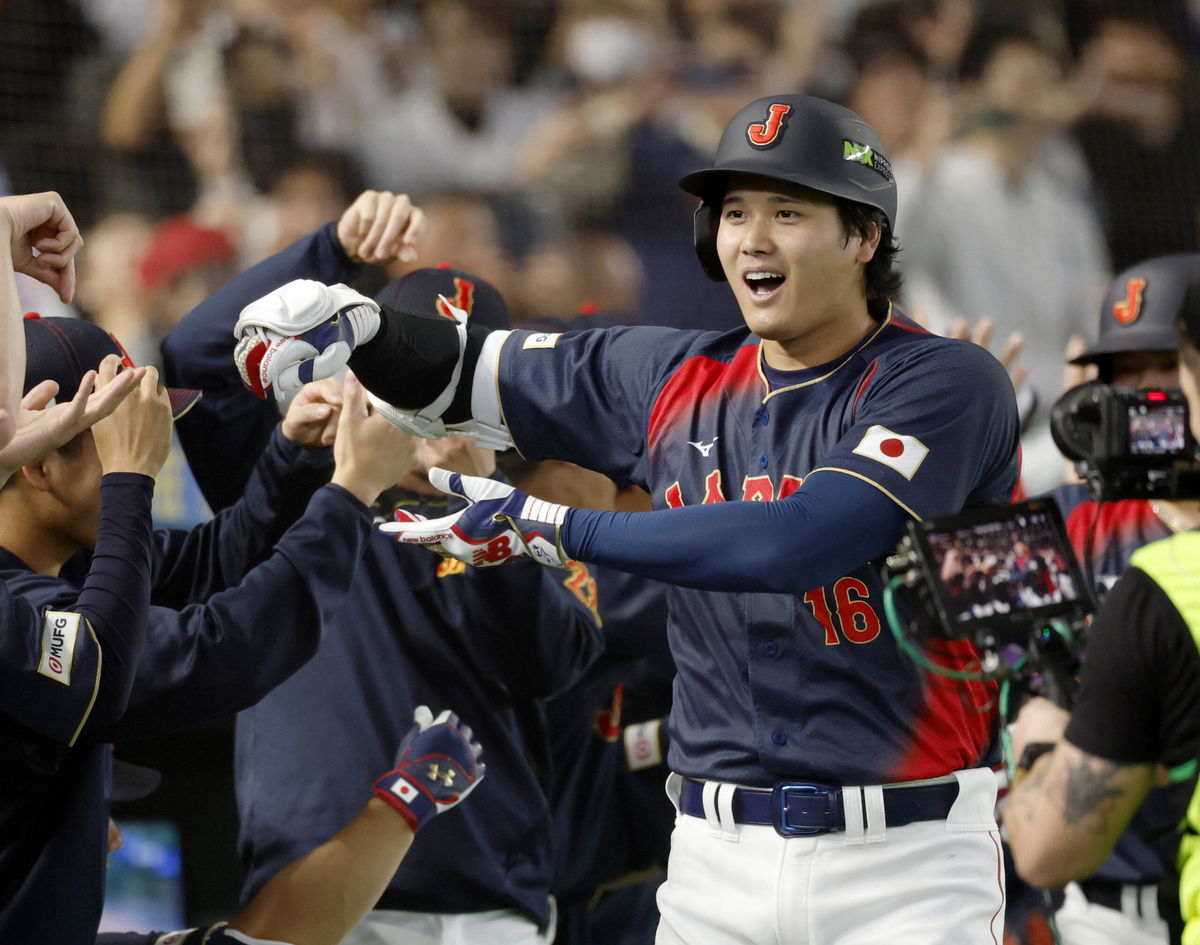
World Baseball Classic: Japan vs. Taiwan Shohei Ohtani of Japan makes a tea mixing gesture after hitting a grand slam in the second inning of a World Baseball Classic Pool C game against Taiwan at Tokyo Dome in Tokyo on March 6, 2026. For editorial use only PUBLICATIONxINxAUTxBELxBIHxBULxCZExDENxESTxFINxFRAxGEOxGERxGRExHUNxISLxIRLxITAxLATxLTUxLUXxLIExMKDxNORxPORxPOLxROUxSVKxSUIxSRBxSLOxESPxTURxUKxUAExONLY A14AA0005354686P
Imago
World Baseball Classic: Japan vs. Taiwan Shohei Ohtani of Japan makes a tea mixing gesture after hitting a grand slam in the second inning of a World Baseball Classic Pool C game against Taiwan at Tokyo Dome in Tokyo on March 6, 2026. For editorial use only PUBLICATIONxINxAUTxBELxBIHxBULxCZExDENxESTxFINxFRAxGEOxGERxGRExHUNxISLxIRLxITAxLATxLTUxLUXxLIExMKDxNORxPORxPOLxROUxSVKxSUIxSRBxSLOxESPxTURxUKxUAExONLY A14AA0005354686P
The World Baseball Classic isn’t exactly the average nine-inning stroll. Japan, the United States, the Dominican Republic, and Venezuela show up with rosters that could embarrass entire national leagues, and the scoreboard notices. Fans quickly learn that even in a “friendly” international tournament, there’s a hard edge lurking behind the ceremonial first pitch, where some games end before they’ve barely warmed up.


What is the Mercy Rule in baseball?
Watch What’s Trending Now!
In baseball, the mercy rule or the run-ahead rule is a special act that ends a game early when one team leads by a large number of runs after a certain point in the game. Commonly, 10+ runs after 7 innings or 15+ runs after 5 innings, designed to prevent excessive blowouts. The purpose is to stop contests that are no longer competitive and avoid unnecessary play when the outcome is essentially decided.
Under this rule, if a team’s lead is big enough after a minimum number of innings, the umpire declares the game over instead of playing every scheduled inning.
Many youth, high school, college, and amateur leagues use this rule to protect players and keep games from dragging on. MLB does not use a mercy rule, so professional games always go the full nine innings, no matter how big the lead gets.
How does the Mercy Rule work in the World Baseball Classic?
In the World Baseball Classic, the mercy rule ends a game early if one team gets way ahead by a lot of runs once enough innings are done.
A team that leads by 15 runs after five full innings will have the game called, saving both teams from more innings that feel unbalanced. If a game isn’t that lopsided early but still gets out of hand, a 10‑run lead after seven complete innings is enough to end it under the mercy rule.
This rule has been used many times.
South Korea’s 22‑2 lead over China ended after five innings in 2023 because the run gap hit the 15‑run mark. It also happened when Australia beat China 12‑2 in 2023, and the game stopped after seven innings once the ten‑run threshold was reached.
Imago
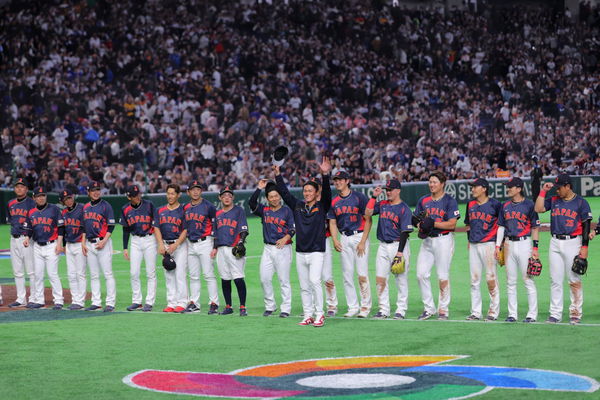
Japan team group, Mannschaftsbild, Totale JPN, MARCH 6, 2026 – Baseball : 2026 World Baseball Classic First RoundPool C Game between Japan – Chinese Taipei at Tokyo Dome in Tokyo, Japan. Noxthirdxpartyxsales PUBLICATIONxNOTxINxJPN aflo_322398041
The mercy rule in the WBC only kicks in after the required inning is fully complete, so even if a team piles on runs early, the tournament waits until the inning ends before stopping play.
Because of this rule, fans often feel both relief and tension, knowing a blowout might end soon but also watching how quickly one team pulls away. Umpires strictly follow these run thresholds so both fans and players know when a game might be called, and teams leading significantly have a real limit beyond which the contest just isn’t played out.
Is the Mercy Rule used in every round of the World Baseball Classic?
In the World Baseball Classic, the mercy rule is only used in the pool play and quarterfinal rounds, ending games early when one team has a huge lead and the game is clearly not close. Umpires will enforce this mercy threshold in those early rounds to protect players and keep the tournament moving.
Once the semifinals and championship game arrive, the mercy rule disappears, and every matchup is played for a full nine innings, no matter how big the lead grows, ensuring the biggest games are given their full stage. This change in rules between early and later rounds creates a clear line where the mercy rule stops and traditional nine‑inning play begins.
Do knockout rounds in the World Baseball Classic use the Mercy Rule?
In the World Baseball Classic, the mercy rule does not apply during any knockout round once the tournament reaches the semifinals or championship game.
This means blowouts in the final stages continue until the last out is recorded, preserving the full drama of elite matchups.
Earlier rounds like pool play and quarterfinals still use the mercy rule, ending games early if one team builds a big lead by a designated number of innings. Then, when the bracket tightens and the knockout pressure hits, the mercy rule fades away, forcing every team to battle through every inning.