
USA Today via Reuters
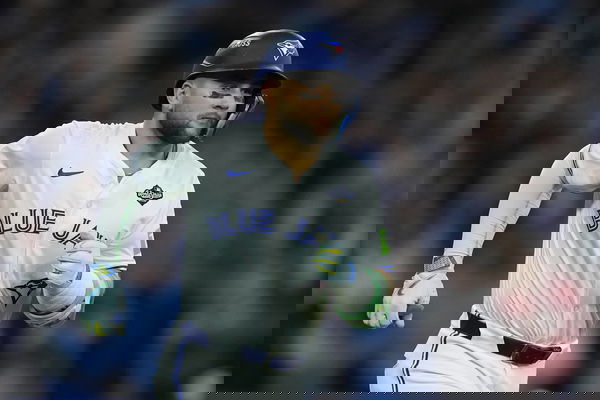
Jun 14, 2024; Toronto, Ontario, CAN; Toronto Blue Jays shortstop Bo Bichette (11) throws to first base to force out Cleveland Guardians right fielder Will Brennan (not shown) as Jays second baseman Isiah Kiner-Falefa (7) looks on in the eighth inning at Rogers Centre. Mandatory Credit: Dan Hamilton-USA TODAY Sports
USA Today via Reuters
Jun 14, 2024; Toronto, Ontario, CAN; Toronto Blue Jays shortstop Bo Bichette (11) throws to first base to force out Cleveland Guardians right fielder Will Brennan (not shown) as Jays second baseman Isiah Kiner-Falefa (7) looks on in the eighth inning at Rogers Centre. Mandatory Credit: Dan Hamilton-USA TODAY Sports
Position changes always get sold as flexibility. Sometimes they’re just panic dressed up as creativity. When the noise gets loud and the rumors get louder, smart players don’t flinch. Bo Bichette shouldn’t either. And if Boston is listening closely, the Boston Red Sox should understand this isn’t adaptability. It’s a warning sign.


Bo Bichette entered free agency, signaling openness to second base after brief World Series exposure. The decision emerged as market interest widened, including growing attention from clubs like Boston, it. His willingness followed teams’ questioning of his long-term shortstop defense despite consistent offensive production in leaguewide metrics. That openness reframed conversations around positional value rather than performance alone, entering negotiations this winter.
Watch What’s Trending Now!
Bichette’s market value has been built primarily on producing elite offense while holding the shortstop position. At shortstop, scarcity amplifies worth, especially for hitters combining contact rates with durability over seasons. Shifting him to second base removes that scarcity advantage immediately within free agency evaluation cycles.
Contract projections near 5 years and $150 million reflect premium shortstop expectations historically across markets.
History shows positional switches sometimes coincide with offensive regression, particularly among contact-focused infielders during transitions. Bichette’s value rests heavily on his bat maintaining rhythm across full seasons without role disruption. In 2025, he hit .311 with 181 hits, 44 doubles, and an .840 OPS overall production. Any adjustment risking timing or comfort could impact numbers central to his projected deal value.
Second base appears simpler, yet requires constant lateral movement, pivots, and double-play coordination under pressure. Bo Bichette’s injury history includes a September knee sprain that sidelined him for weeks during postseason play. Increasing movement demands could complicate recovery management over long schedules and colder months, league-wide conditions.
Defensive metrics already grade him below average at shortstop, signaling limited margin for sudden transitions.
Imago
MLB, Baseball Herren, USA World Series-Los Angeles Dodgers at Toronto Blue Jays Nov 1, 2025 Toronto, Ontario, CAN Toronto Blue Jays designated hitter Bo Bichette 11 runs after hitting a three run home run against the Los Angeles Dodgers in the third inning during game seven of the 2025 MLB World Series at Rogers Centre. Toronto Rogers Centre Ontario CAN, EDITORIAL USE ONLY PUBLICATIONxINxGERxSUIxAUTxONLY Copyright: xJohnxE.xSokolowskix 20251101_lbm_ss9_065
His second base performance spanned 5 World Series games, an extremely small sample size. Bo Bichette recorded a 1.000 fielding percentage, but limited innings restrict meaningful defensive conclusions and statistical reliability. Short-term efficiency does not reliably predict long-term adaptation at a new position under season-long stress.
Teams typically require multi-season data before reevaluating defensive stability during contract talks in free agency.
Moving Bichette also creates downstream roster challenges, since elite shortstops rarely reach markets unrestricted free. Replacing his production at shortstop would require either internal development or costly acquisition via trade. Boston’s reported interest heightens this tension, as the organization lacks surplus shortstop options internally currently. Maintaining Bichette at shortstop preserves positional continuity while maximizing lineup certainty for competitive planning purposes.
Bichette’s offensive consistency has anchored Toronto lineups across seven seasons at shortstop during the regular season. He finished second in the league with 181 hits, underscoring dependable contact skills annually measured. Preserving the environment and role reduces variables as he approaches a career-defining contract valuation period ahead.
If a second base transition occurs, evidence suggests that value stabilization would require extended adjustment time.
Flexibility sounds brave until contracts arrive, then positions matter more than experiments every winter. Bo Bichette built his value at shortstop, not during auditions conducted under postseason noise moments. If the Red Sox want certainty, the warning is simple: do not reinvent proven players.
Where do the Red Sox stand on Bo Bichette?
The Boston Red Sox are juggling options like a circus act with one hand tied behind their back, and Bo Bichette is quietly waiting in the wings. Boston has clearly studied his swing, his splits, even his grocery list, but they’re not ready to pull the trigger. Bichette’s name is out there, but his fate in Fenway remains a careful question mark.
The Red Sox are focused on securing Alex Bregman as their primary target, with negotiations still ongoing. If Bregman signs elsewhere, Bo Bichette becomes the backup plan, potentially moving to second base. Reports suggest acquiring Bichette would require a premium payment to Toronto, given his age and consistent offensive performance.
Securing either Bregman or Bichette would strengthen Boston’s lineup, addressing gaps left after the Willson Contreras trade. Fans can expect a more balanced infield, with a younger bat providing stability over the next six seasons. The financial impact would be significant, but the long-term offensive consistency could justify the investment and improve team performance.
Bo Bichette remains a tempting fallback, keeping Red Sox fans nervously checking every update. Boston’s approach shows patience, strategy, and a willingness to spend big if the timing aligns. Whether Bregman stays or Bichette arrives, Fenway’s infield is poised for serious attention this offseason.
