
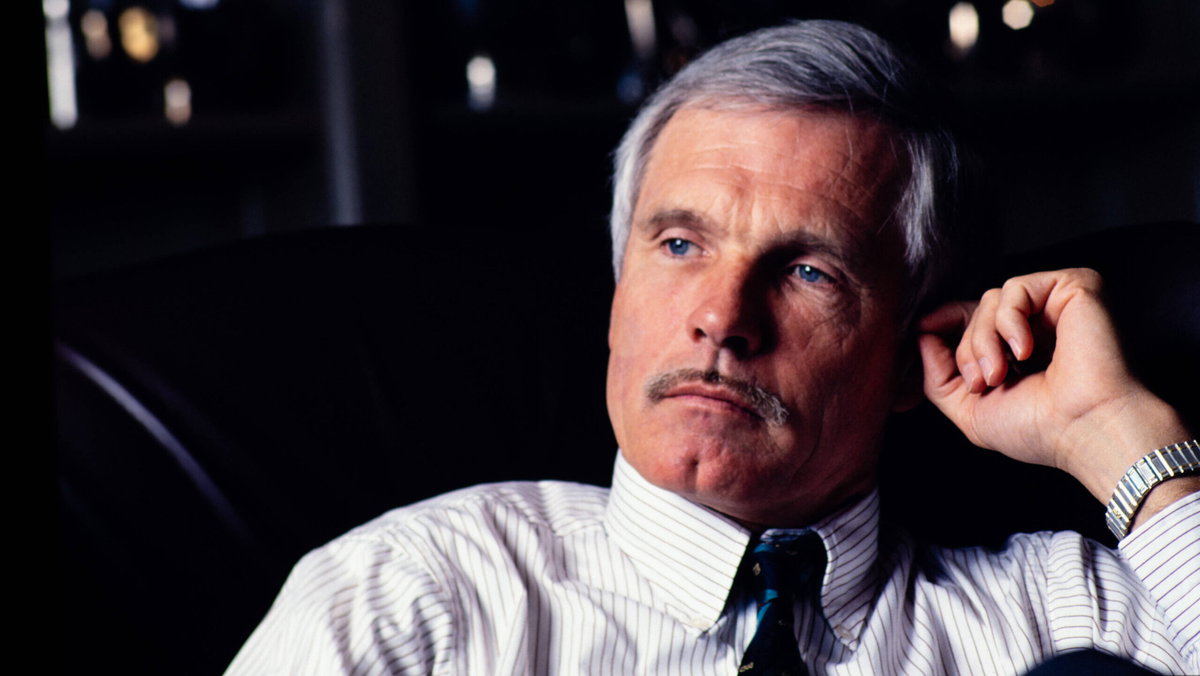
The sad news of a CNN founder and former owner of the Atlanta Braves has broken hearts. Ted Turner has passed away, and the Braves penned a heartfelt message to him.
Watch What’s Trending Now!
“Our good friend and former owner, Ted Turner, was one of a kind – a brilliant businessman, consummate showman and passionate fan of his beloved Braves,” wrote the Braves of their official X handle.
They added, “We will miss you, Ted. You helped make us who we are today, and the Atlanta Braves are forever grateful for the impact you made on our organization and in our community.”
Ted Turner passed away on May 6, 2026, at age 87. His family said he passed peacefully, surrounded by loved ones at his home.
In 2018, Turner confirmed that he had Lewy body dementia, a progressive brain disorder.


The condition affects memory, behavior, and movement, impacting about 1.4 million Americans yearly. Turner described it as something similar to Alzheimer’s but less severe.
With his health gradually declining, it took him away from public life and business.
But long before his passing, Turner reshaped baseball through his ownership of the Atlanta Braves.
He purchased the team in 1976, after they had finished 67-94 and struggled badly in ’75. By broadcasting games nationally on TBS, he expanded the Braves’ reach beyond the regional audiences.
This move built a nationwide fanbase, earning them the nickname “America’s Team” during the 1980s. And this is exactly where the team started to make noise. That exposure pushed the team to do better.
Especially during the 1990s, when the Braves dominated the league under Turner.
From 1991 to 1999, the Atlanta Braves won 8 NL pennants and reached the playoffs every season. Their pitching trio of Greg Maddux, Tom Glavine, and John Smoltz recorded a combined total of 45 wins during the 1995 championship season.
The Braves defeated Cleveland in six games to win the 1995 World Series. Tom Glavine allowed one run across 8 innings in Game 6 and helped the team seal the Series. This period marked one of baseball’s most sustained stretches of success under a stable ownership.
Even after selling the team to Turner Broadcasting in 1996, his influence on the Braves remained visible. The team’s national identity, built through television, has continued shaping fan engagement for decades.
Turner Field, named after him, hosted games from 1997 until it was closed in 2016. His approach showed how media and sports could combine to build long-term franchise goals.
His legacy with the Braves remains visible even today, after almost 30 years. But life outside of baseball first made Ted Turner, the Ted Turner.
Ted Turner’s life outside of the Atlanta Braves
Ted Turner purchased a struggling Atlanta station, WTCG, in 1970 and hoped that the nationwide audience would eventually start watching. Using satellite broadcasts during 1976, Turner transformed WTCG into America’s first successful superstation network.
The station aired Braves games, old movies, and sitcom reruns in every American household. Then Turner launched CNN in 1980 and changed the whole game.
He introduced the concept of a 24-hour news channel, which was previously considered financially impossible.
Many executives mocked CNN when it first started, but when the Gulf War broke out in 1991, the perception changed.
CNN reporters remained inside Baghdad during bombing attacks, delivering live footage that wasn’t even available to competitors.
Turner later expanded the operations, creating TNT, Cartoon Network, and Turner Classic Movies. His 1986 MGM purchase provided thousands of films, and when he walked out, he had control over films like The Wizard of Oz.
Outside of television, Turner captained the Courageous toward victory during the prestigious 1977 America’s Cup. That sailing triumph reflected Turner’s aggressive personality, which regularly pushed him to take ambitious projects like starting Cartoon Network and TNT, which later became global networks.
Turner was a philanthropist, too, donating $1 billion in 1997 to support the United Nations programs addressing poverty and crises. He later partnered with Sam Nunn, confronting nuclear threats through nonprofit awareness camps.
Turner also purchased nearly 2 million acres, restoring bison populations through several western states. In 2002, Turner co-founded Ted’s Montana Grill, promoting bison meat in his restaurants to restore the American bison population and offer a sustainable, healthier alternative to beef.
Those business ventures reflected Turner’s environmental concerns, especially protecting wildlife habitats across ranches.
After leaving television operations, Turner focused heavily on philanthropy following a Lewy body dementia diagnosis. He publicly revealed that he had the condition during a 2018 interview with CBS. Turner revealed that it was exhausting, he had forgetfulness, and it got worse with time.
Following Turner Enterprises and CNN’s announcement of his demise on Wednesday morning, not only the Atlanta Braves, but his ex-wife Jane Fonda and even the US President Donald Trump paid their tributes.
“Ted Turner helped me believe in myself. He gave me confidence,” Fonda wrote on her Instagram.
Trump described the “Mouth of the South” as “one of the greats of all time,” while mentioning, “Whenever I needed him, he was there, always willing to fight for a good cause!”