
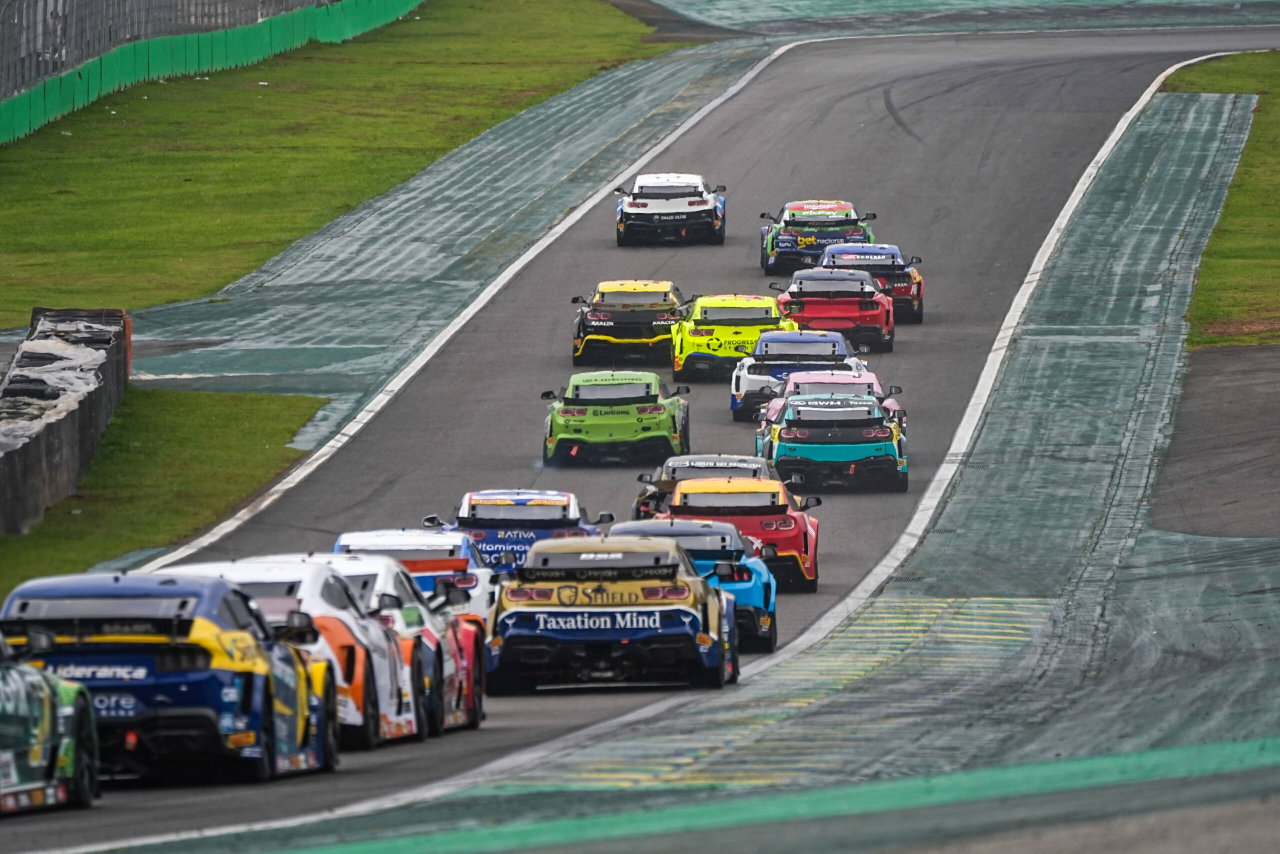
The best races in NASCAR history often overshadowed the fact that the field wasn’t tightly bunched together. To create closer competition, NASCAR introduced the Next Gen car in 2022 with more emphasis on aerodynamics. And while the change achieved that goal to an extent, the heavy reliance on aero over horsepower has created new problems, leaving many drivers and former stars frustrated with the direction the cars have taken.
Watch What’s Trending Now!
Denny Hamlin and Kevin Harvick have been two of NASCAR’s most outspoken critics of the Next Gen car. Now, Hall of Famer Mark Martin has joined in, taking issue with its design and arguing that OEM-driven changes have fundamentally hurt the quality of racing.
“I would work with the engineers, the smart engineers from the teams, to make the underbody not work at all. And I know there’s a challenge, and I know why there’s an underbody, because all the money was spent before there was one, making downforce there was getting out of control. So I get it, but I would want… Man, I’m just telling you, I want zero downforce in the front. Zero. Lift,” Martin said on The Dale Jr. Download podcast.
Later, he also opined that NASCAR’s continued emphasis on aero over increasing horsepower is “insanity.” He pointed to Formula 1 and IndyCar, saying they have found a much better balance between competitiveness and on-track racing.
F1, for instance, introduced its ground-effect regulations in 2022 to help cars follow each other more closely and reduce dirty air. It also used a Drag Reduction System (until 2025) and introduced active overtake modes under the 2026 regulations to further improve racing when cars are running close together.
NASCAR drivers, meanwhile, are screaming for more power. Kevin Harvick noted after the qualifying session in Las Vegas last year how wide-open the whole field was. He begged the sport to listen to the drivers and introduce more horsepower.
In 2014, at its peak, NASCAR Cup Series engines produced around 900 horsepower. Over the following years, however, NASCAR steadily reduced that figure. From 2015 to 2018, output was capped at 750 horsepower before dropping to a surprising 550 horsepower between 2019 and 2021.
Today, the standard engine package for most intermediate tracks produces 670 horsepower. For 2026, however, NASCAR increased output to 750 horsepower for road courses and ovals shorter than 1.5 miles. At Drafting tracks like Daytona or Talladega, though, the horsepower limit remains at 510.
It’s not enough, and like Martin, Denny Hamlin has also been calling for more focus on that part. But Hamlin sarcastically asked the community to stop asking for it in an episode of his podcast, opining that the OEMs would do nothing to hurt their pockets.
Martin recognizes that his solution of stripping downforce and adding horsepower would, once again, spread the field. But he also insisted that “traditionalists” like himself would not mind that. He remembers races from the 1990s that were considered peak.
The message is simple. Less downforce and more horsepower could make the racing better again. And with more drivers continuing to call for the same thing, the debate over the Next Gen car is unlikely to die down anytime soon.