
When NASCAR traveled to Daytona for the Coke Zero Sugar 400 to wrap up the regular season in August, it came with a brand-new superspeedway package. Reduced horsepower and smaller spoilers were introduced to improve racing on superspeedways. The aim was to address the fuel-saving strategy and help improve overtaking.
Watch What’s Trending Now!
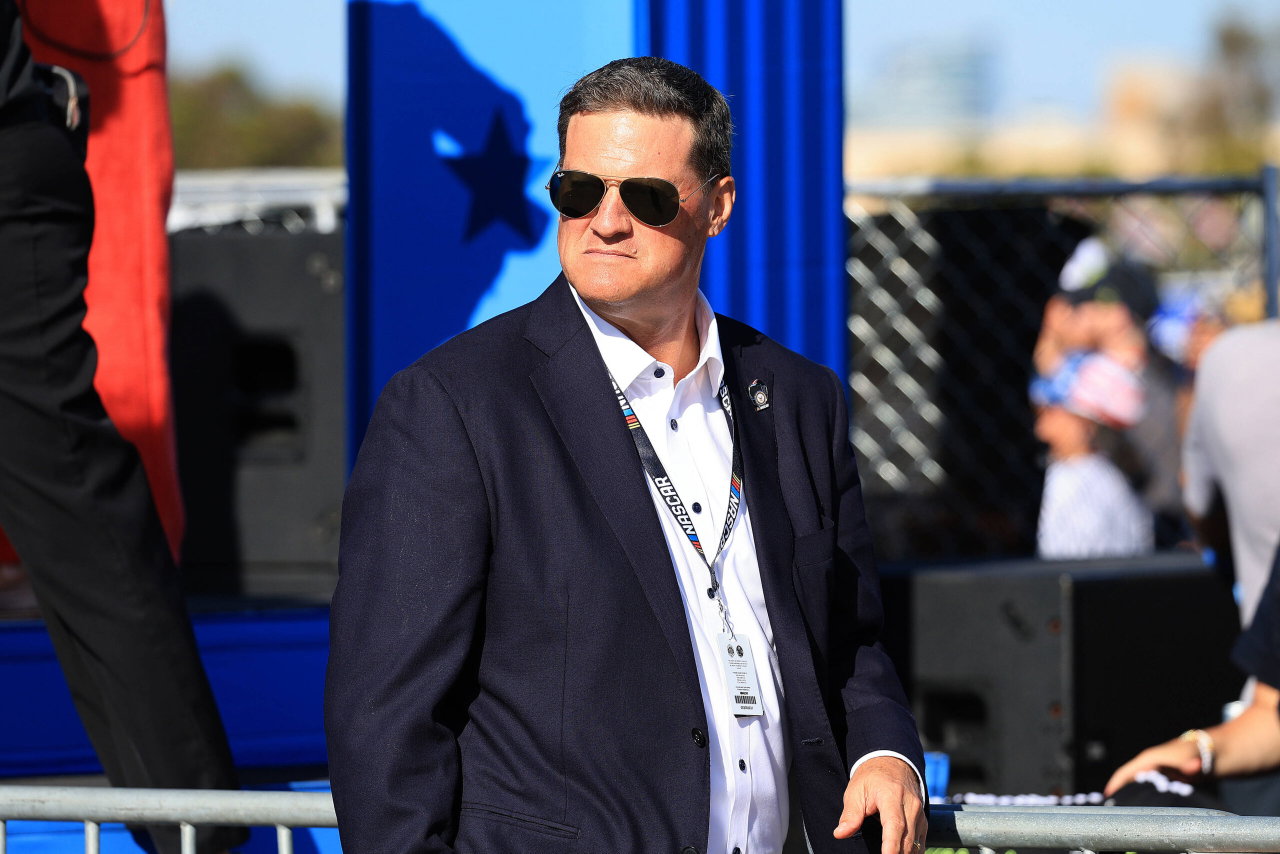
However, the changes didn’t have the same impact on every driver. While some noticed a difference, others struggled to see how the new package was improving the racing. NASCAR CEO Steve O’Donnell, speaking with former Cup Series champion Kevin Harvick, revealed that the results weren’t what NASCAR had expected.
“So I think you’re exactly right. Daytona 500, did we say, wow, that was unbelievable in terms of where we’re at? No. But directionally, I thought it was better,” said O’Donnell on the Happy Hours podcast. “I thought that you at least could pull out. There was some more movement where it wasn’t just three-wide all the way through lockdown; you couldn’t move. That’s not what we want.”
The key changes NASCAR made to the superspeedway package ahead of Daytona were reducing the spoiler size from 7 to 4 inches and lowering horsepower from 510 hp to 465 hp. They also replaced the splitter stuffers with wider ones. All of this was intended to address the excessive drag at superspeedways and the fuel-saving strategy, which fans have voiced their dislike for on multiple occasions.
NASCAR hoped the reduced drag would allow cars to experience less speed fall-off when running in the middle of the pack compared to running in clean air. Drivers had previously felt that the difference made it nearly impossible to overtake on superspeedways.
But after the Daytona race, RFK Racing owner-driver Brad Keselowski said that he felt the package was too similar and couldn’t really make out what the changes were supposed to do.
23XI co-owner and Joe Gibbs Racing’s driver Denny Hamlin said that the changes were good, but not drastic enough to make the difference it aimed to. Hamlin suggested that NASCAR should go to the extreme it can with these changes if they want to see the impact in the near future rather than sometime next year.
While NASCAR’s CEO admitted that the changes didn’t make the difference NASCAR expected, there are glimpses of it being in the correct direction, and he did say that more changes could be expected on the superspeedway packages to make the cars race better.
“I think there’ll be another tweak potentially for Talladega, like directionally, to kind of continue that and see how that goes,” said O’Donnell. “And hopefully that continues to go in the right direction. And I think, even looking at how those races play out in terms of formats, we want to have those discussions in the future as well.”
NASCAR looks to be going with the slower and more meticulous approach themselves. A big reason for that could be the will to monitor what each change brings, in order to ascertain what is working and what isn’t.
Talladega is the last superspeedway on the calendar, and there are still four races to go before the garage heads to Alabama. What kind of changes NASCAR can make to the already updated superspeedway package will be interesting to see.
One of Hamlin’s suggestions was to make the spoilers even smaller. The No. 11 driver said that NASCAR had the option to do that, but it seemed like too much for a mid-season change. Even smaller spoilers would reduce the drag even more, which ideally would make overtaking easier.
While NASCAR continues to make tweaks, it’s only fair to point out that the organization is listening to everything being said, be it from analysts and broadcasters or drivers and even fans. With steps being taken to improve superspeedway racing, NASCAR fans will take note that everything is considered feedback, and the organization will do what it can to rectify any issue that would improve the experience of racing and watching races.