
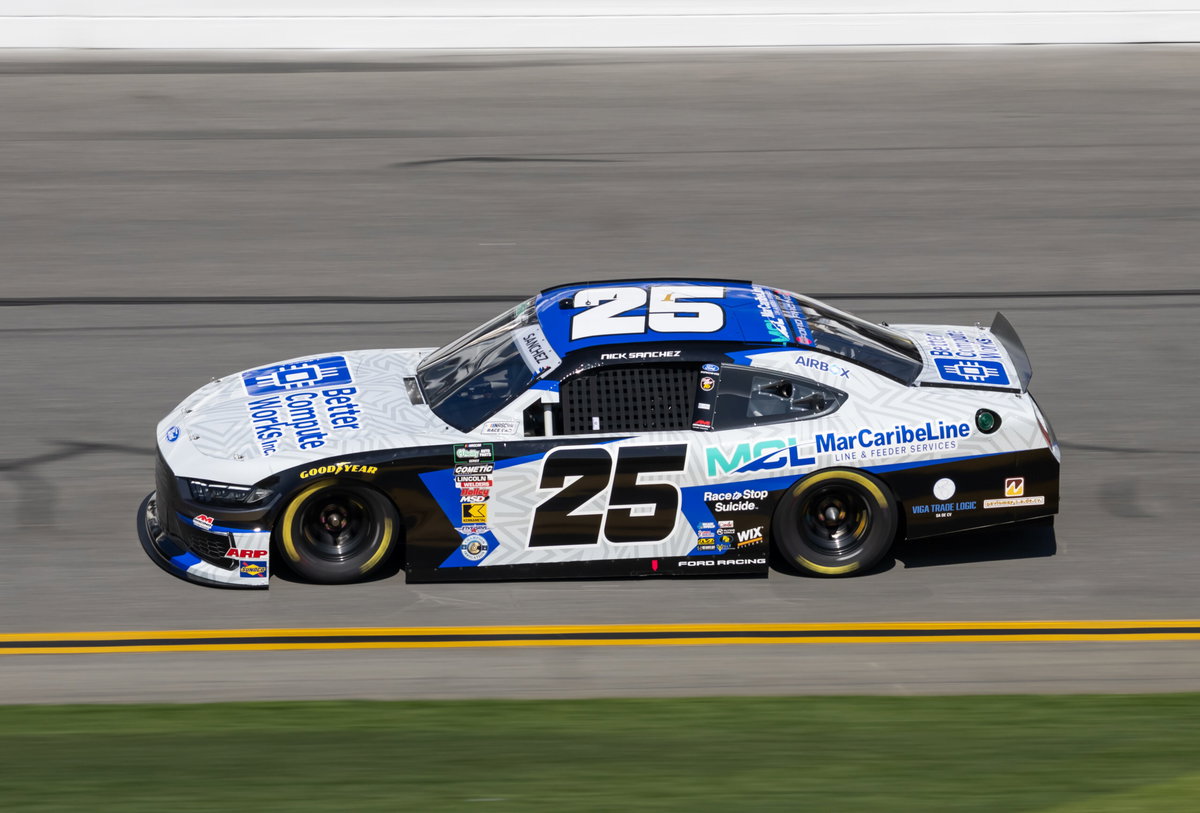
For decades, the NASCAR All-Star Race was supposed to represent the sport at its best: The biggest stars, the loudest atmosphere, and the kind of made-for-TV spectacle that could pull both hardcore fans and casual viewers. The 2026 edition of the race was supposed to exceed even that. Bringing the All-Star action to the Dover Motor Speedway for the first time, it also meant that the event’s last venue, North Wilkesboro Speedway, could be freed up for its first official, points-paying regular season Cup race since 1996.
Watch What’s Trending Now!
But almost like every other year, the result was an unsatisfactory racing product. Here’s where it’s always gone wrong:
The dust had never settled
Started in 1985, the NASCAR All-Star stands as an annual, non-championship exhibition event designed as a high-stakes playground for the sport’s elite. Since its inception, the event has functioned as NASCAR’s primary laboratory, used to test radical rules, engineering packages, and formats. Like the changes they made for the 2026 race.
It all started with the first race in 1985 at the Charlotte Motor Speedway. It featured 12 race winners from the previous season. With 70 laps to decide the winner, Darrell Waltrip became the inaugural champion. Since then, apart from the 1986 All-Star race, the exhibition consistently took place in Charlotte till 2019.
The 1986 edition went down at the Atlanta International Raceway. However, the attendance plummeted, prompting NASCAR to move the event back to Charlotte. While the inaugural year garnered over 50,000 footfall, only around 18,000 people showed up to the Atlanta exhibition race. As a result, the All-Star Race remained anchored to Charlotte for over three decades.
But since 2019, the scheduling has turned the NASCAR All-Star Race into a touring spectacle. It has suffered an identity crisis since then, moving to Bristol, then Texas, then North Wilkesboro, and finally Dover. This constant hopping has prevented the event from building any localized tradition or consistent fan attendance.
However, NASCAR made this move with the intention of revitalizing the event’s identity. In 2020, the All-Star Race took place at Bristol Motor Speedway in Tennessee. It was during the COVID pandemic that several guidelines allowed only partial crowd attendance. Despite that, the event drew around 30,000 people in attendance. NASCAR saw it as a success and decided the exhibition race did not need to be anchored to Charlotte to be relevant.
Following the success at Bristol, NASCAR and SMI formally abandoned the idea of a permanent home. They realized the event could serve as a floating wildcard, bringing unique value to different markets. In 2021 and 2022, Texas Motor Speedway hosted the All-Star Race, followed by North Wilkesboro Speedway from 2023 to 2025. But the numbers did not have any major jump.
Although North Wilkesboro managed to have a full-house audience, the Texas Speedway was too big to fill. Something similar happened at the NASCAR 2026 All-Star Race. And it was too evident to ignore, given the other hoard of issues Dover failed to avoid.
Dover couldn’t deliver
Analysts, for starters, were especially ticked off with how the historically short race looked nothing like its own self heading to Dover. Notably, the non-points paying race had a staggering 90-minute practice, evidently one of the longest of the season. What’s more concerning is many qualified All-Stars didn’t even get a chance to compete in the main race despite being “eligible”. For context, what makes a driver a qualified All-Star is winning a points race in the last two seasons/being a former champion.
In past years, NASCAR hosted a separate All-Star Open for all non-eligible drivers to fight for the handful of “Open” spots in the main event. The Open race was one of the most exciting parts of the weekend. Fans would get to see drivers, who don’t usually win or lead races, vying for spots in the main race leading to excellent racing action. However, the structure was changed this time.
NASCAR put all its qualified all-Stars and the non-qualified drivers on the same track at the same time. The result? Big names and eligble All-Stars like Ryan Blaney, Kyle Larson and Chase Elliott’s chances ending before the end of Segment 1 owing to crashes by drivers not locked into the 26-car final segment. In fact, 24 out of 36 cars had already fell prey to a race incident before the actual race even began. Now, if that’s not unfair, what is.
“That simply cannot happen ever again. NASCAR must immediately return to having two separate races, as it had done for every other year of this event,” The Athletic’s Jeff Gluck noted.
But that was not the only thing that made the All-Star weekend an entertainment packed affair in the past. Sporting a shorter run-time of 1.5-2.5 hours, it was enough incentive for casual fans to enjoy without sitting through a four-hour traditional NASCAR race. The race also worked perfectly as a short, fast-pace event, especially due to its placement before the sports’ longest race, the 400-lap spanning, 5-hour long Coca-Cola 600. Only that didn’t happen this time.
Instead, the final product was a 350-lap exhibition race (a 200-lap final segment following two 75-lap segments) with longer practice sessions that took four hours to complete! It was a long race because NASCAR and SMI didn’t want to take laps away from those who attend races at Dover every year. To simulate an ‘open race’ dynamic, the first half featured a full field with an invert and eliminations.
What’s more, the two 75-lap segments before the start of the actual race also led to widespread confusion. The hilarious revelation came to the forefront during the post-race press conference when Hamlin asked reporters if they knew when the race actually started. Two reporters sitting next to each other had completely different answers.
“See? There you go,” Hamlin said. “I think we should know when the All-Star Race starts. Let’s start there first.”
Other drivers were also far from satisfied.
“All-Star Races typically are like the shortest race of the year,” said Chase Briscoe, who finished second place. “I felt like it was a Coke 600 or something, or the Southern 500. It took forever. You’ll have that feeling next weekend or the next, that come lap 100 or 200, ‘Man, we’re only a quarter of the way or halfway into the race’. We got past both 75 lap runs and it was like ‘Man, we have another 200 laps?’ It was just a long race.”
“It just doesn’t feel like All-Star weekend,” Bubba Wallace noted. “It just feels like another race weekend.”
“It feels like a normal weekend,” Elliott then said. “I would say it feels the least like an All-Star weekend than it ever has in my career. I don’t know if it’s just because I’m not used to having an All-Star Race here (at Dover).”
Drivers like Denny Hamlin also also took an issue with the race being held during the day.
“I don’t know if it’s just me, but I feel like an All-Star Race should be at night,” the race winner said, I don’t even care where it is. Night was always something that was always… I’m not trying to throw mud. They did as well as they possibly could, given where they put this track in the schedule and whatnot. But at night somewhere… I definitely prefer Dover as a points race.”
But there were reasons for NASCAR to change the timings. Dover is one of those NASCAR ovals that lacks lights over the track. As a result, a traditional nighttime All-Star Race was physically impossible without bringing in lighting infrastructure. Along with that, the proximity to the Dover Air Force Base never allowed them to install stadium lighting. As such, lights required for a night race would interfere with flight operations and safety protocols at the active military installation.
That’s not to say that a day race worked, and fans also agree. When Jeff Gluck posted his weekly ‘Good Race or not, only 34.2% users responded with a yes. That leaves a staggering 65.8% who answered with a resounding ‘No’.
What drew attention to the bigger picture?
The Dover Motor Speedway has a total capacity of 54,000. While the venue had some packed sections, broad camera angles revealed empty grandstands. To that end, almost 10,000 seats were reportedly left vacant. Here, the reasons could be anything from ticket costs, cultural realignment, new format, or midday time slot. But the bigger picture showed the gradual decrease in the value of the NASCAR All-Star Race due to constant venue relocations.
Carolina arguably stands as the heart of NASCAR as thousands of core-industry based around the region. Although Dover is also regarded as a promising market, but not as a place of diehard fans like the regions of North and South Carolina. That evidently stood out as one factor for lack of attendance in the 2026 All-Star Race.
But that isn’t the sole reason behind Dover’s criticisms. Historically, the All-Star Race relied on the electric atmosphere of a “Saturday Night Shootout.” Because Dover cannot support night racing due to local constraints, the race was held in the middle of a Sunday afternoon. As a result, many felt it lacked the vibe of an All-Star Race.
“I woke up Monday, and I’m like, ‘Where are we racing at? Oh, it’s Dover. It’s All-Star,” said Bubba Wallace. “It doesn’t feel like All-Star weekend. That sucks. I think from a fan standpoint now, the All-Star hasn’t been anything like it was back in the heyday… It just doesn’t feel like All-Star weekend. To me, it feels like another race weekend. I’m having to tell myself that this weekend doesn’t really matter; let’s go out and try new things, different things. It’s just like, blah. And I hate that. I hate that for the sport. I hate that for the fans. We need to have some fun interaction and All-Star type vibes, and you don’t get that here.”
Quite a similar sentiment was shared by many other competitors of the 2026 All-Star Race as well. So, this now raises the question of how NASCAR can address the concerning issues that have left fans, drivers, and others feeling disappointed with the changes made to the exhibition race.
The problem is major and needs to be resolved in order to restore the charm that the event once had during its glorious days in Charlotte.