
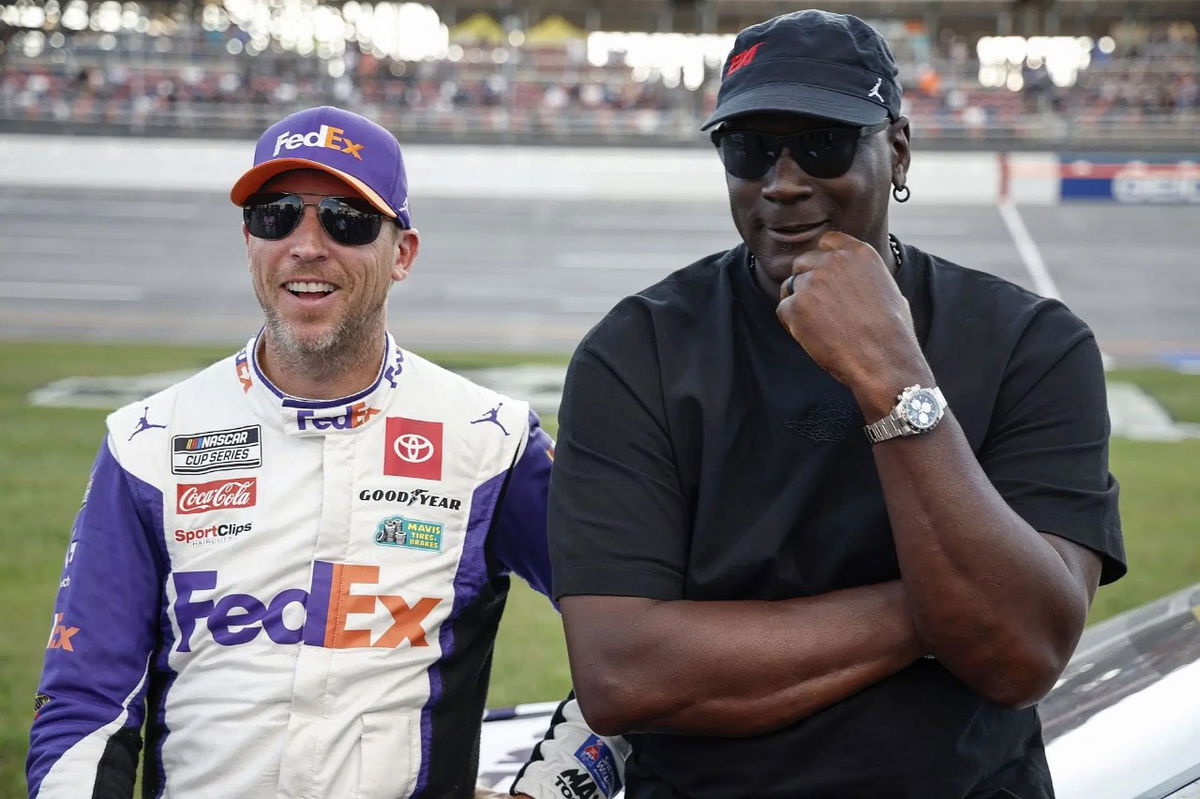
The fight that put NASCAR’s business model under a federal microscope did not begin in 2026, nor did it end with a handshake. It began with a charter dispute in 2024, reached a trial in December 2025, and raised difficult questions about how NASCAR treated the teams that make its racing possible. It also put the charter system’s future and team owners’ influence in question.
Watch What’s Trending Now!
By the time NASCAR reached its 2026 finale at Homestead-Miami Speedway, the courtroom battle was nearly a year behind it. But seeing NASCAR and Michael Jordan’s 23XI Racing share an end-of-season celebration offered a striking measure of how far their relationship had moved since the dispute and what the sport might build from that change.
“A year on from an antitrust trial that rocked NASCAR, the two principal parties of that lawsuit held a party together Saturday night before NASCAR’s final race of the year in a symbolic scene of the renewed camaraderie in the sport,” reported Adam Stern for Sports Business Journal. “Held at the Amazonica restaurant in the Brickell neighborhood of Miami, the event put on by Michael Jordan’s 23XI Racing team and NASCAR was in many ways a typical end-of-season soiree with a performance by the celebrity DJ Khaled, drinks and hor d’oeuvres, and mingling among industry dwellers.”
The case began with NASCAR’s September 2024 charter offer for the 2025-31 seasons. Charters guarantee a place in the Cup field and provide a share of revenue. Thirteen of 15 organizations signed.
23XI Racing and Front Row Motorsports refused, arguing the terms offered teams too little financial security and influence. Introduced in 2016, the system had become central to team valuations, sponsorship negotiations, and the financial structure of the Cup Series.
The teams sued, seeking $365 million in combined damages. They accused NASCAR of using its dominant position in top-level stock-car racing to impose unfair terms and exercise illegal monopsony power.
NASCAR denied the allegations. At issue was leverage: teams invest heavily but depend on NASCAR for access to its premier series.
The consequences were visible through much of 2025. Without charters, 23XI and Front Row competed as open teams, qualifying for races rather than relying on guaranteed spots and charter revenue. The teams said a loss could threaten their future; NASCAR faced scrutiny of its charter system and dealings with owners.
The trial began in Charlotte in December 2025. Michael Jordan, 23XI co-owner Denny Hamlin, and NASCAR chairman Jim France testified. After eight days of testimony, the parties settled on December 11, the ninth day, before the jury could deliver a verdict.
Financial terms remained confidential. The agreement restored charter status to 23XI and Front Row for 2026 and provided for amended terms that included a form of “evergreen” charters for all charter holders, subject to mutual agreement. It offered teams a path to greater long-term security, though not an end to every disagreement.
That context made the Miami party more than a seasonal get-together. The settlement ended the courtroom fight, but NASCAR still had to rebuild working relationships and create a more stable business environment. The joint celebration suggested both sides were ready to move forward.
Spire Motorsports CEO Jeff Dickerson offered a broader assessment of what that process requires. Speaking to SBJ at Homestead on Saturday, he addressed the responsibility shared by everyone with a stake in NASCAR.
“Our sport, for good or for bad, has a lot of stakeholders that have opinions on what it needs without having the proper frame of reference of what it was and why it was that,” Dickerson told SBJ at Homestead on Saturday. “What I want is everybody, including the teams, fans, and media partners, all of us truly having the sport’s best interest at heart, and we’re suggesting changes. And I don’t want us to take for granted that NASCAR listens to all of us, because I’m not sure that’s exactly how it works in other sports.”
The next challenge is turning shared interests into progress. Teams need a business model that supports investment in cars, people, and facilities. Tracks need fans, while broadcasters need compelling races and recognizable drivers who can bring new viewers. NASCAR must balance those demands without losing the competition that keeps longtime fans invested.
There are reasons for cautious optimism. The 2026 Homestead finale was announced as a sellout, continuing the championship race’s capacity streak dating to 2014. The Chase also returned, replacing a winner-take-all finale with a 10-race postseason in which points determine the champion.
But one successful weekend cannot solve NASCAR’s longer-term challenges. The sport needs compelling racing, drivers who can become mainstream names, and confidence among teams that their investments have a future. Stronger teams can produce better competition, giving tracks and broadcasters a stronger product to sell.
The Miami party did not mean every disagreement had disappeared or guarantee smooth negotiations ahead. But it offered a different image from December 2025, when NASCAR’s future was being argued in federal court. The legal battle is over. Whether the goodwill lasts depends on what NASCAR, its teams, tracks, and media partners do next.