
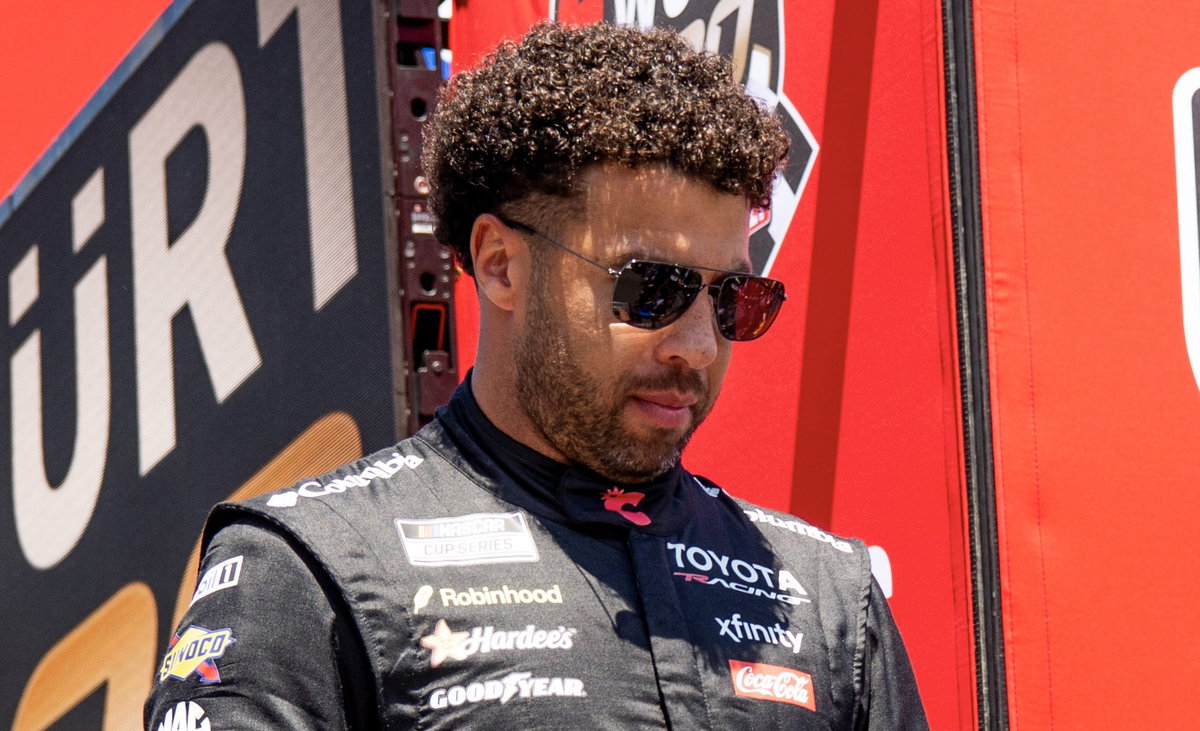
Winless since his Brickyard 400 triumph in July 2025, Wallace entered the Phoenix October race still searching for his first win since the aforementioned date, carrying a drought that had stretched to more than a year. He led 52 laps and looked poised to finally close the deal, only for a late pit-road speeding penalty to derail his afternoon. For a driver known as his own harshest critic, the disappointment hit hard. Now, crew chief Charles Denike is focused on helping Wallace learn from the mistake without letting it define him.
Watch What’s Trending Now!
“We both have to lift each other up when we struggle or when we make a bad move or a bad decision so that we approach that just like we would any other time that we had something not go our way by the end of the race. And we look at what any of us could have done different,” Denike told SiriusXM NASCAR Radio.
Charles Denike knows Bubba Wallace doesn’t need anyone to explain how much Sunday’s Phoenix Raceway race hurt. The decisive moment came on Lap 285 of the 312-lap Freeway Insurance 500. Wallace had taken control of the race late in the afternoon, leading when Kyle Larson crashed into the Turn 1 wall on Lap 283.
The caution created one final opportunity for teams to make a strategic call before the finish, and Wallace brought the No. 23 Toyota to pit road for four fresh tires. The decision offered a potential advantage, but it also left Wallace needing a clean trip through Phoenix’s awkwardly curved pit lane. Three drivers stayed out, while others opted for two tires.
Wallace was the first among the contenders to take four, and he exited pit road in sixth place. Then NASCAR called him for speeding. The penalty sent him to the rear, forcing him to restart 24th with just 18 laps remaining. Instead of fighting for the win, Wallace had to salvage whatever positions he could. He ultimately finished 17th.
Wallace understood how the mistake happened. Phoenix’s curved pit road makes it difficult to judge both speed and distance, particularly when drivers try to avoid losing time entering their stalls. He explained that cutting too much distance through the corner while accelerating can trigger a speeding penalty. But knowing the cause did little to ease his frustration.
“There’s nobody better today. Until you just give it away, so unfortunate. But all I can do is blame it on myself and keep on fighting,” Wallace said after the race.
The result was especially painful because the No. 23 had shown genuine speed. Wallace scored points in both stages and led more laps than he had in any other race this season. While teammate Tyler Reddick went on to win, Wallace was left wondering what might have happened if he had simply completed that final pit-road run without a penalty.
Denike, meanwhile, has been examining the situation beyond Wallace’s mistake. He said the team reviewed how the car approached the pit stall, including the point at which it needed to remain outside the hash marks. The goal is to identify clearer visual references and apply those lessons at other tracks, rather than treating Phoenix as an isolated problem.
Wallace’s frustration also reflects a season in which costly setbacks have repeatedly interrupted promising runs. At Martinsville in March, Wallace made contact with Carson Hocevar after Hocevar passed him on a restart, spinning Hocevar and damaging his own car badly enough to end his race in 36th. Wallace later apologized, admitting he had been frustrated and that Hocevar had done nothing wrong.
Then came EchoPark Speedway in July. Wallace appeared headed for a runner-up finish before NASCAR penalized him for advancing his position below the yellow line on the final lap. The penalty dropped him to 29th, turning what looked like a strong points day into a major loss.
Those incidents have made Wallace’s ability to reset an important part of his season. He has shown he can contend, but the results have not consistently reflected that pace. After Phoenix, he sat 12th in the Chase standings, 162 points behind leader Kyle Larson, with three races remaining. That deficit leaves him facing a steep climb if he hopes to enter the championship fight.
For Denike, the task is not to convince Wallace that the penalty did not matter. It cost the team a legitimate shot at winning. Instead, the crew chief wants both driver and team to take responsibility, learn from the mistake, and move forward without letting disappointment dictate the next race.
Wallace may be his own harshest critic. But with the season nearing its end, turning that self-criticism into cleaner execution matters far more than dwelling on another missed chance.