Imago
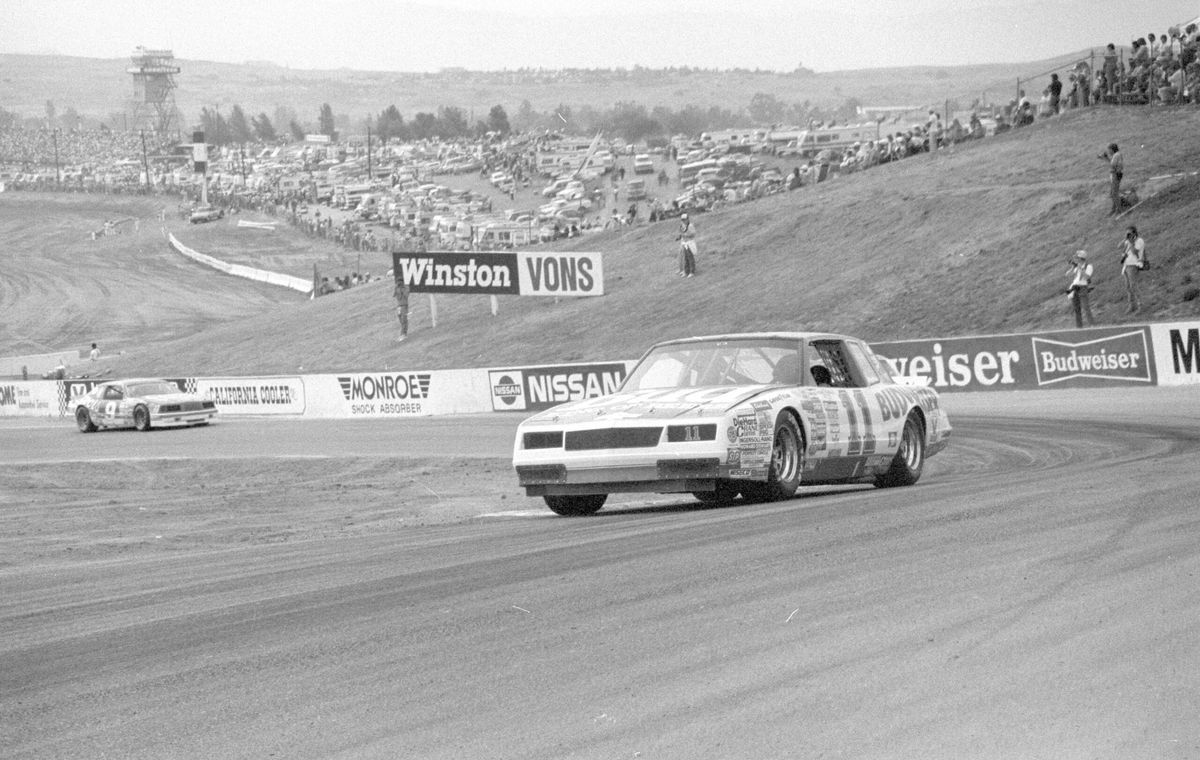
Bildnummer: 08580227 Datum: 16.11.1986 Copyright: imago/Icon SMI 1986 Nov 16: Darrell Waltrip (11) Junior Johnson Chevrolet Monte Carlo competes in the Winston Western 500 NASCAR Motorsport USA Winston Cup Series race at Riverside International Raceway in Riverside, CA. NASCAR Motorsport USA 1986 NOV 16 Winston Western 500 PUBLICATIONxINxGERxSUIxAUTxHUNxRUSxSWExNORxONLY Icon951111686044817; Motorsport USA NASCAR vsw xdp x0x 1986 quer Image number 08580227 date 16 11 1986 Copyright imago Icon Smi 1986 Nov 16 Darrell Waltrip 11 Junior Johnson Chevrolet Monte Carlo Compet in The Winston Western 500 Nascar motor aviation USA Winston Cup Series Race AT Riverside International Raceway in Riverside Approx Nascar motor aviation USA 1986 Nov 16 Winston Western 500 PUBLICATIONxINxGERxSUIxAUTxHUNxRUSxSWExNORxONLY Icon951111686044817 motor aviation USA Nascar Vsw x0x 1986 horizontal
Imago
Bildnummer: 08580227 Datum: 16.11.1986 Copyright: imago/Icon SMI 1986 Nov 16: Darrell Waltrip (11) Junior Johnson Chevrolet Monte Carlo competes in the Winston Western 500 NASCAR Motorsport USA Winston Cup Series race at Riverside International Raceway in Riverside, CA. NASCAR Motorsport USA 1986 NOV 16 Winston Western 500 PUBLICATIONxINxGERxSUIxAUTxHUNxRUSxSWExNORxONLY Icon951111686044817; Motorsport USA NASCAR vsw xdp x0x 1986 quer Image number 08580227 date 16 11 1986 Copyright imago Icon Smi 1986 Nov 16 Darrell Waltrip 11 Junior Johnson Chevrolet Monte Carlo Compet in The Winston Western 500 Nascar motor aviation USA Winston Cup Series Race AT Riverside International Raceway in Riverside Approx Nascar motor aviation USA 1986 Nov 16 Winston Western 500 PUBLICATIONxINxGERxSUIxAUTxHUNxRUSxSWExNORxONLY Icon951111686044817 motor aviation USA Nascar Vsw x0x 1986 horizontal
The late 1970s version of NASCAR was a rather strange, transitional space. Stock car racing was still shaking off its regional skin while slowly embracing national relevance, and road courses were rare. At this time, Riverside International Raceway stood apart from the ovals that defined the sport. It was a place where reputations could be made, or revived.


That is what made a particular return to racing so emotionally loaded. It was not just about nostalgia or a ceremonial appearance, but about unfinished business at the track. It was about the dominance that this particular driver once had. And as he returned to racing, he took the lights, and it indeed almost became a fairy-tale run to victory, only to ultimately end in disappointment.
Watch What’s Trending Now!
The day NASCAR’s tough side crushed a remarkable return
Dan Gurney had already become a motorsports legend by the time NASCAR moved its Grand National Series, which was called the Winston Cup Series then, to Riverside in 1980. Although never a full-time driver, he had been the face of the track in the sport, delivering dominating wins, owing to his experience racing in other series.
His racing stretched far beyond any limits, be it stock racing, F1, or sports cars, and that certainly helped him. He hadn’t run any of the major series since 1970, post his retirement, but then came that one race at Riverside in 1980, which looked like the perfect story written out for him.
The sport was different from what it was a decade ago, when Gurney had last raced. Many questioned his performance; no one knew how well he could perform against the new and upcoming drivers.
But Dan Gurney lived up to his name. He qualified near the front and remained in contention for a race win. His age and the lack of racing in the past decade did not seem to make any difference. To many, he was still the Gurney who had conquered the track five times previously. Nothing seemed to be stopping him from clinching yet another victory.
Everything was looking good. Gurney was running third. But that is when it happened. Lap 79. Gurney crossed the start/finish line, and something did not feel right in his #48 Chevy. The spectators frowned as he brought his car to a stop. It was something Gurney had never seen happen before or since.
The input shaft in the transmission of his car just stopped working. The gearbox failed, the power couldn’t reach the wheels, and Gurney lost the poetic finish that the moment seemed destined for.
January 19, 1980: One of the greatest performances by NASCAR’s best ringer
Dan Gurney had been retired for 9 years when he ran the Cup race at Riverside. Gurney had climbed to 2nd place when the transmission broke with 40 laps to go pic.twitter.com/KmfQKrSPLD
— nascarman (@nascarman_rr) January 19, 2026
Riverside was on the verge of creating history. Statistically, this could have been the comeback of a lifetime for Gurney, but luck didn’t play by his side. Darrell Waltrip won the race, showcasing his dominance as the new face in NASCAR. But it was Gurney who had the fans’ attention.
After this dramatic loss, Gurney left the on-track life and never returned to racing. And as for Riverside, it had a tougher fortune.
What happened to Riverside International Raceway?
What happens when business overtakes passion? That is exactly what happened to Riverside. It was one of the most important venues for racing. NASCAR continued racing there for a long time. The track also hosted the 1960 Formula 1 US Grand Prix, and a plethora of other racing series left their mark on the track. However, real estate prices in Southern California skyrocketed in the late 1980s, and the land that Riverside was built on exceeded its value more than the racetrack.
It was built as a remote facility in 1957, but by the late ‘80s, urban expansion could be seen around it. American Raceways Inc, which also owned a bunch of other tracks, declared bankruptcy in 1971, and the track was sold off.
Imago
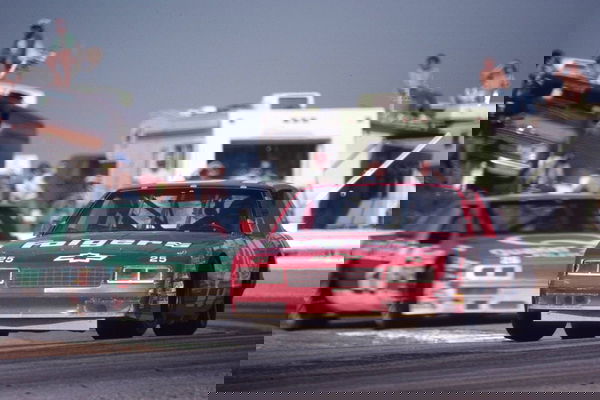
Rick Hendrick (25) Chevrolet Monte Carlo races in the Winston Western 500 NASCAR Motorsport USA Winston Cup Series race at Riverside International Raceway in Riverside, CA. NASCAR Motorsport USA 1987 NOV 08 Winston Western 500
The racing still continued, but the 1988 NASCAR Winston Cup Series race would become the last time the track was used for its original purpose. Rusty Wallace won the race and became the last driver to win on the track.
Not just the track was permanently shut, but it was also demolished, and a mall complex was built around some of its parts. In the coming years, housing societies developed at the location of the track.
Today, nothing remains of the original Riverside International Raceway, perhaps one of the gems that NASCAR, or motorsports as a whole, lost. The track didn’t fail; it just couldn’t keep up with urban development.
Many streets in the neighborhood are still named after the track: Yarborough Drive, Surtees Court, Penske Street, etc. But one name, Dan Gurney, still brings back the memories of 1980.
Related Newsletters