
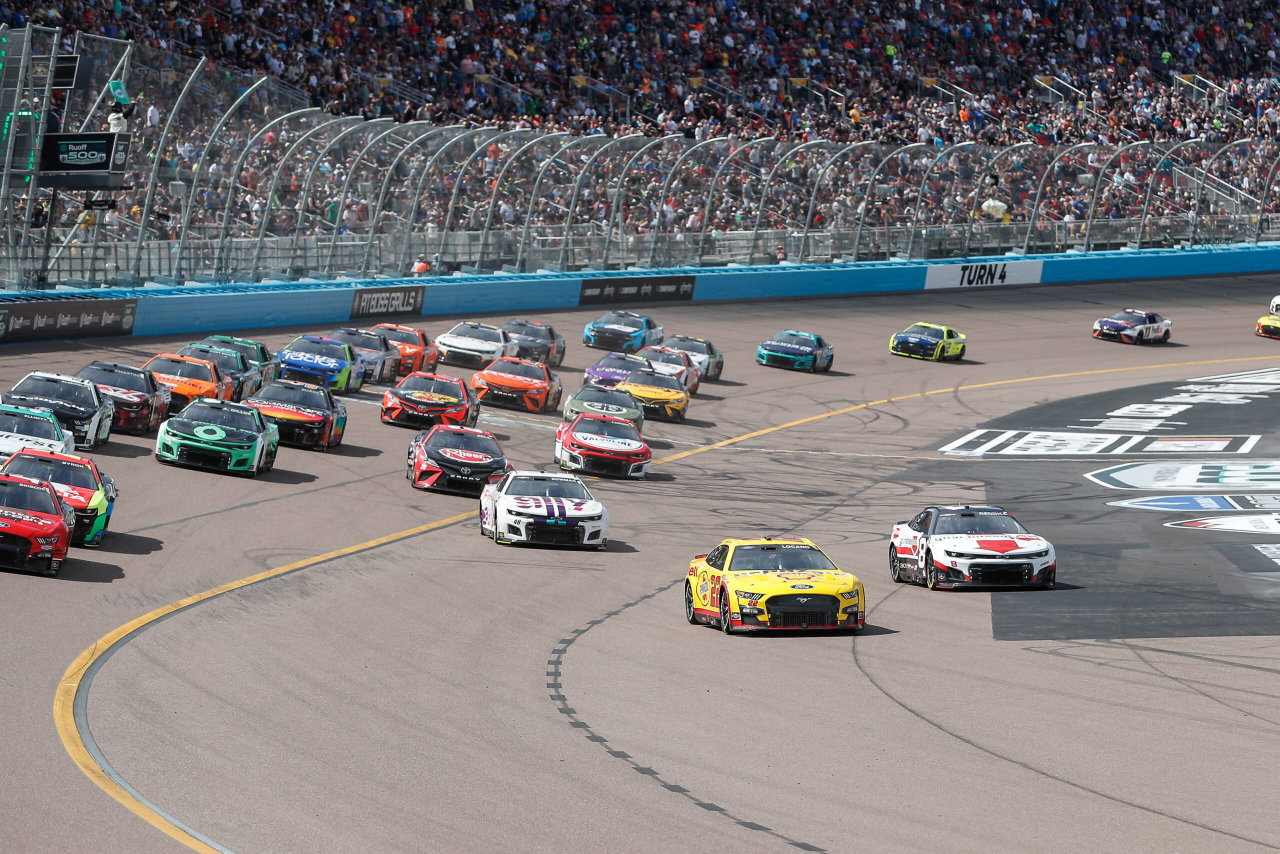
Dale Earnhardt Jr. has spent years arguing that Phoenix Raceway lost part of its identity when a section of its traditional layout became a paved shortcut. Now, with drivers reporting repeated head-impact readings while crossing the dogleg, his criticism has resurfaced alongside a more pressing concern: what that transition is doing to competitors inside their cars.
Watch What’s Trending Now!
NASCAR is now planning changes to the Phoenix dogleg ahead of the 2027 season, with the focus on making the transition onto the apron less jarring. The move follows concerns raised by driver-monitoring data and puts the spotlight on a feature that has become a regular part of the Cup Series’ restart battles.
“The idea to take the back straightaway, which is now the front straightaway, and bank it, it just infuriates me,” Dale Jr. said on his Dale Jr. Download podcast.
The proposed changes address a problem that has been building for years. According to Motorsport.com’s Matt Weaver, NASCAR officials discussed the forces drivers experience when moving from the banking onto the apron during an August competition meeting. Data from mouthpiece sensors worn by drivers had drawn attention to the impact of crossing the dogleg repeatedly.
Connor Zilisch provided a specific figure after reviewing his readings from Phoenix. Speaking on SiriusXM NASCAR Radio, the Trackhouse Racing driver said the sensor registered an impact of roughly 10 Gs each time he crossed the section.
“Yeah, I certainly have it in, and basically every time you go down there, it’s a 10G hit,” Zilisch said.
Those readings are not proof of long-term injury, but they give NASCAR a measurable reason to investigate the transition. Drivers encounter it repeatedly during a race, particularly on restarts, when several cars can cut across the apron together before climbing back onto the racing surface.
Zilisch has described the experience as more than an uncomfortable bump. He said that during a qualifying run earlier this year, the impact shifted his helmet and left him struggling to see as he entered Turns 1 and 2. The incident illustrated how abrupt the transition can be, even without a crash.
Bubba Wallace has also called attention to the cumulative physical toll. The 23XI Racing driver initially estimated the forces at more than 30 Gs, while the reported mouthpiece readings were roughly 10 Gs. He acknowledged that his estimate could be wrong, but his concern about repeated impacts was clear.
“It’s brutal. It looks cool on TV but it might not be cool when we’re 60 and struggling, right?” Wallace said.
The current debate traces back to Phoenix’s 2011 reconfiguration. The project changed the shape of the dogleg, introduced variable banking, and replaced the grass beside the apron with asphalt. That last decision gave drivers a paved route across the inside of the bend rather than requiring them to follow the full racing surface.
The shortcut became even more prominent after the track’s 2018 modernization moved the start-finish line toward the dogleg. Today, drivers often use the apron to gain ground on restarts, creating multiple lanes of traffic before the field converges on Turn 1. It can produce close racing, but it also means cars repeatedly negotiate a sharp change in elevation.
Earnhardt’s objection has long extended beyond the shortcut’s appearance. He believes the original redesign changed how drivers use the track and created a transition that should never have become part of the normal racing line. In August 2025, he criticized the decision to pave the area, arguing that the track should have preserved its traditional configuration.
The latest data has given that longstanding argument a different dimension. NASCAR is not simply responding to a complaint about track character; officials are considering how to reduce the physical load drivers experience while maintaining the racing opportunities the dogleg provides.
Smoothing the transition appears to be the most likely approach, according to the reporting on NASCAR’s plans. Senior Managing Director Brad Moran discussed potential improvements for 2027 on SiriusXM NASCAR Radio on October 21. NASCAR has not yet announced the final design or confirmed exactly how the surface will change.
That leaves a difficult balance. Removing the shortcut or restricting access could change restart strategy and reduce the side-by-side action fans have come to expect. Leaving the transition as it is, however, would mean accepting a concern that driver-monitoring data has now brought into sharper focus.
The dogleg is not going away simply because Earnhardt criticized it, nor does the available data establish that the layout has caused lasting harm. But NASCAR’s planned review signals that the issue now demands more than a debate over tradition. The challenge is to make Phoenix less punishing for drivers without taking away the racing that has made the shortcut part of the track’s identity.