
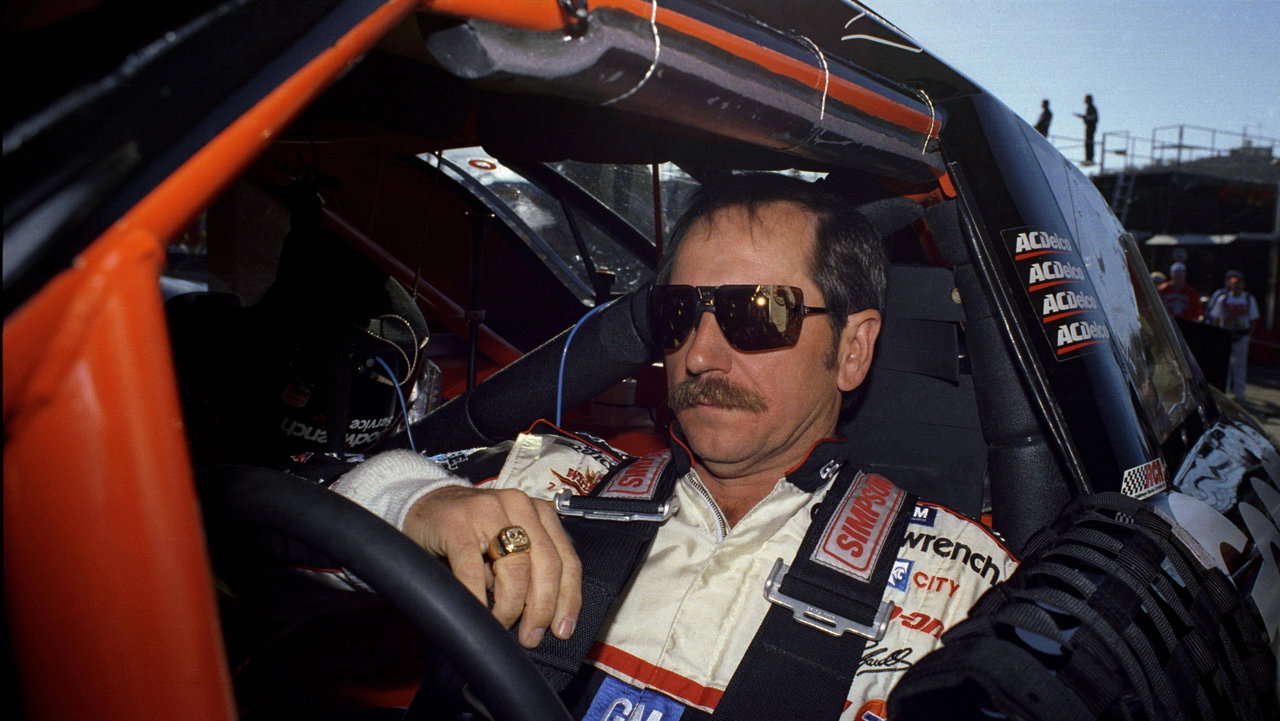
The “Intimidator” nickname attached to Dale Earnhardt was not just about aggressive driving. It also reflected a calculated psychological edge that competitors noticed long before the checkered flag. According to fellow drivers, Earnhardt combined physical racing tactics with subtle mind games that shaped how opponents raced against him.
Watch What’s Trending Now!
NASCAR veterans recall racing against Dale Earnhardt
“I can just see Dale doing this because he always played little mind games on the track and off the track […] That’s the kind of sh*t that he would do.” Ward Burton told Mark Martin. While many loved Dale Earnhardt and the attitude he carried during the races, it is tough to say if other drivers felt the same. There was a lot more to Earnhardt’s persona than just being an aggressive driver.
Earnhardt’s success came against elite competition, including drivers such as Terry Labonte and Jeff Gordon. While his speed and experience were central to that success, his approach to passing and race control often involved calculated pressure rather than pure aggression.
One of the clearest examples came during the 1999 Bristol Night Race. While battling Labonte for the lead late in the race, Earnhardt made contact that spun Labonte and secured the win. After the race, Earnhardt addressed the incident directly: “I didn’t really mean to turn him around. I did mean to rattle his cage, though.”
The phrase “rattle his cage” became synonymous with Earnhardt’s approach. Drivers often described how he would position his car directly behind them, maintaining pressure without immediately attempting a pass. That presence alone frequently influenced how competitors handled key moments in a race.
That sustained pressure often led to mistakes, creating passing opportunities without direct contact. Earnhardt did not rely on aggression at every moment. Instead, he applied it selectively, which made his approach less predictable and more effective over the course of a race.
While Earnhardt’s reputation was built in NASCAR’s top series, many trace the foundation of that approach back to his early racing days alongside his father.
How Dale Earnhardt’s father made him the ‘Intimidator’
Around 1972, a 21-year-old Dale Earnhardt raced against his father, Ralph Earnhardt, at Metrolina Speedway. Ralph was driving a more powerful car, giving him a clear advantage.
The race became one of the earliest moments where Dale faced direct competition from his father, and it quickly turned into a lesson that would shape his approach to racing.
As Dale tried to manage the gap, Ralph repeatedly positioned his car directly behind him, matching every move Dale made on the track.
“He [Ralph] went wide, too, and then he hits dad from behind. So now dad’s [Earnhardt] looking behind him, he’s trying to figure out what’s happening, and his dad hits him again,” Dale Jr. said, describing the race between his father and his grandfather.
The contact continued throughout the race, and Ralph eventually took the win. More importantly, the lesson became clear. “Dad starts to realize this isn’t going to stop. Ralph was trying to teach him something, you don’t move over for anybody,” Dale Jr. explained.
That lesson carried through Earnhardt’s entire career. Combined with his skill and racecraft, it helped define the style that made him one of NASCAR’s most feared competitors. As multiple drivers have described, his success was not only built on speed, but on how effectively he controlled the race mentally as well as physically.