
Essentials Inside The Story
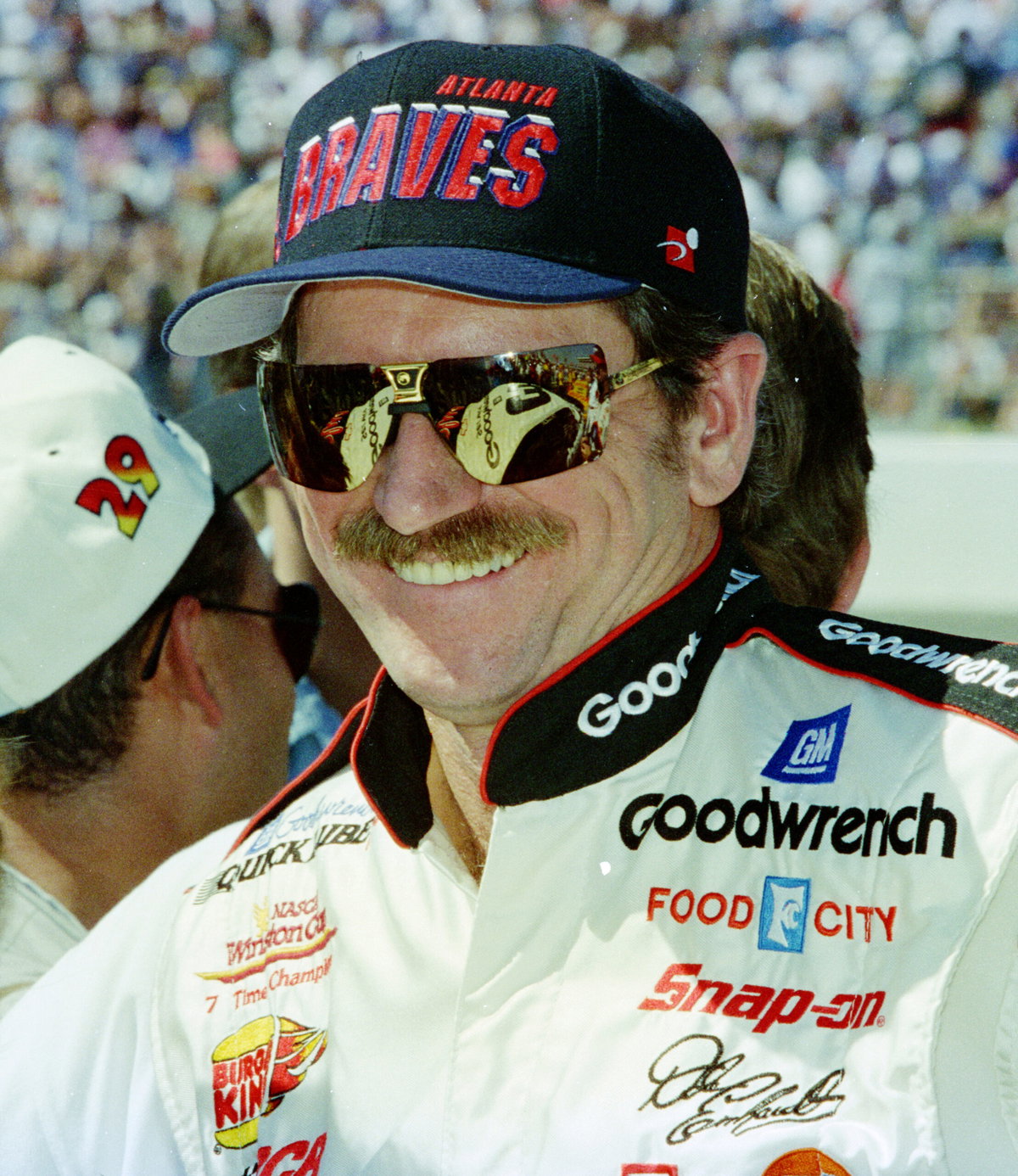
- Today marks what would have been Dale Earnhardt's 75th birthday
- Had it not been for deaths of Adam Petty, Kenny Irwin Jr., Tony Roper and ultimately Earnhardt, NASCAR likely would have never made the safety enhancements it did after Earnhardt's death, and we most likely would have seen more such incidents
- No drivers have died in NASCAR's three top series since Earnhardt was killed in a last-lap crash in the 2001 Daytona 500
For all of you who are Dale Earnhardt fans, today, April 29, marks The Intimidator’s 75th birthday.
Watch What’s Trending Now!
It’s still hard to imagine that Earnhardt tragically left us at the far-too-young age of 49, killed in a last-lap crash in the 2001 Daytona 500 at Daytona International Speedway. Just three months earlier, he finished second to Bobby Labonte in the 2000 season championship battle for the then-Winston Cup title.
Even though he ended that season a distant 265 points behind Labonte, Earnhardt came closer to Labonte than anyone else, giving Dale Sr.’s fans hope that he still had it and was potentially primed for another championship run in 2001.
What Might Have Been If Earnhardt And The Others Had Not Been Tragically Killed?
Had he not been killed, there’s a strong likelihood that Earnhardt would have picked up where he left off after his 2000 season performance – 2 wins, 13 top five and 24 top 10 finishes in 34 starts – and potentially could have become the first and to date the only driver to win eight Cup titles. Not even Richard Petty could have claimed eight, nor Jimmie Johnson eventually.
I admit I hate hypothesizing about what may have happened to someone’s life and career had both not been cut short. But in nine months, from May 2000 until February 2001, NASCAR lost four drivers to crashes:
Adam Petty was the first to be killed on May 12 during a practice crash at New Hampshire Motor Speedway (NHMS). The 19-year-old son of Kyle Petty, grandson of Richard Petty, and great-grandson of Lee Petty, the fourth-generation race car driver, had a bright future ahead of him in the family business. He crashed head-on into the Turn 3 wall after the throttle on his car stuck wide open.
As if Adam Petty’s death wasn’t a bad enough experience at NHMS, less than two months later, on July 7, 2000, Kenny Irwin Jr. also died at NHMS, in nearly the same spot and in almost the same manner as Petty’s tragic crash, the lone difference being Irwin’s car flipped and slid upside down after contact with the wall. According to doctors who pronounced him deceased, the 30-year-old Irwin died immediately upon impact from a basilar skull fracture.
Tony Roper suffered a severe head and neck injury during a NASCAR Truck Race on Oct. 14, 2000, at Texas Motor Speedway, and passed away at the age of 35 in a nearby hospital the following day.
Lastly was Earnhardt’s fatal wreck, less than four months after Roper’s passing.
NASCAR’s Safety Enhancements Have a 100 Percent Success Rate Since Earnhardt’s Death
NASCAR has not lost a driver to a fatal crash since Earnhardt. If the sanctioning body, before Petty’s, Irwin’s, Roper’s and Earnhardt’s deaths, had in place all the safety initiatives it eventually added following Earnhardt’s death – such as mandatory head-and-neck restraint devices, stronger driver harnesses, SAFER Barrier “soft walls”, black box data recorders, a safer Car of Tomorrow with enhanced safety elements and more – one can only wonder how their respective lives and careers may have wound up:
With both the talent and genes he possessed, Petty, who would have turned 46 this July, could potentially have followed in his grandfather and great-grandfather’s footsteps by winning multiple races and even championships.
With four top-five finishes in 1999 and 2000 before his fatal crash, many believed Irwin was a win waiting to happen in the Cup Series (which would have been his first victory in the series). Irwin would have turned 57 this August.
Roper was similar to Irwin in that he also had never won a NASCAR race, with the difference being that Roper competed in the Truck Series. And also like Irwin, had he not lost his life, Roper had enough talent that a checkered flag or more would have eventually come his way. Roper would have turned 62 this December.
Had Earnhardt not been killed, he likely would have seen his own race organization – Dale Earnhardt Incorporated – follow the path of his best friend and team owner Richard Childress and win several Cup championships. And if that had happened, it’s likely that the third-generation racer, his son Dale Jr., would have added at least a few Cup championships to the two Busch Series titles he won while driving for his father, and never would have perhaps raced for Rick Hendrick.
Yet at the same time, Earnhardt’s death – as tragic as it was – served arguably the most meaningful purpose NASCAR has ever seen, as the ensuing safety enhancements made sure that no other driver would have to bear the same fate again.
In a Sense, All Four Drivers Died So That Others Would Live
Although it may not sound as such, I mean this in a good way: all four drivers did not die in vain. Their deaths actually served very valuable purposes for future drivers, NASCAR, and its fans.
For if all four were still with us today, NASCAR might have never implemented the safety measures it did after all four deaths, most notably Earnhardt’s. And NASCAR may not have become the safest form of motorsports in the world today.
The day of his death, during a pre-race interview with Matt Yocum on FOX Sports’ inaugural telecast of the new TV package with NASCAR, Earnhardt, sitting relaxed and comfortably with his legs up, seemed to suggest what would tragically occur a few hours later, telling Yoakum, “I think it’s going to be some exciting racing. You’ll see something you’ve probably never seen before on FOX.”
Earlier this year, we marked 25 years of Earnhardt’s death at Daytona. Today, we mark what would have been his 75th birthday. Even though he’s no longer with us, and the circumstances couldn’t be more diametrically different, those are two days NASCAR and its fans will never forget.