
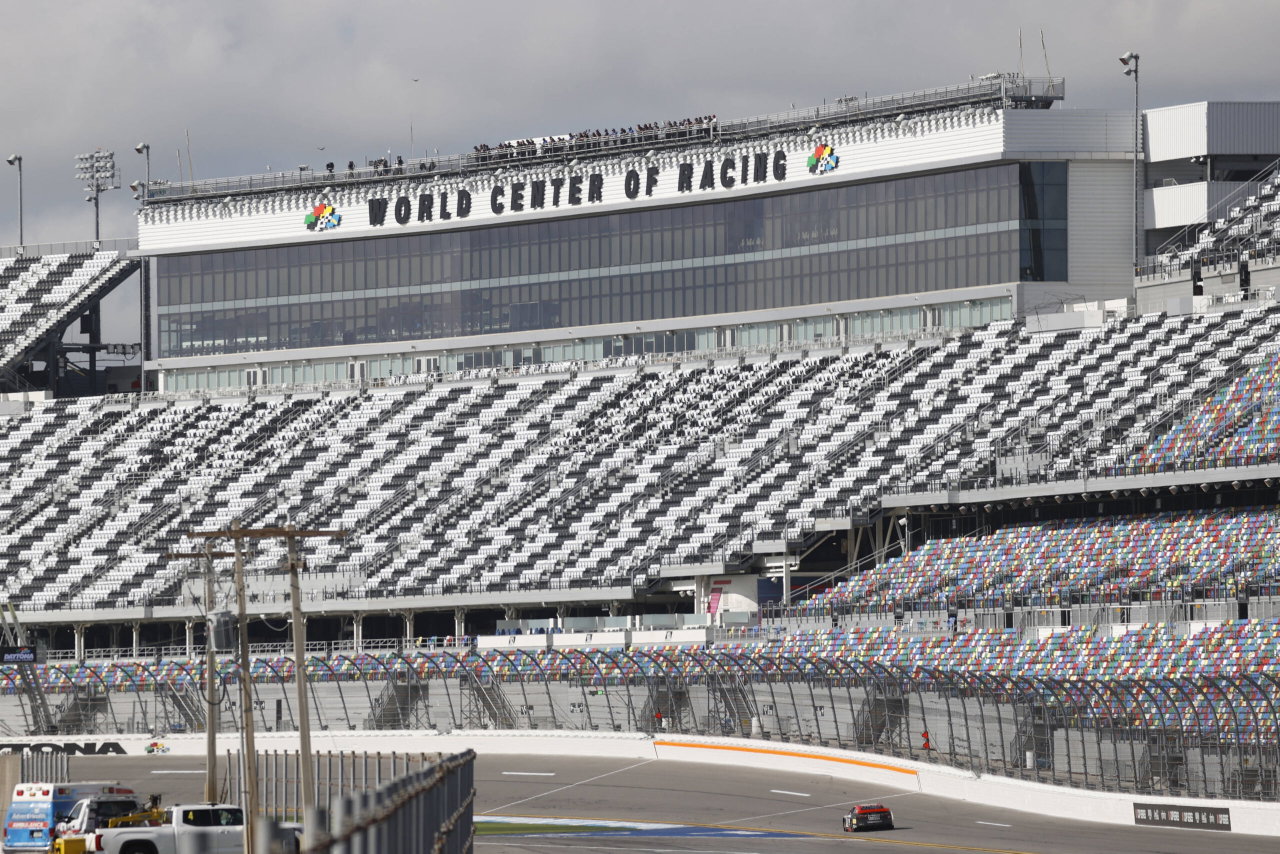
By the summer of 2006, NASCAR had basically everything. The Daytona 500 had just pulled 19.355 million television viewers, the highest in the race’s history. The sport was claiming 75 million fans. It had more Fortune 500 sponsors than any other sport in the country and over $2 billion in annual merchandise sales. New tracks were going up in Texas, California, Las Vegas and Kansas. Drivers were on cereal boxes, corporate America was lining up with their chequebooks. Then the ceiling came into sight, and NASCAR hit it hard.
Watch What’s Trending Now!
This is not a story about a sport that never made it. NASCAR made it further than almost anyone remembers. What it never did was cross the specific line that turns a popular sport into one that the entire country considers its own. The NFL lives on that side of the line. So does the NBA, and so does MLB. For all the reasons NASCAR should have joined them, it never did.
Born from the backroads
Here is what makes this so strange. Most major American sports borrowed their DNA from somewhere else. Basketball came from a gym in Massachusetts, Football grew out of rugby, and Baseball from older English games. NASCAR did not borrow anything from anybody.
After World War II, stock car racing spread across the American South through local tracks and gravel roads. Some of those early drivers had literally been building faster cars to outrun law enforcement while hauling moonshine. When Prohibition ended and that particular business dried up, the cars were still there and so was the need to do something with them. Local racing filled the gap.
Bill France Sr. eventually pulled drivers, owners and mechanics together at the Streamline Hotel in Daytona Beach in December 1947, and the first NASCAR-sanctioned race followed two months later. Richard Petty raced at Greenville-Pickens Speedway in South Carolina. Junior Johnson raced there; also, David Pearson raced there. Their names are still on those walls.
This sport came from mechanics and risk-takers and a guy who saw something worth organizing. No other major American sport has a founding story that raw or that distinctly American. Which makes it all the more worth asking how NASCAR got this far and still never became what it should have been.
The decade it almost happened
People forget how big NASCAR actually got. During the late 1990s and into the 2000s, the growth was real, and it was fast. Between 1997 and 2001, the sport added Cup races in Texas, California, Las Vegas, Homestead, Kansas and Chicagoland, building a national footprint the sport had never had before. The Cup schedule reached 36 points races. Research at the time found 71% of NASCAR followers regularly chose a NASCAR sponsor’s product over a competitor’s, which is the kind of brand loyalty that makes marketing executives excited.
But a 2006 Harris Interactive survey told the real story. Football was the favorite sport of 29% of Americans. Baseball was at 14%. College football was at 13. Auto racing sat at 9%.
That number matters because it shows exactly what NASCAR had and what it did not. It had reach, such that tens of millions of people knew what it was, watched it occasionally, and had a driver they loosely followed. What it did not have was the grip that turns a sport into a habit. Football fans do not just watch football on Sunday; they live inside it. NASCAR never built that world around itself, and the gap between those two things is where the real story sits.
What the biggest sports have that NASCAR does not
Think about what the NFL actually is. It is not just seventeen weeks of games. It is fantasy leagues that run offices on Monday mornings. It is injury reports that people read on Tuesday like they are important news. It is a Thursday night game and a country that already knows what happened on Sunday even if they never watched a snap.
The NBA turned its players into cultural figures years before some of them won anything. LeBron James was in sneakers, and music videos and magazine covers long before he had a ring. Baseball has Little League and baseball cards and statistics going back over a century and a summer rhythm that became part of American childhood in a way nothing else ever really matched.
NASCAR has had fragments of all of this at different times. It has just never had them all operating as one coherent thing. The clearest example is youth access. A kid can shoot a basketball in a driveway. They can throw a baseball in a backyard. They cannot practice stock car racing with anything from a sporting goods store, and that gap has real consequences. NASCAR has almost 100 regional tracks and runs youth programs through Rev Racing for drivers aged 12 to 17.
The Drive for Diversity program has produced 26 wins and 232 top-10 finishes in development series since 2010. That infrastructure is real. But using it costs money, requires proximity to a track and demands a level of specialized access that most families simply do not have.
Compare that with the NHL, which faces its own version of this problem and still managed to introduce hockey to more than 43,000 new children in 2025-26 through its Learn to Play and First Shift programs, pushing overall youth registration to 586,002 players. A child can love NASCAR from the couch without any realistic path to ever getting behind the wheel, and that structural gap has no easy fix.
The media situation has not helped. NASCAR’s Cup rights are currently spread across FOX Sports, Prime Video, TNT Sports, USA Network, NBC Sports, Peacock and HBO Max, all under a seven-year deal worth an estimated $7.7 billion through 2031. The business reasoning is perfectly sound.
The viewing experience for a casual fan is a different matter. In 2026, only four Cup races air on NBC’s main broadcast network. Ten others are on USA. Practice and qualifying shift between truTV and HBO Max week to week. The NFL operates across multiple broadcasters too, but Sunday has meant football without interruption for decades. NASCAR asks its audience to figure out where the sport lives every single week, and that friction is precisely where casual fans quietly give up and find something easier to follow.
The driver identity issue runs even deeper. A basketball fan can follow Giannis Antetokounmpo with no knowledge of the Milwaukee Bucks organization. A football fan can follow Patrick Mahomes without caring about anyone else on the Kansas City Chiefs. In NASCAR, a driver’s identity is inseparable from their car number, their team, their sponsor and their manufacturer.
Chase Elliott is not just Chase Elliott. He is the No. 9 Hendrick Motorsports Chevrolet with a long list of primary sponsors rotating through the season. That structure makes NASCAR drivers commercially valuable in a way that is genuinely impressive, but it also makes it hard for any one of them to exist in popular culture the way Jordan or Brady or LeBron did.
Dale Earnhardt Jr. won the NMPA Most Popular Driver Award 15 consecutive times between 2003 and 2017. Chase Elliott won it eight straight times from 2018 through 2025. That loyalty is remarkable. But neither became a household name outside the sport’s existing audience, and that is not a criticism of either driver. It is a consequence of how NASCAR’s system is built.
The conversion problem nobody talks about
Here is where it gets genuinely complicated, because the numbers do not all tell the same story. As of August 2026, MRI-Simmons says roughly 83 million Americans call themselves NASCAR fans. S&P Global puts the share of Americans who actually watch motorsports at 10%, against 53% for football, 34% for baseball, 29% for basketball, and 19% for hockey. Among those who do watch motorsports in the United States, 46% are 55 or older.
But then there is a completely different set of numbers sitting right next to those. The 2026 Daytona 500 drew 7.489 million viewers on FOX, up 11% from the year before. The Naval Base Coronado event in San Diego brought in more than 125,000 people, and 67% of them had never been to a NASCAR race before. Hispanic attendance was three times higher than at a typical event. Female attendance was 11% above normal.
The Prime Video package in 2026 averaged 2.29 million viewers, up 6%, with a median viewer age of 57.7, more than five years younger than the linear television audience. Across TNT Sports, truTV and HBO Max, the five-race package reached 16.6 million total viewers, up 43% from 2025, and among adults 18 to 34, practice and qualifying viewership on those platforms was up 55%. At the 2025 Mexico City Cup race, 90 % of attendees were Mexican nationals, 44% specifically from Mexico City. The 2024 Chicago Street Race brought visitors from 25 countries.
So NASCAR can absolutely attract people who have never thought about the sport. The events work. The new markets work. The question sitting underneath all of that, which nobody has answered publicly, is what happens next. Of those 125,000 people in San Diego, how many actually watched another race before the year was out? Of the first-timers in Chicago, how many picked a driver and followed them into the playoffs?
Of the new Prime Video viewers, how many were still there in October? The sport puts out attendance figures and ratings and economic impact reports consistently. What rarely surfaces is whether any of that initial attention becomes something permanent. The chain that builds a real sports audience goes from discovery to a first race to a second race to a favorite driver to merchandise to a live event to a kid who grows up watching with their parents and starts the whole thing over.
NASCAR has proven it can get people to the beginning of that chain in places that previously had no relationship with the sport. Getting them all the way through it is where the work remains.
The sport is not standing still. The 2026 Racin’ With the Boys partnership brought NFL players Taylor Lewan and Will Compton into NASCAR’s world with the specific goal of pulling their audiences in with them. The documentary series RISING generated more than 11 million views in its first season, got renewed for a second and eventually moved to free streaming on Xumo Play with episodes on NASCAR’s YouTube channel.
The NASCAR Local Racing Series was renamed in February 2026 as part of a deliberate push to re-emphasize the nearly 100 regional tracks that form the sport’s grassroots foundation. North Wilkesboro Speedway came back to the Cup schedule in 2026 and drew 2.4 million viewers across TNT Sports.
Chicagoland Speedway sold out. Both are back on the 2027 schedule, alongside San Diego and continued international plans. None of that is accidental. It is a sport trying to honor what it was while reaching for what it wants to become, and the tension between those two things is the experiment that is still running.
The commercial engine underneath all of it is not in trouble. MRI-Simmons found NASCAR fans are 48% more likely to notice brands that sponsor their favorite athletes and 56% more likely to buy from those sponsors. Coca-Cola extended its NASCAR deal in 2026. The media rights are worth close to $7.7 billion. That is not a struggling sport. That is a sport with an exceptionally valuable core audience that has not yet solved how to grow past it.
So here is the honest answer to the question in the headline. NASCAR did not fail to become a major league sport. It became something very large with real commercial muscle, a genuinely unique American identity and a fan base that is deeply loyal by almost any measure. What it never built was the everyday habit, the youth pipeline and the cultural continuity that make a sport feel like it belongs to the whole country rather than a devoted part of it.
The NFL dominates because millions of people live inside football from September through February, in fantasy leagues and sports bars and arguments at work on Monday morning. NASCAR has millions of people who genuinely love it. What it still needs is a way to make enough of the rest of America feel that the sport is theirs too. That is the line it has never crossed, and right now, nobody on either side of the garage has a clean answer for how it finally gets there.