
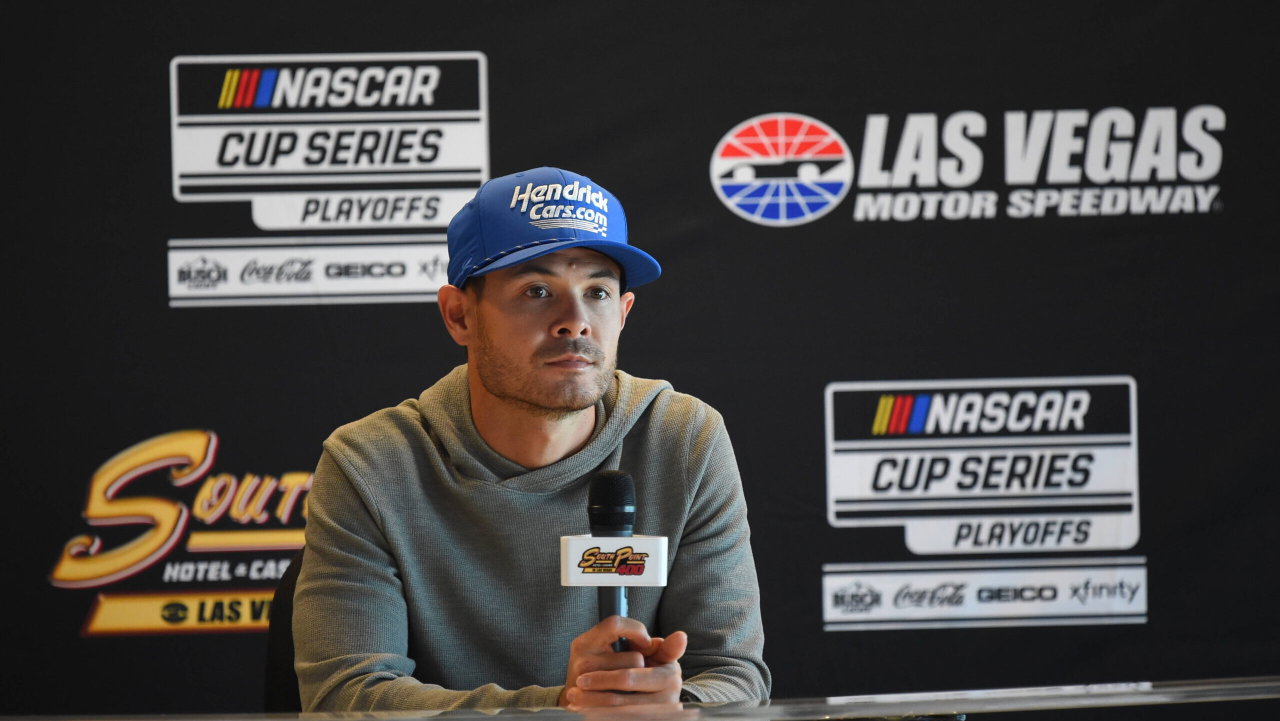
Kyle Larson has built one of the most impressive résumés in modern NASCAR, winning three Cup Series championships and establishing himself as one of motorsports’ most versatile drivers. Today, he is a central figure at Hendrick Motorsports, but his career looked very different just six years ago.
Watch What’s Trending Now!
After losing his Chip Ganassi Racing seat in 2020, Larson faced an uncertain future in the Cup Series. He has now revealed how close he came to choosing a completely different path rather than sacrificing the passion that defined his racing journey. Larson admitted that if Hendrick had refused to accommodate his dirt schedule, he would have pursued full-time dirt racing instead.
“Like, so I mean before I lost my job in 2020, I never thought that I would race for Hendrick Motorsports because I didn’t really want to because I’d heard that, you know, or I not that I’d heard but I was close with [Kasey] and I could tell that they wouldn’t let anybody run dirt stuff and that was always important to me,” Kyle Larson said on the SPEED With Harvick and Buxton podcast.
For Larson, the possibility of joining Hendrick Motorsports once seemed unlikely because of the organization’s approach to extracurricular racing. His connection with former Hendrick driver Kasey Kahne gave him an idea of what he might have to sacrifice. Dirt racing had been part of his life since childhood, and he was not prepared to give it up simply to secure a Cup Series seat.
Larson started racing outlaw karts at seven before moving into sprint cars and USAC competition. His talent became evident in 2011 when he won all three divisions at Eldora Speedway’s 4-Crown Nationals in one night, becoming only the second driver to accomplish the feat. He later established himself among dirt racing’s biggest names, winning the Chili Bowl Nationals three times and the Knoxville Nationals four times. For him, these were not side projects competing with his NASCAR ambitions. They were a major part of why he wanted to race in the first place.
Does Carson Hocevar Need to Move to a Bigger Team to Become a Champion?
Hendrick’s previous policy made Larson’s concerns understandable. When Kahne joined the organization in 2012, Rick Hendrick did not allow his drivers to compete in extracurricular racing during the NASCAR season. Kahne had to put his sprint car and midget commitments aside, and Larson expected a similar arrangement if he joined the team.
Other organizations followed comparable restrictions. Ryan Blaney said in 2021 that Team Penske did not allow him to compete in other types of racing, while Joe Gibbs Racing maintained its own restrictions until introducing an approval process in 2024. These were team policies rather than a NASCAR-wide ban.
Then came the 2020 controversy. During a live-streamed iRacing event in April, Larson used a racial slur that was broadcast to participants and viewers. Chip Ganassi Racing initially suspended him without pay before ending its relationship with the driver. NASCAR also suspended him indefinitely, leaving his Cup career in serious doubt. After completing the required sensitivity training and other conditions, he was reinstated in October, with eligibility to return to NASCAR competition beginning January 1, 2021.
During that absence, Larson returned to the discipline where his racing journey began. He competed in 97 dirt-track features in 2020 and won 46 of them across sprint cars, midgets, Silver Crown and late models. His 12 victories on the World of Outlaws tour led the series. The results showed that he could build a successful career outside NASCAR, even though the controversy had cost him his Cup ride.
When Larson eventually met Rick Hendrick, Jeff Gordon and the team’s leadership, he made one thing clear: dirt racing would remain important to him. The organization agreed to accommodate his schedule. That willingness changed the conversation, giving Larson an opportunity he had not expected to receive.
Rick Hendrick later explained why he reconsidered his position. His primary concern had been the risk of injury, but watching Larson compete in powerful dirt cars changed his view of their value. Hendrick believed the experience improved Larson’s car control and helped him become a better Cup driver. The team also recognized the marketing opportunity. Through HendrickCars.com, Larson could connect the organization with grassroots racing fans who might not otherwise follow NASCAR.
The 2021 season provided an extraordinary return on that trust. Larson estimated he would compete in around 50 dirt races during his first full-time campaign with Hendrick. He won 10 Cup races, captured his first championship and led 2,581 laps. Hendrick’s profile records 33 victories across 97 total events that year, including his dirt-track schedule. Rather than distracting him from NASCAR, his outside racing commitments coexisted with one of the most dominant Cup campaigns in recent memory.
That support has continued. In August 2026, Larson finished sixth in the Cup race at Richmond before making a last-minute trip to Iowa for the Knoxville Nationals. Cliff Daniels and Hendrick Motorsports president Jeff Andrews helped arrange the flight, while the team remained determined to get him there despite Larson initially believing the double was impossible. He arrived in time to win the 50-lap feature and claim his fourth Knoxville Nationals title. Larson specifically thanked Rick Hendrick and the organization for supporting his dirt-racing ambitions.
Six years after losing his NASCAR seat, Larson is a three-time Cup champion with a team that once seemed unlikely to accommodate his passion. His relationship with Hendrick has grown beyond simply allowing him to race elsewhere. The organization now actively helps make those opportunities possible, giving Larson the freedom to pursue both sides of a career he was once prepared to split apart.