
There was a time when NASCAR drivers could barely get through a major career milestone without being surrounded by reporters from national television networks and major sports publications. Brad Keselowski experienced that firsthand in 2012, when his first Cup Series championship turned into a media spectacle. After clinching the title, he gave ESPN a famously unfiltered, beer-fueled interview that quickly went viral, making headlines well beyond the NASCAR world.
Watch What’s Trending Now!
More than a decade later, Keselowski was back in the spotlight over his uncertain future. However, Corey LaJoie noticed something different: major media brands appeared largely absent from the Charlotte press interaction, prompting him to question whether mainstream outlets had deserted NASCAR.
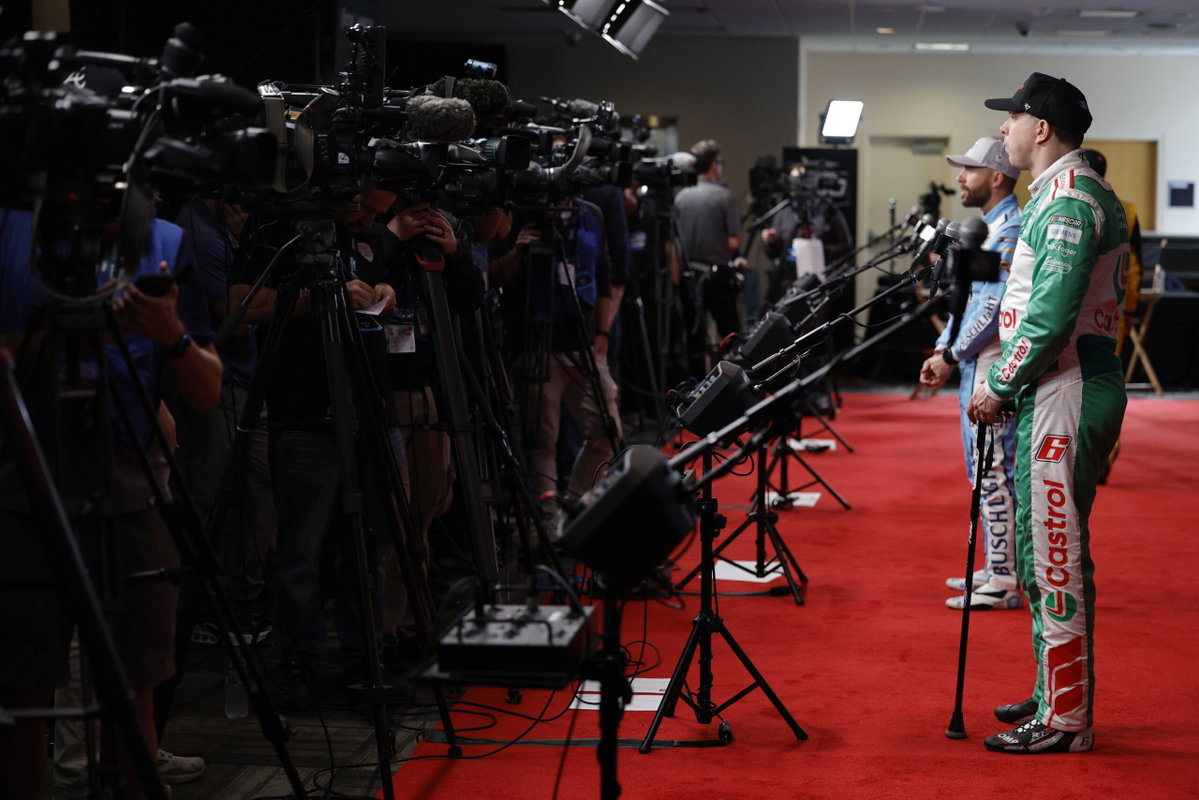
“With all due respect to the men and woman media who cover the sport, I’m genuinely curious why the large media companies have deserted NASCAR. The keselowski news is biggest story in recent memory and he’s in the media center surrounded by non affiliated youtube channels,” Corey LaJoie’s October 10 post on X sparked a debate about NASCAR’s visibility in mainstream sports media.
Brad Keselowski’s impending departure from RFK Racing had created one of the biggest talking points of the 2026 season. Yet LaJoie questioned why major media organizations appeared to be missing from the Charlotte media center. His criticism was not aimed at the reporters doing the work, but at the absence of familiar national media brands from a story with implications for a former Cup Series champion’s future.
The story was certainly significant. On September 29, RFK Racing announced that Keselowski would leave its No. 6 Ford at the end of the 2026 season, ending a five-year stint as a driver and co-owner. The 2012 Cup Series champion said he was nowhere near ready to retire and intended to continue racing, but his next destination remained undecided.
When asked what he considered a large media company anymore, LaJoie described a transformed industry: “1,000 platforms with 50,000 subscribers instead of five with 10 million.” His comment captured the shift from a small group of dominant sports outlets to a crowded digital environment in which hundreds of independent creators and specialist publications compete for attention. For LaJoie, the concern was whether NASCAR’s biggest stories were still reaching audiences beyond its dedicated fan base through established national media organizations.
But have mainstream outlets actually ignored the Keselowski news? Not entirely. NASCAR.com covered his departure, while the Associated Press distributed a report that appeared across major platforms, including ESPN, FOX Sports and CBS News. USA Today also covered the announcement, and The Athletic reported on the split before RFK Racing officially confirmed it. The distinction was between the story receiving coverage and major media companies being visibly represented at that particular Charlotte press interaction.
That distinction matters because NASCAR journalism no longer revolves around a handful of national broadcasters and newspapers. Independent websites, podcasts, digital publications and YouTube channels now provide interviews and analysis directly to fans. Their reporters can follow the garage closely, ask questions at media availabilities and deliver updates without the overhead of a large newsroom. For audiences who follow NASCAR every week, these outlets have become a regular part of how they consume the sport.
The change also reflects the economics of covering a traveling series. Sending reporters to races across the country requires staffing, travel budgets and a belief that the resulting coverage will attract enough readers or viewers. Major outlets must weigh NASCAR against other sports and stories, while independent creators can focus almost entirely on racing. Digital platforms have widened access to NASCAR coverage, even as the sport competes for space in a fragmented media market.
LaJoie’s criticism naturally faced pushback. The Daily Downforce argued that the issue was not necessarily the absence of big media brands, but the implication that independent journalists were somehow less legitimate. After all, reporters were present, asking questions and covering Keselowski’s comments. The debate raised a fair distinction: wanting NASCAR to receive broader mainstream attention is not the same as dismissing the journalists already reporting on it.
There is an irony in LaJoie’s position, too. The former Cup Series driver has embraced the digital media landscape himself through his Stacking Pennies podcast and his work as a NASCAR analyst. His own platform reflects how racing personalities can now build direct relationships with fans without relying solely on traditional broadcasters. That does not make his concern about mainstream reach invalid. However, it places him within the same evolving media ecosystem he was questioning.
Ultimately, LaJoie’s post raised a question about NASCAR’s reach beyond its core audience, rather than proving that major outlets had abandoned the sport. Keselowski’s departure received national coverage, and independent reporters were there to capture his latest comments. The challenge for NASCAR is to ensure that its biggest stories reach new audiences while recognizing that the journalists and creators covering the sport today are no longer limited to the traditional media establishment.