
USA Today via Reuters
Feb 14, 2024; Daytona Beach, Florida, USA; NASCAR Cup Series driver Chase Elliott (9) speaks with reporters during media day at Daytona International Speedway. Mandatory Credit: John David Mercer-USA TODAY Sports
USA Today via Reuters
Feb 14, 2024; Daytona Beach, Florida, USA; NASCAR Cup Series driver Chase Elliott (9) speaks with reporters during media day at Daytona International Speedway. Mandatory Credit: John David Mercer-USA TODAY Sports
How much can track designs affect cars? Well, Chase Elliott has an answer. The Hendrick Motorsports driver has voiced his concerns over a lesser-discussed angle about the formerly known Gateway Motorsports Park track from his experience.


The #9 Chevy driver ended his 42-race winless streak this year with a convincing win at the Texas Motor Speedway. The race was dramatic, to say the least. As he looks forward to doing better, his recent concern over one of the World Wide Technology Raceway’s design elements was made very open. Furthermore, according to him, those elements take a direct toll on the braking system of the Next-Gen cars.
Watch What’s Trending Now!
In the build-up to the weekend, Elliott talked to the media. In a video shared by FrontStretch, one of their reporters asked, “This place is really hard on the brakes. How do you find that medium between using all your braking ability and not having rotors go bad on you?” Not a highly discussed topic lately, he correlated the dynamics between Next Gen cars’ braking mechanics and race track designs like that seen on the Gateway Motorsports park.
“The issue is not [about] having enough brake,” Chase Elliott said, explaining, “The issue is heating them up properly to withstand the heat over a long period of time. It has nothing to do with not having enough brake or not having enough cooling. These cars have plenty of brakes.” Relating that to the track layout, he added to his views: “You have a really long straightaway and a hard braking to a corner. So, that’s hard on the rotors and calipers because they have a long time to cool off, and then you’re shocking them with a lot of heat.”
Elliott concluded, “So, that is what is difficult on the brakes, not the amount that you have. It’s just the design of the facility.” These aspects of the track make it more driver-dependent, meaning that drivers who find relatively better balance than others will likely perform better. However, the #9 driver doesn’t seem to think finding that balance is possible here. The reporter followed Elliott’s remark with the most anticipated question, asking him his expert take on managing this heat.
The Georgia native had a subtly sarcastic and straightforward answer, “You don’t. It is what it is. You have to bring it up to temperature as best you can, and after that, you just run your lap and hope they don’t fall apart.” That said, while braking could pose a problem at the WWTR, one issue of the Next Gen cars could potentially improve due to the track’s design. And 2022 Cup Series champion Joey Logano shed light on it.
Getty
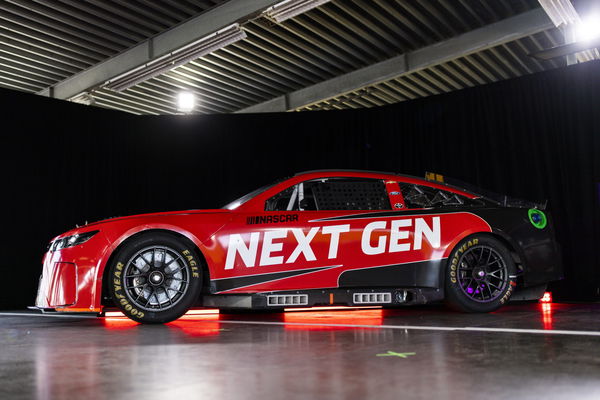
DAYTONA BEACH, FLORIDA – JANUARY 12: A NASCAR Next Gen model sits on display in the garage during the NASCAR Next Gen Test at Daytona International Speedway on January 12, 2022 in Daytona Beach, Florida. (Photo by James Gilbert/Getty Images)
The Next Gens cars have undoubtedly made for better racing on intermediate tracks. But when it comes to road courses like the WWTR, the racing hasn’t been as good. One of the major concerns brought forth by drivers has been lower horsepower levels. Turns out, the Illinois track actually makes it seem like the horsepower levels aren’t all that low. Speaking to SiriusXM NASCAR Radio, Logano said, “One thing that’s really unique about Gateway is that you downshift twice in Turn 1. So when you leave the corner off of Turn 2, you have a lot of horsepower.”
“It’s hard to put the throttle down, and that’s something that’s a little more unique than most racetracks we go to these days where it feels like we’re underpowered. It’s a bit of a challenge to get the throttle down and use it all, which is good. It’s one of the reasons why there is good racing here.”Coming back to the braking issue Elliot highlighted. You may ask whether the assessment is based on facts or mere speculation. Being the expert he is, Chase Elliott’s concerns stem from a very genuine place, and a few design elements at WWTR are challenging. Which ones, you may ask?
A closer look at Gateway Motorsports Park’s design
Gateway Motorsports Park, now known as World Wide Technology Raceway (WWTR), is a unique track that often gives drivers and teams a run for their money. The 1.25-mile oval, with its long straightaways and sharp corners, places intense demands on the braking systems of the Next Gen cars.
Elliott’s observations highlight a key issue: cooling. The long straights let the brakes cool down quite a bit, but the sudden, hard braking needed for the corners generates a ton of heat fast. This rapid cycle of cooling and heating can make the brakes inconsistent, affecting how well drivers can control their cars throughout the race.
The Next Gen cars, built for high performance, have larger brakes that should theoretically help. However, as Elliott pointed out, the unique demands of tracks like WWTR expose the system’s limitations and the areas that need improvement.
Do you agree with Chase Elliott’s views on WWTR’s design?
Written by

Edited by

Shivali Nathta