
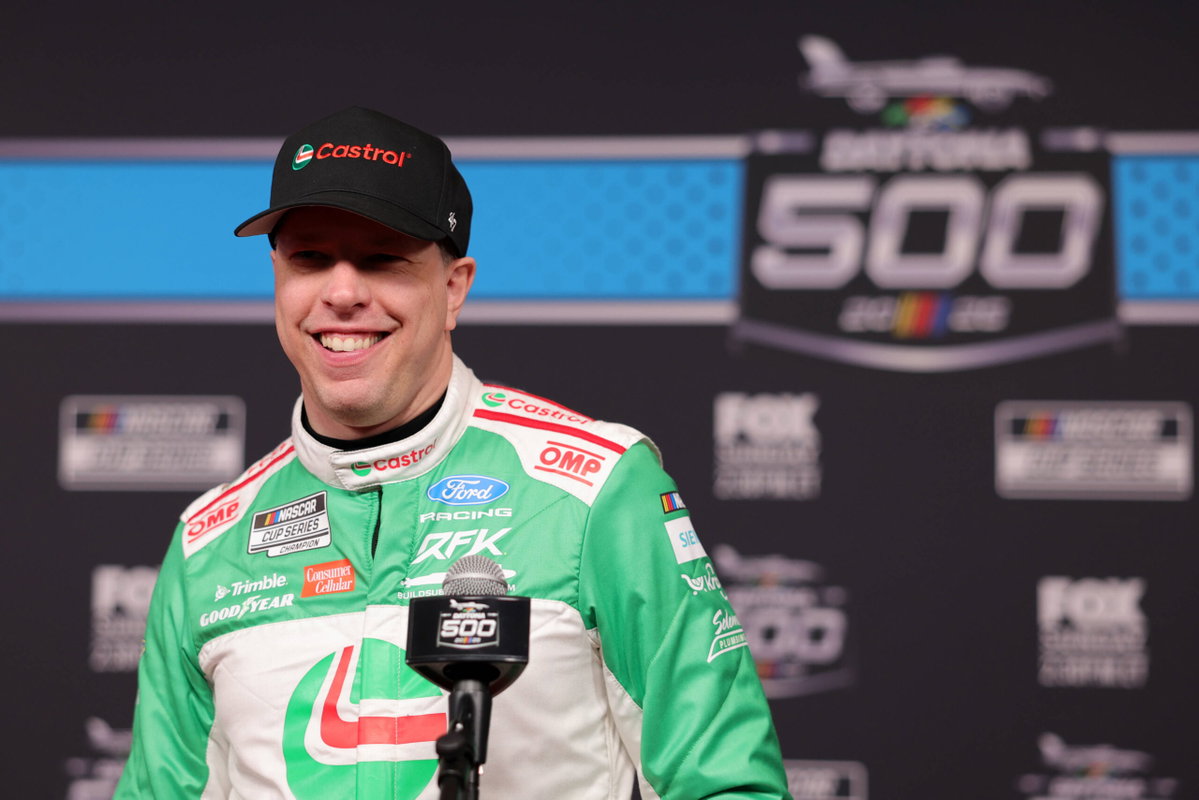
Fenway Sports Group’s ambitions in Formula 1 have run into an unexpected complication, and it comes from a NASCAR ownership arrangement that has yet to be fully settled. The group, which co-owns RFK Racing, is reportedly interested in acquiring a stake in Cadillac’s F1 operation.
Watch What’s Trending Now!
However, Brad Keselowski’s existing agreement with FSG could prevent the deal from progressing without his approval.
The complication is particularly unusual because Keselowski is already preparing to leave RFK as a driver and has stepped away from his management responsibilities. Yet the 2012 Cup Series champion still owns 20% of the NASCAR organisation, and an important provision in his ownership agreement reportedly gives him a say in FSG’s motorsport investments outside NASCAR.
According to The Athletic’s Madeline Coleman, two sources familiar with the agreement revealed that Keselowski and FSG are contractually restricted from pursuing motorsport ventures outside NASCAR without the other’s permission. That means FSG cannot simply sign a purchase agreement for a stake in Cadillac’s Formula 1 team without first receiving Keselowski’s consent.
The sources clarified that discussions alone would not violate the agreement, but entering a binding purchase arrangement would. As of Saturday morning, Nov. 14, Keselowski had not agreed to FSG pursuing the investment.
The situation puts an unusual amount of importance on an ownership separation that is already underway. Keselowski and RFK have reached a verbal understanding to unwind his remaining stake, but that agreement has not yet been formally signed.
According to The Athletic’s reporting, the restriction will cease to apply once his ownership interest is officially unwound. Until then, the NASCAR driver’s permission remains a potential obstacle to FSG’s F1 ambitions.
FSG’s interest comes amid discussions over the future of the Cadillac F1 operation. The team is backed by General Motors and TWG Global, the investment group led by billionaire Mark Walter. TWG is reportedly exploring the sale of a significant portion of its interest, attracting multiple potential buyers.
FSG, whose sporting portfolio includes Liverpool FC, the Boston Red Sox and the Pittsburgh Penguins, is among the groups interested in expanding its presence in motorsport. The Cadillac operation has been valued at more than $3 billion in reports surrounding the potential transaction.
For Keselowski, however, the remaining contractual connection to FSG is a consequence of a complicated departure from RFK Racing. He joined the former Roush Fenway Racing organisation as a driver and co-owner ahead of the 2022 season, bringing his name, experience and competitive vision into the operation.
His arrival triggered the rebranding to Roush Fenway Keselowski Racing, and he subsequently became an important figure in its competitive transformation.
The partnership produced seven Cup victories across the organisation during his tenure, including his own breakthrough win at Darlington in 2024. However, the relationship reached a crossroads ahead of the 2027 season. In September, RFK announced that Keselowski would leave the No. 6 Ford at the end of 2026, with both parties unable to agree on the direction of his future role.
Keselowski wanted to continue driving past his initial five-year driving contract while retaining a significant competition leadership position, whereas the organisation had hoped to see him transition further into management.
The ownership disagreement became even more complicated when Keselowski revealed that he had attempted to purchase RFK Racing outright. The offer was rejected by fellow owners Jack Roush and Fenway Sports Group in October.
Speaking to Sports Business Journal, Keselowski described his proposal as a “pretty solid and significant offer,” but the other stakeholders were not prepared to sell the organisation to him.
An agreement was subsequently reached on Oct. 31, allowing Keselowski to become a “passive investor” while ending his involvement in RFK’s governance, board participation and competition oversight. It also allowed him to pursue driving opportunities with another NASCAR organisation.
However, the release did not immediately eliminate his 20% ownership stake or the contractual restrictions attached to it. Keselowski confirmed that selling that stake remained one of his priorities.
Interestingly, Keselowski is also exploring opportunities beyond simply finding another Cup Series seat. Speaking at Homestead, he revealed that he had six options to consider, ranging from competing for another team to becoming an owner elsewhere or pursuing a television role. He also left the door open to returning to the Truck Series as a driver and team owner, including the possibility of reviving Brad Keselowski Racing.
This is where the contractual provision becomes particularly relevant. The restriction works both ways: Keselowski also needs FSG’s permission to pursue a motorsport venture outside NASCAR while the agreement remains active. Therefore, the unresolved ownership arrangement could affect the next chapter of his career just as much as it affects FSG’s plans in Formula F1.
For Fenway Sports Group, the Cadillac opportunity represents a potential expansion from its established NASCAR involvement into the increasingly valuable F1 market, with all 11 teams combining for a $50 billion-plus valuation. But completing the transaction may require resolving a contractual relationship with a driver who is no longer part of its day-to-day racing operation.
Keselowski has not publicly approved the proposed investment, and the available reporting does not establish that he intends to block it permanently.
The eventual sale of Keselowski’s ownership interest could remove that complication, but until the separation is formally completed, his NASCAR business relationship continues to have implications well beyond the Cup Series garage.