
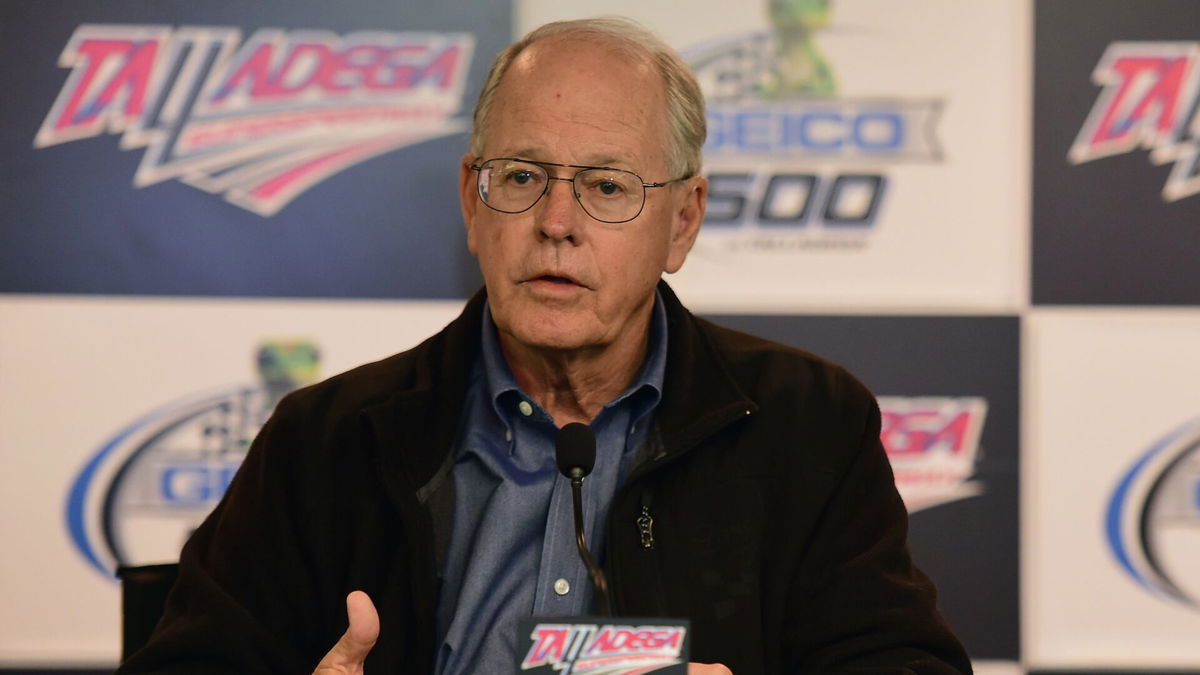
Everyone chants loudly about how they want to save NASCAR’s grassroots, but rarely does anybody ask who is going to pay for it. Brad Keselowski aimed to lay bare this exact issue, but in doing so, he revealed a deeper tension sitting in the heart of American racing itself.
Watch What’s Trending Now!
The funding gap behind saving NASCAR’s grassroots tracks
“Yeah, well, it’s important,” started Brad Keselowski, immediately taking us to what he believed was the fundamental issue behind the burden on NASCAR tracks.
“You know, capital is really hard to come by for these small tracks, and it’s so expensive and so hard to build new ones that your best bet is to save the ones that we have or to upgrade even the ones that we have into the facilities that we want them to be.”
Seems easy, right? But even saving the tracks that we already cherish is now proving to be difficult.
“But that’s easier said than done,” he continued, before dropping the line that best summed the entire situation up. “Everybody wants the tracks to invest, but nobody wants to be the money to help them invest in them.”

"Your best bet is to save the ones that we have or to upgrade the ones that we have into the facilities that we want them to be, but that's easier said than done." @keselowski on reviving grassroots racetracks. #NASCAR
The contradiction isn’t just built out of thin air; it’s built on the ground reality of how such a contribution has failed its intent. Keselowski added, “You know, I read all these things about France family should buy this track or that track,” he said, before immediately dawning on us the practicality, “And it’s kind of like, I think they just went through all the lawsuit stuff. I don’t know if they would share that same sentiment.”
Yet as Keselowski correctly points out, no matter how difficult it is, everything should be done within our powers to save the soul of our beloved sport. “But it’s just hard to find the capital to be successful for a racetrack,” he said before adding, “And whether that’s building a new one or maintaining the ones that we have, it’s quite the uphill battle, but an important one for our sport.”
This leaves us with a lingering question. Who is the France family? Why are they even putting in so much effort to save the sport? And is it even working?
The family that built NASCAR, and the limits of what even they can save
The France family isn’t just another investor with a huge position in the sport; they are, in fact, the ones who built it. The family’s contribution shouldn’t be mistaken as being just symbolic; it structured NASCAR into what it is. From Bill France Sr.’s 1947 meeting that formalized the sport, to the construction of Daytona International Speedway in 1959, to Bill France Jr.’s push into national television and corporate sponsorship in the 1970s, the family’s stamp rides on all of NASCAR’s major achievements.
Today, that control still extends across sanctioning, scheduling, and major track ownership, especially after NASCAR’s 2019 merger with International Speedway Corporation, which consolidated these premium venues under a single umbrella.
However, this centralized model is the exact reason why critique is rising. Fans don’t even question the family’s contributions to NASCAR; those are unparalleled. Instead, what is questioned is how tightly control is exercised. This tight control all came to light during the 2024–25 antitrust dispute, including 23XI Racing and Front Row Motorsports. The dispute, which started off due to disagreements over the charter system, alleged something far worse.
It is alleged that NASCAR used its control over the Cup Series, tracks, and commercial ecosystem to maintain monopoly power and enforce anticompetitive conditions on teams. It unfortunately didn’t end there and took a dive for the worse when, during trial, an economist argued NASCAR had underpaid teams by over $1 billion between 2021 and 2024.
Now, the lawsuit settlement should technically placate all issues, right? Well, this time it didn’t. If anything, it confirmed the underlying reality that power and control by revenue, combined with structural authority, remain heavily concentrated among the top few in the sport.
And this is exactly where the comments of Keselowski gain weight. Let’s say if the sport is perceived to be strong and centralized, with few hoarding the benefits, then it is reasonable to expect that during tough times, the same centers that benefit would come out and rise to the occasion of saving the sport. But the unfortunate reality is that the system that the France family built was never designed to be a redistribution model that somehow assisted these struggling local tracks. In fact, it was designed to scale and grow NASCAR into a premier monetized national product.
This is the exact distinction that matters today. Even though the family’s contribution to NASCAR is unparalleled, it also explains why saving every short track is not simply a matter of ownership or intent. Since the issues these short tracks face are due to the structures that the family created, it isn’t unreasonable for the expectation to exist. The expectation exists because of their own legacy and aforementioned unparalleled contributions.