
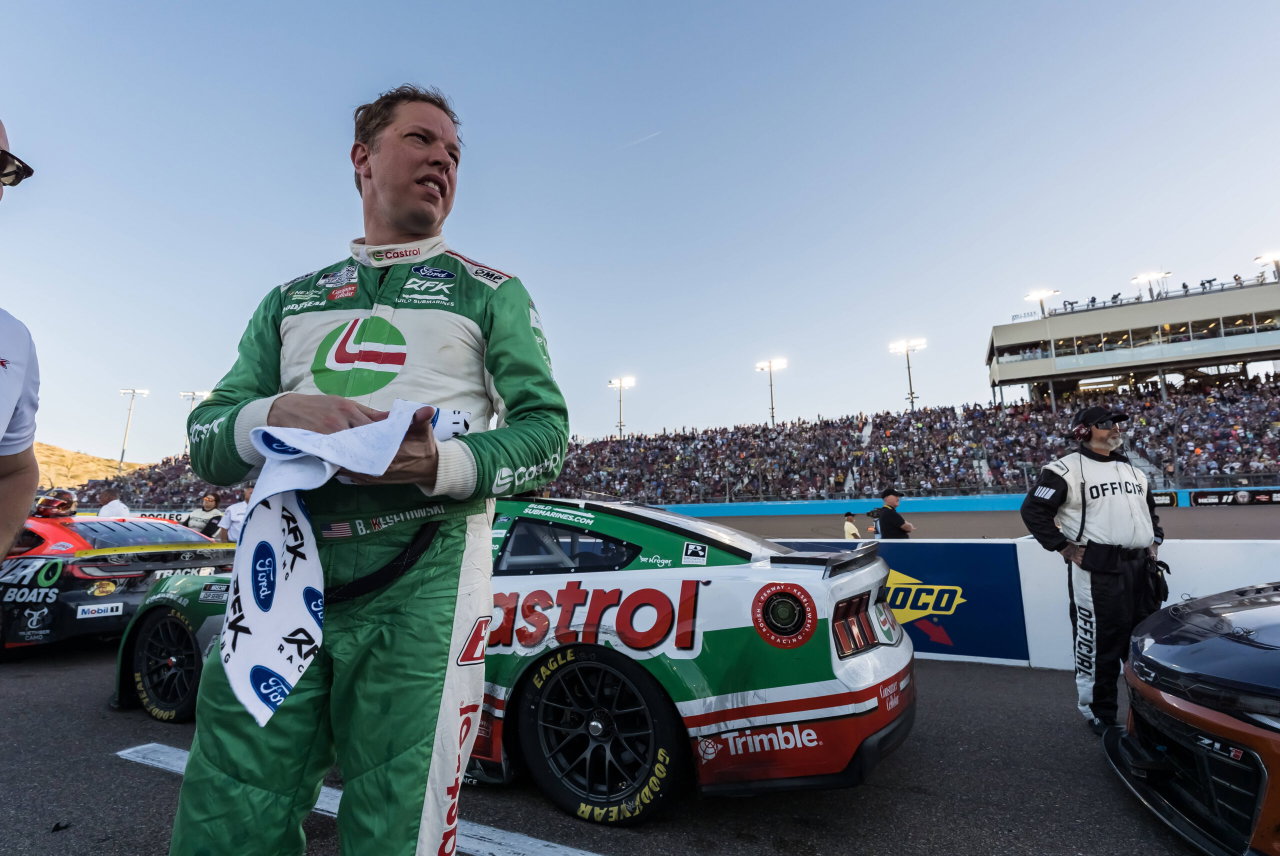
A pole position used to belong to one driver and one lap. Then NASCAR started the clock, sent drivers down pit road for four tires, and let the combined time decide the lineup. In 2025, Brad Keselowski turned that gamble into the All-Star pole at North Wilkesboro, posting a three-lap, four-tire-stop total of 87.363 seconds. Now NASCAR is weighing whether the idea can escape the exhibition, and the argument over where it belongs is already heating up.
Watch What’s Trending Now!
“I advocated for and support this move so I guess we see this differently,” Brad Keselowski wrote on X.
The 2012 Cup Series champion was replying to Pete Pistone (to which Jeff GLuck had added a “+1”), who had argued that a pit stop belongs in an exhibition race but should never migrate to a points race. Pistone’s post took aim at a proposal NASCAR’s John Probst outlined on SiriusXM NASCAR Radio: All-Star-style qualifying, pit stop included, for a very select few races next year.
No tracks have been named, and the mechanics remain unannounced. A separate idea would trim superspeedway qualifying from two rounds to one.
The concept would mark a sharp break from routine. Most 2026 Cup tracks use one round with a single timed lap, while several short tracks allow two laps. At this year’s All-Star Race at Dover, qualifying added a four-tire pit stop between laps, and the total time decided the result. That puts a pit crew’s work directly into the starting lineup.
Who Is the Poster-Child of Modern-Day NASCAR?
Brad Keselowski knows the format firsthand. After his 2025 pole run, he said it pushes drivers, teams and pit crews to their limits. He has also long been among the garage’s most outspoken voices on qualifying and has advocated for more practice time.
The reaction on X was swift and blunt.”Wow Brad I guess you wanna kill the sport with more gimmicks,” one fan wrote.
Another seemed more surprised than angry considering the driver’s history.
“Wow Brad this is surprising coming from you,” the comment read.
Others reopened older wounds, tying the debate to the Next Gen car’s ongoing short-track struggles.
“Did you advocate for making the nose so weak at short tracks to?” one fan recollected.
For fans in that camp, each new format tweak feels like a distraction from fixing the racing itself. Some comments turned personal.
“Then it’s time to go to the house @keselowski We don’t need you anymore,” one fan wrote.
Some fans even wanted to bring in the fact that he was not RFK racing anymore.
“Is that because you’ll be watching on tv like the rest of us? Lol,” another user pointed out.
The jabs land against a backdrop of uncertainty. Keselowski has not announced his 2027 plans, though he has said he wants to continue racing, and Speedcafe reported an impending split from RFK Racing, where he owns shares.
That context matters because Keselowski’s voice carries weight on both sides of the pit wall. He has driven the format and helped run a team that would have to execute it.
Still, his support does not answer the central question critics keep raising: should a procedure that sets the grid for a points race be shaped by a show-friendly format first tested in an exhibition?
Dale Earnhardt Jr. Faced Similar Fan Backlash Over NASCAR Changes
Keselowski is not the first driver to face questions from NASCAR fans for backing a controversial change. When stage racing became part of the Cup Series in 2017, Dale Earnhardt Jr. publicly supported the format, pointing to its additional rewards and the potential to eliminate artificial debris cautions. His position, however, also drew criticism on social media, with one fan asking whether he had simply become a “sheep.”
Earnhardt responded that if change was coming regardless, drivers could either stand outside and complain or join the conversation and help find a satisfactory solution. His response offers a familiar parallel to Keselowski’s current situation.
Both drivers found themselves defending their willingness to embrace NASCAR’s evolving format, even as some fans questioned whether those changes were actually good for the sport.
For now, nothing is settled. With no tracks selected and no rules published, the format could still change or shrink before 2027. Supporters believe a pit stop adds a second skill to a session that traditionally rewards a single fast lap. For skeptics, it introduces a variable that has little to do with identifying the fastest car.
What happens next will depend less on social media volume than on the details NASCAR releases. Fans want to know which races will get the format, how penalties would be handled, and whether it will remain rare enough to feel special. Until then, the debate over Keselowski’s support is likely to continue.