
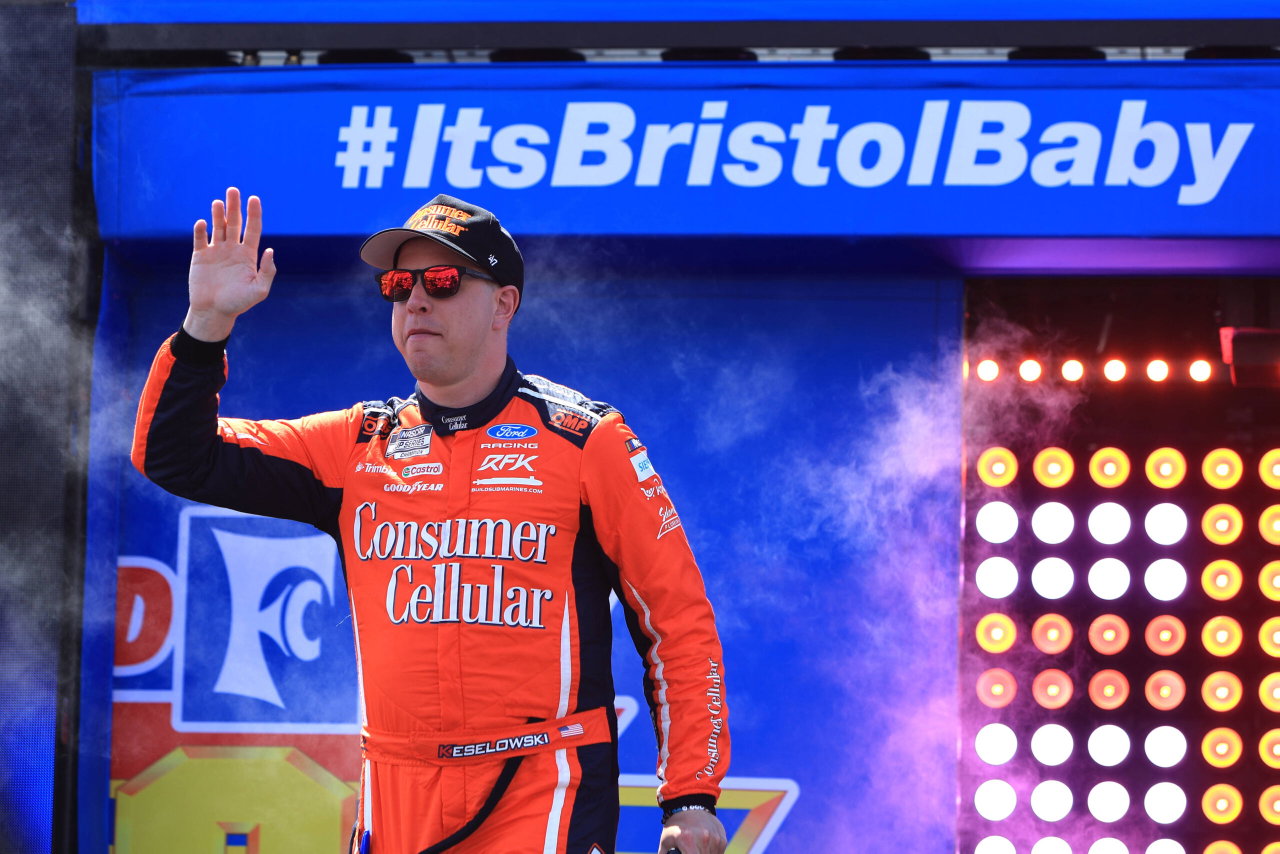
Brad Keselowski’s farewell comes with a 10-point assessment of NASCAR. The 2012 Cup Series champion is preparing to close his chapter as a driver at RFK Racing, but he is not leaving the sport quietly. His message hits the widening financial divide between teams, the dominance of NASCAR’s biggest organizations, and the impact of the charter settlement.
Watch What’s Trending Now!
Keselowski began by reflecting on how dramatically his 2026 season changed. He entered February unable to walk after breaking his femur in a December 2025 accident while vacationing. The injury forced him to miss the season-opening exhibition at Bowman Gray Stadium, although he returned for the Daytona 500 and maintained his remarkable streak of consecutive points-paying Cup starts.
His departure from RFK now brings another major transition, ending a five-year partnership in which he served as a driver, co-owner and head of competition. The 42-year-old made clear that the experience had been a rollercoaster, with plenty to process.
His second point turned toward the people NASCAR lost during the year. Greg Biffle and several members of his family died in a plane crash in December 2025, devastating the racing community. Then came the death of two-time Cup champion Kyle Busch on May 21, 2026, at 41, following complications from severe pneumonia and sepsis.
Both were major losses for a sport in which drivers, teams and fans often share close relationships beyond the racetrack. Keselowski acknowledged that those losses affected the entire NASCAR community, not just the people closest to the drivers.
On the racing itself, Keselowski offered a positive assessment of NASCAR’s horsepower changes. The Cup Series increased engine output from 670 to 750 horsepower at road courses and ovals shorter than 1.5 miles for 2026. The package was intended to increase tire falloff, put more emphasis on throttle control, and create better passing opportunities.
Early data showed encouraging signs, particularly at Darlington and Phoenix, where passing increased compared with previous seasons. Keselowski singled out short-track racing as an area that improved considerably from 2025 to 2026.
However, his fourth point was considerably less encouraging. Operating a Cup team has become expensive, and smaller organizations have struggled to keep pace. Denny Hamlin estimated during the antitrust proceedings that running one Cup car costs approximately $20 million across a 38-race season, excluding driver salaries and general business overhead. Inflation, increasingly sophisticated technology and powertrain requirements all add pressure.
Those expenses can force smaller teams to compromise on staffing, testing, and even how many weekends they can compete. Keselowski believes NASCAR needs to address those underlying costs before the gap becomes even harder to overcome.
That concern connects directly to his fifth observation: the sport’s competitive hierarchy has barely changed. Hendrick Motorsports, Joe Gibbs Racing and Team Penske remain the three organizations setting the standard. Keselowski had previously described RFK as a Tier 2 team, explaining that the leading organizations have the speed and resources to contend for several wins every season.
He argued that smaller competitors will struggle to close that gap without meaningful rule changes that reduce the advantage of the established superteams. His assessment is particularly significant because he spent years at Penske before joining RFK as an owner and driver.
The sixth point focused on the charter agreement settlement. NASCAR’s December 2025 settlement with 23XI Racing and Front Row Motorsports introduced evergreen charter terms, subject to mutual agreement, and expanded teams’ governance rights. Industry executives subsequently estimated that charter values had risen from approximately $45 million to between $90 million and $100 million.
However, the settlement did not automatically provide teams with higher recurring annual revenue. Keselowski believes the changing economics could encourage investors to value teams based on revenue multiples rather than primarily on their physical assets. That could bring fresh investment into Tier 2 organizations, although whether that capital produces a more competitive field remains to be seen.
His seventh point raised another uncomfortable question: are injuries and suspensions becoming a regular feature of Cup weekends? The 2026 season included Christopher Bell fracturing his wrist in a Michigan crash and Riley Herbst withdrawing from Daytona after concussion symptoms returned.
Carson Hocevar also received a one-race suspension from Spire Motorsports after his Martinsville incident involving Austin Cindric. Keselowski wants NASCAR to publish statistics covering the previous 25 seasons to establish whether these occurrences are genuinely increasing or simply receiving more attention.
For his eighth point, Keselowski shifted to what comes next for the sport, reminding fans that the 2027 Daytona 500 is only 105 days away. His ninth point was more personal. He admitted that he has not decided what his next chapter will look like, saying he needs time for soul-searching and to listen before making an announcement within 60 days. He has previously insisted that he is not ready to retire, leaving open the possibility of another driving opportunity.
Finally, Keselowski thanked his fans, partners, coworkers and family for supporting him through a demanding season. He also congratulated Kyle Larson on securing his third Cup Series championship. After helping RFK rebuild its competitive identity since 2022, Keselowski is moving on, but his ten-point assessment makes clear that he still has plenty to say about NASCAR’s future.