Imago
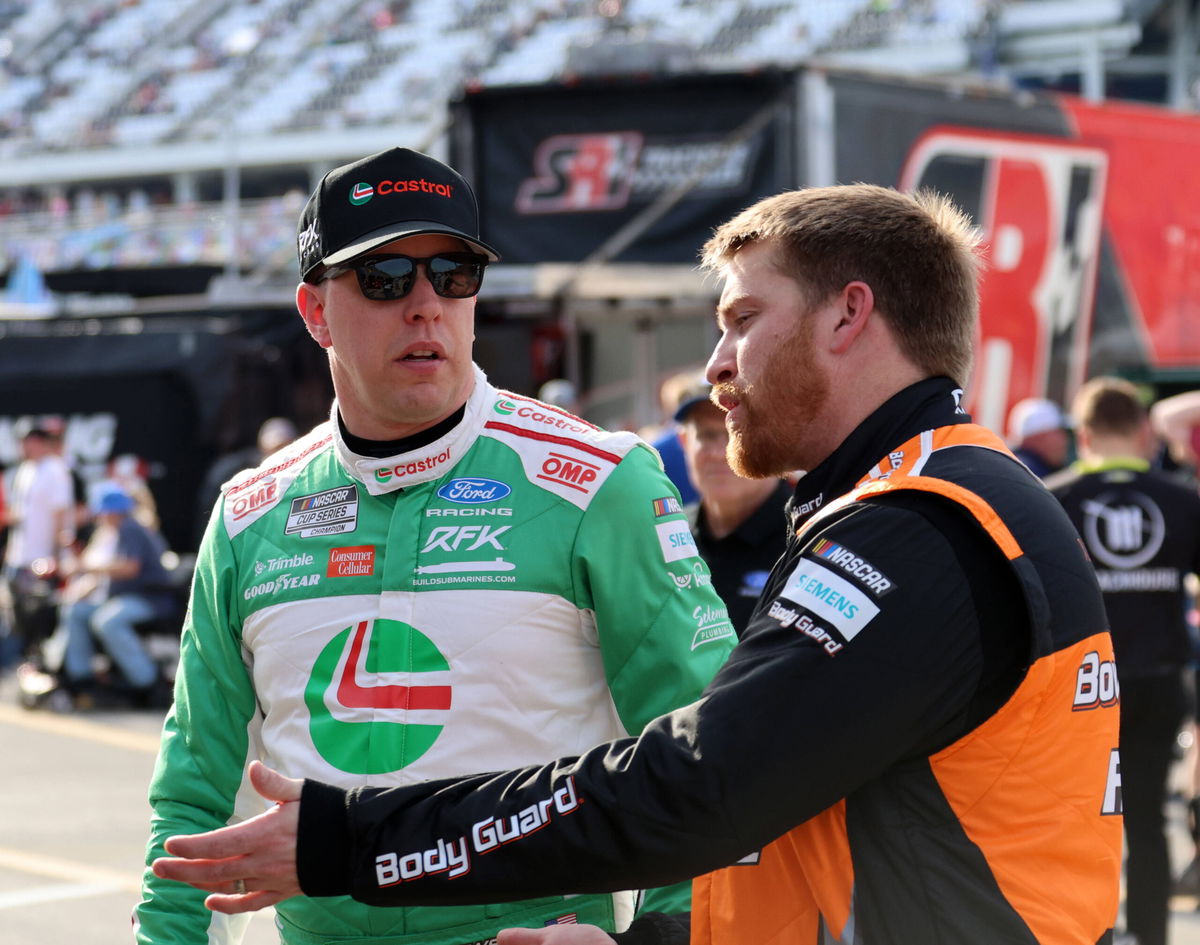
DAYTONA BEACH, FL – FEBRUARY 14: Brad Keselowski 6 RFK Racing Consumer Cellular Ford talks with teammate Chris Buescher 17 RFK Racing Body Guard Ford during final practice for the NASCAR, Motorsport, USA Cup Series Daytona 500 on February 14, 2026 at Daytona International Speedway in Daytona Beach, FL. Photo by Michael Bush/Icon Sportswire AUTO: FEB 14 NASCAR Cup Series Daytona 500 EDITORIAL USE ONLY Icon260214037
Imago
DAYTONA BEACH, FL – FEBRUARY 14: Brad Keselowski 6 RFK Racing Consumer Cellular Ford talks with teammate Chris Buescher 17 RFK Racing Body Guard Ford during final practice for the NASCAR, Motorsport, USA Cup Series Daytona 500 on February 14, 2026 at Daytona International Speedway in Daytona Beach, FL. Photo by Michael Bush/Icon Sportswire AUTO: FEB 14 NASCAR Cup Series Daytona 500 EDITORIAL USE ONLY Icon260214037
After the changes that Phoenix Raceway underwent in 2018, one thing became clear. Anything can happen when drivers create lines along the ‘dogleg.’ Friday’s practice session was the perfect example of the same. For RFK Racing, it was a worrisome day, as they lost two of their cars from punctures. As a result, one of their drivers isn’t that confident about attacking the track on Sunday.
Watch What’s Trending Now!
RFK Racing unsure about Phoenix drama
Both Chris Buescher and Brad Keselowski suffered tire failures during Friday’s practice session. Now, Buescher is not really sure if that was just the track playing usual games or if they really have an issue with their car.
“Yeah, we are going to give a look at what we got. The post-practice meeting’s coming up, so we’re trying to figure out what we can diagnose, if it’s something clear with us or it’s just another Phoenix.” ‘Just another Phoenix’ is a phrase that describes the situation of many drivers. No one can predict what happens when the mile-long Speedway decides to bring a sudden situation.
So when Chris Buescher was asked about his issues, he only theorized on the basis of what he felt. “We are out and dive in to knowing the issues we had here, the race. I thought we took steps to correct that, so dive into that a little further. I would say that where we fired off in balance of overall speed helped during our 15 laps of run.”
Chris Buescher on having a tire issue in practice (as did his teammate Brad Keselowski). Sounds like he’s unsure what will happen today. Race coverage begins at 3p ET on FS1. @NASCARONFOX pic.twitter.com/EkXhghl9RT
— Bob Pockrass (@bobpockrass) March 8, 2026
Nevertheless, Buescher is confident about his car. Even with the limited runs from the practice session, he is able to conclude that the car is going to work well during the race. However, Buescher does regret that he did not get more time to test out the setup and fine-tune his car accordingly.
Starting from P17 on the grid, he is still in a better position compared to the team owner, Brad Keselowski. Keselowski is going to participate in the race in a spare car after his ride got totaled during the practice session. Starting from the back of the grid is not ideal, but the race outcome can change anytime at this track.
While they handle their setup to address the issues they have, if any, the team is also working the best they can on another prevalent issue.
RFK Racing’s strategic approach to cool suits
A NASCAR cool suit and Schrödinger’s cat have one thing in common. You never know when they will work or fail. The entire grid was getting boiled alive during the race at the Circuit of the Americas. While the Phoenix Raceway is slightly cooler, it does not eliminate the cockpit heat.
Some teams and owners just opt to omit the racing cooling suits altogether. Denny Hamlin for once believes that cool suits are just a piece of technology waiting to fail. Hence, he and his drivers just decide to face the elements head-on. Brad Keselowski, on the other hand, has a very different outlook towards this.
“Our group and the teams have a certain level of autonomy,” Keselowski said. “But you still need the engineering support behind it to make sure everything works the way it should.”
It is a smart move, especially considering the fact that these failures happen because most teams do not deem cool suits important. Even though they are an important part of driver safety, they just make temporary workarounds.
RFK Racing’s involvement of engineers and thorough inspection before the race makes sure that their drivers have reliability and trust in their equipment. It allows them to race safely without worrying too much about the heat generated in the cockpit.
Related Newsletters