
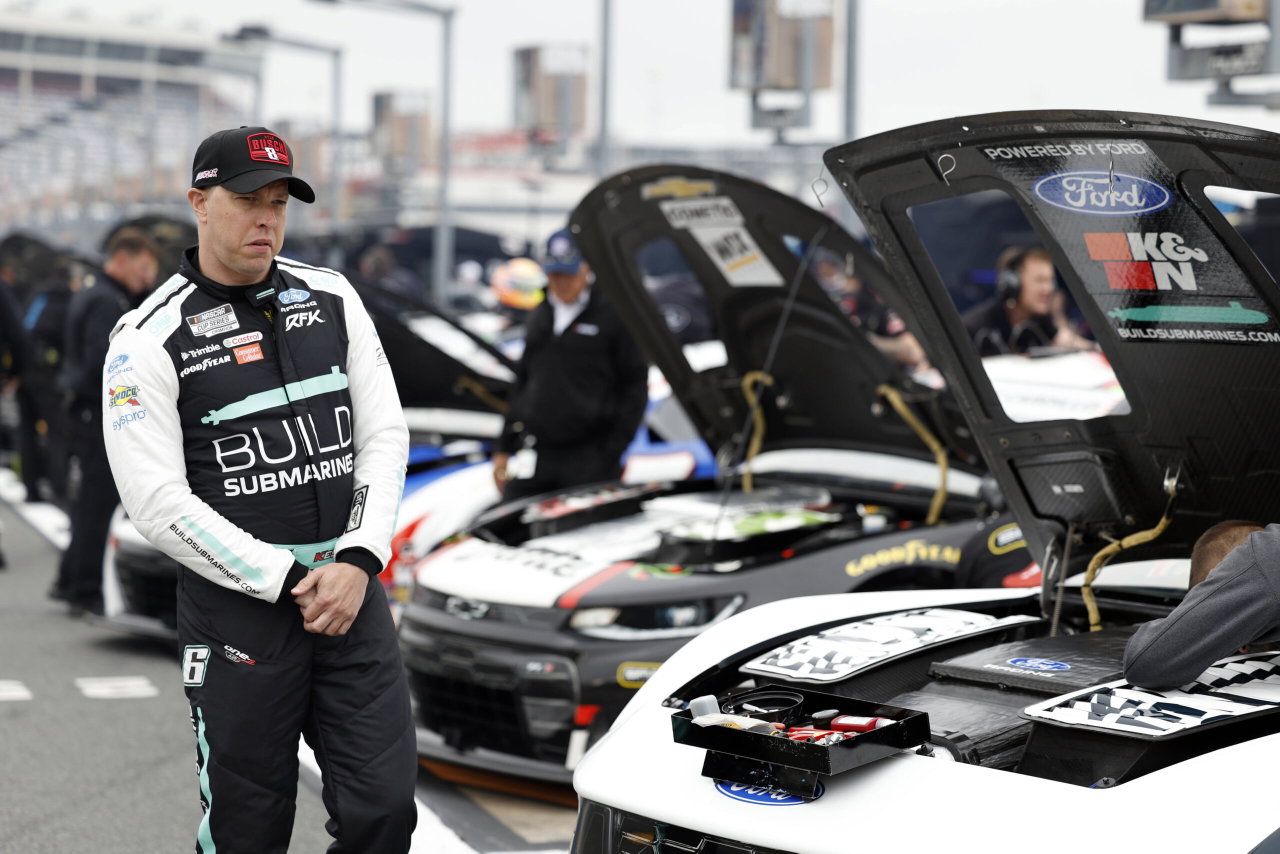
The warning signs were there, but few took notice. Brad Keselowski had been unhappy with several things at RFK Racing, the team he joined in 2022 as an owner-driver. With their split now confirmed ahead of the 2027 season, the organization is losing not only a former Cup Series champion from its third car, but also the driving force behind its resurgence in the garage. And the latter could create a problem similar to what has arguably been NASCAR’s most interesting subplot of 2026.
Watch What’s Trending Now!
Chris Gabehart and Spire Motorsports are currently engaged in a legal battle with Joe Gibbs Racing over allegations that sensitive information was carried over to his new team following his departure earlier this year. Insider Jeff Gluck believes that with Keselowski also set to leave, RFK Racing could find itself facing a situation similar to JGR.
“What’s going to be interesting is how Keselowski and RFK unwind this relationship now. Because you’ve heard about the JGR lawsuit against Chris Gabehart, right, and it’s a non-compete, which included information beyond just set-ups…
“And Keselowski, he knows things about Ford’s engine performance; he knows all sorts of proprietary information, so how is that going to be handled going forward?” Gluck stated on his YouTube channel, raising an important question.
Before Keselowski joined RFK Racing, the organization was struggling as a mid-tier team that hadn’t won a race in years. The No. 6 car, in particular, didn’t win in over a decade. Their average finish position hovered around the 20th mark.
Keselowski, who knew what it took to run a winning operation, took over as Head of Competition and turned their fortunes around.
He became involved in the competitive and technical transformation of the team, helping shape how it developed cars, used data and technology, and organized its competition operation. Even Keselowski described himself in his departure statement as having learned a great deal “as a co-owner and as the head of competition.”
The results showed. They ended up winning a Cup Series race in 2022, with Chris Buescher going to Victory Lane in Bristol. The next year, he won three more races, with Keselowski breaking his own drought in Darlington the following season. In 2025, they expanded to a three-car operation, and this season, two of its drivers — Buescher and Ryan Preece — are in the Chase, looking for a championship upset.
Keselowski finished 18th and didn’t make it to the Chase, but he knows a great deal about these cars, information that could prove valuable to any team he decides to join next. As for RFK Racing, replacing such a figure won’t be easy either.
“This is RFK’s words: ‘The search for a new head of competition, a position previously held by Keselowski, will begin immediately,’ Gluck said in the same video.
That person would not just be responsible for making one Cup car faster. RFK’s technical operation is much bigger than that. Its RFK TeK Alliance covers everything from engineering and data analysis to software, vehicle dynamics, quality control, and manufacturing. The team also added its AVL RACETECH relationship in 2026. Keselowski has been part of that larger competitive structure for years.
That is where the Gabehart situation becomes relevant. Denny Hamlin’s former crew chief, he left Joe Gibbs Racing for Spire Motorsports while he was competition director, and JGR later took the matter to federal court over allegations involving trade secrets, confidential information and a non-compete agreement.
The case was still active as of October 1, when a discovery hearing was held, with a trial scheduled for February 1, 2027.
There is no similar accusation against Keselowski. RFK has not filed a lawsuit claiming that he took any information, and Keselowski remains with the organization through the end of 2026. Still, the Gabehart case shows why losing someone at the top of a competition operation can be very different from losing an ordinary free agent.
Keselowski was also growing increasingly unhappy with both RFK Racing and Ford. Although he held an ownership stake, Fenway Sports Group controlled 50% of the organization, meaning Keselowski could often be outvoted on important decisions. He was also frustrated with the way he felt Ford treated RFK Racing compared with its other teams.
During the Enjoy Illinois 300 last month, Keselowski lashed out on the team radio, “I wish I was a Ford considered good enough to get one of the good engines. We’d already be passing. But instead, we’re called a sh**box team and get the sh**box stuff. Thanks a lot!”
This came after Team Penske’s Joey Logano passed him in the race, also driving a Ford. For a long time, he felt that the Blue Oval did not treat his team with the same importance it gave Penske. He argued that there should be better cooperation between teams running the same OEM.
There were tensions, and the split is now official. What remains unclear is what comes next for both sides when it comes to driving. RFK has to fill the seat Keselowski is leaving, while the 42-year-old still has unfinished business behind the wheel.
An uncertain future for RFK Racing and Brad Keselowski
RFK already knows two-thirds of its 2027 driver lineup. Buescher has signed a multiyear extension, while the team exercised Preece’s option. The No. 6 seat that Keselowski will vacate is now open, while RFK continues its search for a third charter. Keselowski’s ownership stake has not been publicly resolved, although insiders Jeff Gluck and Jordan Bianchi believe it will be sold as the two sides move in different directions.
At 42, Keselowski still wants to race. He released a statement where he said: “I still have a lot I want to accomplish in this sport and I’m looking forward to what comes next. I’m thankful for everyone who has been part of this journey and for the fans who continue to support me. I look forward to sharing future plans when the time is right.”
Sadly, there aren’t many seats left in the sport, leaving his next move uncertain. Kaulig Racing quickly emerged as a potential destination because of its connection to Dodge, but CEO Chris Rice said on October 1 that he had not spoken with Keselowski about driving for the team, even if Dodge returns.
If Keselowski does eventually join Dodge, or even Toyota, the JGR-Chris Gabehart situation could become relevant. That, however, remains a big what-if for now.
So, RFK has a driver to replace, a competition chief to replace, and an ownership issue to settle. But the bigger challenge may be making sure the organization does not lose the institutional knowledge and competitive structure Keselowski helped build.
When he leaves RFK Racing, the team will have to prove that what Keselowski built can continue to thrive without him.