
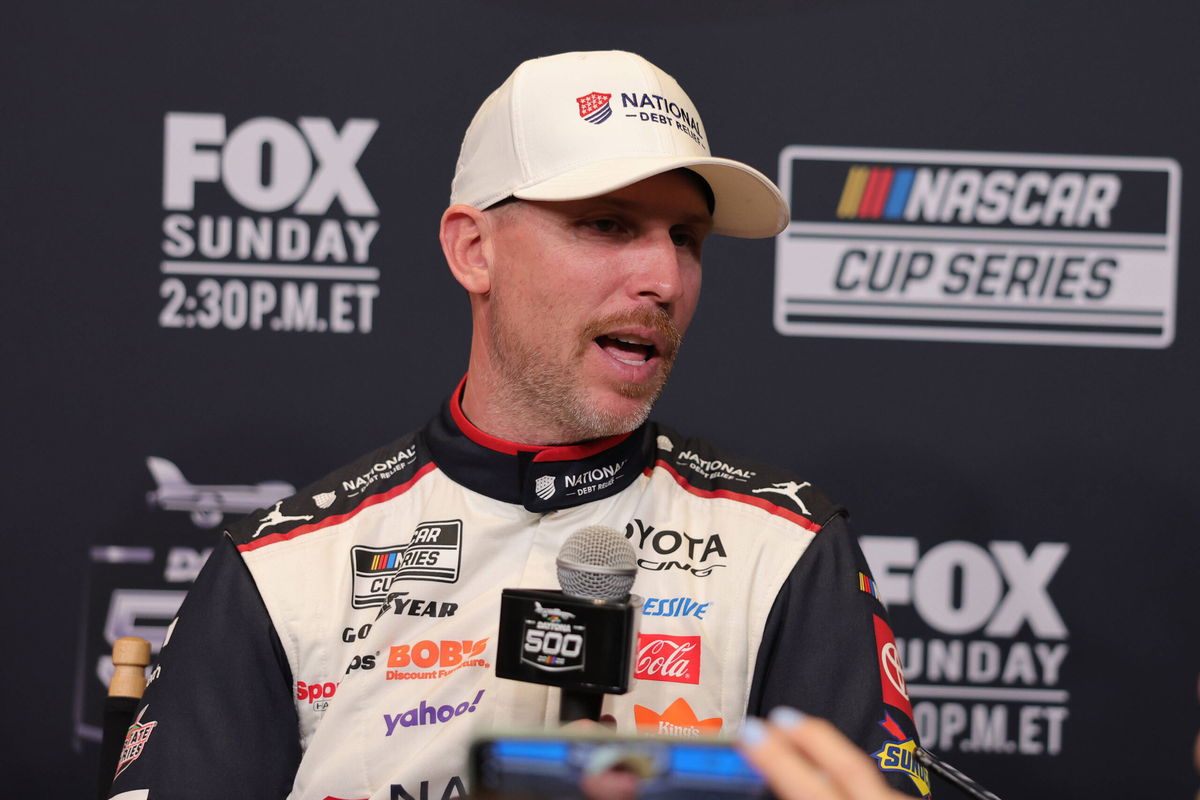
In recent years, NASCAR has subtly demonstrated the significance of its traditional fan base. In response to criticisms, the sanctioning body moved away from the elimination playoff bracket and returned to a 10-race Chase-style format, increased horsepower after complaints that the Next Gen car felt too artificial, and even brought back tracks like Chicagoland and North Wilkesboro to reconnect with its roots. However, Denny Hamlin made it plain after Nashville’s long race weekend that honoring nostalgia is not the same as letting it rule you.
Watch What’s Trending Now!
Denny Hamlin thinks NASCAR can’t treat nostalgia as a rulebook
“It’s the toughest job that they’ve got is their core audience is the nostalgia type of race fan. But you can’t necessarily be handcuffed by that going forward. I think you can definitely understand your roots, play into those roots. But you also have to look forward and you know, you don’t have to completely change the game.”
That wasn’t Denny Hamlin randomly throwing out a hot take on the SiriusXM podcast. This came just a few days after Nashville. Ironically, it was a race that he won. But even after climbing from 38th to victory lane, Hamlin left the Cracker Barrel 400 frustrated with something bigger than strategy or track position: NASCAR’s refusal to rethink how race weekends are structured.
After Nashville stretched to nearly four hours of race time (and even longer for fans sitting through delays and cautions), Hamlin suggested something that immediately drew backlash from parts of the fanbase. Denny Hamlin wants the race to go from 400 miles to 300 miles. “4 hours of racing is too long,” Hamlin said on the Actions Detrimental podcast.

🗣️ "I think you can definitely understand your roots, play into those roots, but you also have to look forward." @dennyhamlin weighs in on #NASCAR's tough task of balancing nostalgia and looking to the future. More → sxm.app.link/NASCARIntervie…
Now, to traditionalist NASCAR fans, that statement sounded almost sacrilegious. However, if you dig deeper, Denny Hamlin’s actual argument was different. He wasn’t asking NASCAR to erase its identity. Instead, he was asking NASCAR to acknowledge that honoring tradition and preserving every old habit are not the same thing.
Nashville became the perfect example. The race featured an 80-minute weather delay, repeated cautions, brake rotor failures, and constant restarts. Charlotte, the week before, had already stretched to 4 hours and 39 minutes. Yet NASCAR’s default instinct remains completing the traditional race distance whenever possible.
That’s where Denny Hamlin thinks the sport is missing the point. Because what fans experience isn’t mileage, but it’s time. And increasingly, time is becoming NASCAR’s biggest competitor. The challenge becomes even bigger because NASCAR’s audience has always leaned heavily blue-collar. And eventually, even passionate fans begin choosing highlights over live viewing. That’s where his baseball comparison came in.
“The game of baseball has changed, but it’s not. It’s still baseball. You know, it looks the same as it did 20 – 30 years ago when you’re watching the game. Now the experience and how you experience that game it, you know, it’s got the pitching clock. Now they’ve sped it up a little bit, but the game itself has remained intact,” Hamlin explained his analogy.
And he is entirely correct. Baseball was not redesigned by Major League Baseball. Rather, it brought about modifications such as the pitch clock, a timer that restricts the amount of time that batters and pitchers may wait between pitches. The outcome? Shorter watching periods, faster games, and fewer dead spots without altering innings, hits, strikes, or the principles of the game.
Hamlin sees NASCAR’s opportunity similarly. Keep the racing recognizable. Keep stock cars, the strategy, and the rivalries. But modernize how fans experience race day by making the events short and time-bound.
“You don’t need to alter the game entirely.”
He wants races to have the same appearance that NASCAR has traditionally had, but presented in a way that honors modern sports viewers.
In short, NASCAR needs to have less waiting, more energy, but with the same ol’ identity.
Why NASCAR might be reluctant
The tricky part is that NASCAR’s hesitation isn’t entirely irrational either. Endurance has always been part of stock car racing’s identity. In fact, NASCAR has already shortened plenty of events over the years. Dover and Pocono dropped from 500 miles to 400. Texas followed the same path. At Pocono, the races were further trimmed to 325 and 350 in the 2020 and 2021 doubleheader weekends)
So, it can be said that NASCAR has shown a willingness to adjust. But race length isn’t happening in isolation. There is already far less on-track activity on Cup weekends now than there was in the past. Before qualifying, drivers now have about twenty-five minutes of practice. In contrast, previous weekends saw multiple practice sessions throughout the course of Friday and Saturday, totaling several hours.
That reduction matters. The race itself has emerged as the primary event, with the majority of the entertainment value for spectators purchasing weekend tickets, particularly families visiting and staying for many days. Additionally, Denny Hamlin noted that stage cautions are no longer necessary for NASCAR, only for television. Although green-flag side-by-side advertisements are now typical, natural cautions continue to produce breaks.
However, perception could be NASCAR’s greater worry. If races get shorter while practice remains limited, fans may start asking a different question: If the race is shorter too… what exactly are we showing up all weekend for?