
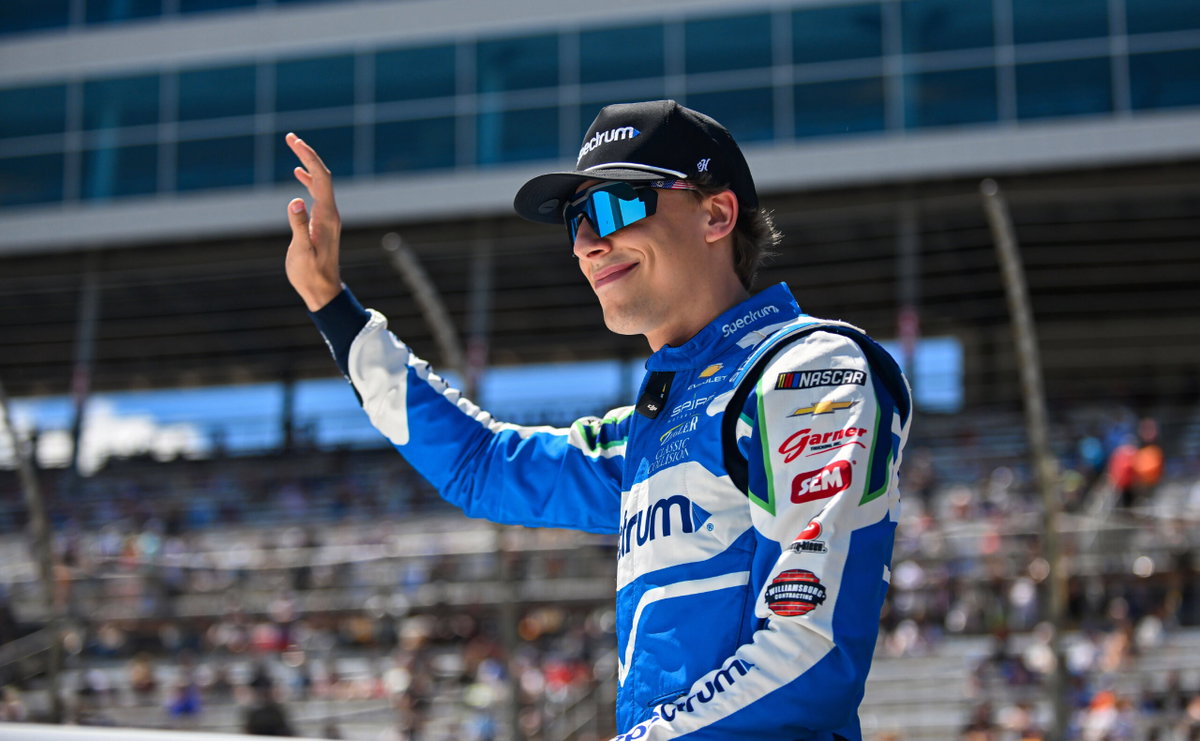
For most race fans, a night at the local short track is about watching the cars go around and hoping for a little on-track drama. For Carson Hocevar, however, Kalamazoo Speedway has always offered something more. It was a place where he could spend time around racers, get close to the action and develop the kind of attachment to motorsports that eventually took him to NASCAR’s highest level. Now, years after those childhood visits, the Spire Motorsports driver has found an interesting way to reconnect with the Michigan facility. And this time, he won’t have to wait for someone to open the gates.
Watch What’s Trending Now!
In a post on X, motorsports journalist Adam Stern reported, “NASCAR driver Carson Hocevar didn’t buy Kalamazoo Speedway. But he may have gotten the next best thing: a key to the track without any financial commitment. … He also plans to use Kalamazoo Speedway a half-dozen times this offseason for content.”
The development comes after a change in ownership at the historic Michigan short track. Longtime owner Randy Ritchey sold Kalamazoo Speedway to businessman Don Perkins, with the transition announced during the facility’s 2026 awards banquet. Veteran racer Kenny Head was also appointed general manager, bringing extensive experience within the local racing community into the new management structure.
Perkins’ arrival has opened an opportunity for Carson Hocevar to become more involved with a facility that holds considerable personal significance. The 23-year-old Portage native had considered purchasing the speedway himself, but ultimately decided against making the investment.
“I didn’t buy it, I would have loved to, but I’ve spent a lot of money as of recently, and my finance guy said absolutely not,” Hocevar explained in a video posted to his YouTube channel.
What’s the Biggest Thing You’re Looking Forward to From Dodge’s NASCAR Comeback?
Rather than walking away from the opportunity altogether, Hocevar began working with Perkins and Head to establish a role at the facility. The arrangement gives him access to the property and an opportunity to help shape its future, without taking on the financial responsibilities of ownership.
Hocevar’s attachment to Kalamazoo Speedway goes back to his earliest memories of watching racing. He has previously recalled how the experience extended beyond the competition itself. As a young fan, he would wait for the final race of the evening to finish so he could make his way down to the fence and eventually into the pits.
“I would be like five years old and acting like I’m 35, so it was fun for me,” Hocevar recalled while discussing those memories during a NASCAR media availability at Bristol in September 2026.
His family’s involvement in the local racing scene made that connection even stronger. His mother, Amy, built the adjacent Little Kalamazoo Speedway, a quarter-midget facility that opened in 2011. It gave the driver somewhere to practice closer to home after his parents had been making lengthy trips to Lansing for his early training.
The driver went on to win 15 national championships and 79 national races in quarter midgets. He subsequently moved into full-sized stock cars under the guidance of former NASCAR Craftsman Truck Series champion Johnny Benson Jr. and began establishing himself at Berlin Raceway, where he won championships and developed into one of Michigan’s most promising young drivers.
Kalamazoo Speedway was therefore an important part of his childhood racing environment, even though Little Kalamazoo and Berlin played more direct roles in his competitive development.
Having secured access to the facility, Carson Hocevar isn’t looking to keep the key as a childhood souvenir. He wants to use it.
His plans include visiting the speedway several times during the offseason to produce content, with Adam Stern reporting approximately six visits. He has also discussed organizing two or three special events, potentially featuring Super Late Models and entertainment-oriented racing.
One example he has looked toward is Cleetus McFarland’s Freedom Factory in Florida, which has developed a following by combining grassroots racing with a strong digital entertainment presence.
The No. 77 driver has also identified areas where Kalamazoo could improve its overall fan experience. He discussed issues involving admission pricing, queues at the gates and the availability of live race broadcasts. His intention is to contribute ideas that can make attending events more accessible and enjoyable.
Another priority is establishing a closer working relationship between Kalamazoo Speedway and Little Kalamazoo Speedway. The latter has helped introduce young drivers to racing, with several eventually progressing to the larger facility. Hocevar believes better coordination between the two venues could strengthen that development pathway.
“I’m a part of this race track; I want this race track to succeed,” he said. “I want the best for this racetrack, because it’s my ultimate connection to my love for racing.”
Kalamazoo Speedway is preparing for its 77th season in 2027, having first opened in 1950. The 3/8-mile paved oval has maintained a continuous racing schedule across its history and established itself as a regular destination for Midwest short-track competitors.
Its signature event, the Kalamazoo Klash, was introduced in 1993 by Marty and Bobby Jones as a major Super Late Model showcase. Over the years, it has attracted prominent names from the racing world, including Matt Kenseth, Ken Schrader, Johnny Benson Jr. and Kyle Busch.
The venue has also hosted a variety of racing disciplines, from ARCA/CRA Super Late Models and USAC Midgets to winged sprint cars and modifieds. Its weekly racing program and special events have helped maintain its place in Michigan’s grassroots racing scene.
The ownership transition marks another chapter for the facility. Perkins takes over after Ritchey, who acquired the speedway from Gary Howe shortly before the COVID-19 pandemic. With Head overseeing operations and Hocevar contributing ideas and promotional reach, the new leadership has an opportunity to introduce the venue to a wider audience while retaining its local identity.
Hocevar’s involvement also arrives at an interesting point in his NASCAR career. The 2026 season has made him one of the sport’s most talked-about personalities, with his aggressive driving, outspoken nature and willingness to embrace controversy attracting both criticism and considerable attention.
That visibility has extended beyond the traditional NASCAR audience. His viral Talladega celebration, social media activity and growing presence in popular culture have helped establish him as a recognizable face of the sport.
NASCAR CEO Steve O’Donnell has acknowledged the value Hocevar brings to fan engagement, even while pointing to areas where the driver needs to improve on track.
“I like what he brings to the fan base in terms of going out, meeting with fans, talking,” O’Donnell said in November. He also highlighted the importance of merchandise sales and giving fans drivers they can identify with and support.
For Kalamazoo Speedway, that reach could prove valuable. A Cup Series driver’s involvement can bring attention to a venue that might otherwise struggle to reach fans outside its regional audience. Carson Hocevar’s existing digital following also creates opportunities to showcase grassroots racing to people who may not regularly watch short-track events.
Ultimately, the arrangement gives both sides something to gain. Kalamazoo gets a recognizable NASCAR personality invested in its future, while Carson Hocevar gets an opportunity to reconnect with a place that helped shape his passion for racing.
He may not have ended up owning the speedway, but with a key in his possession and plans already taking shape, Carson Hocevar has certainly found another way to make himself at home.