
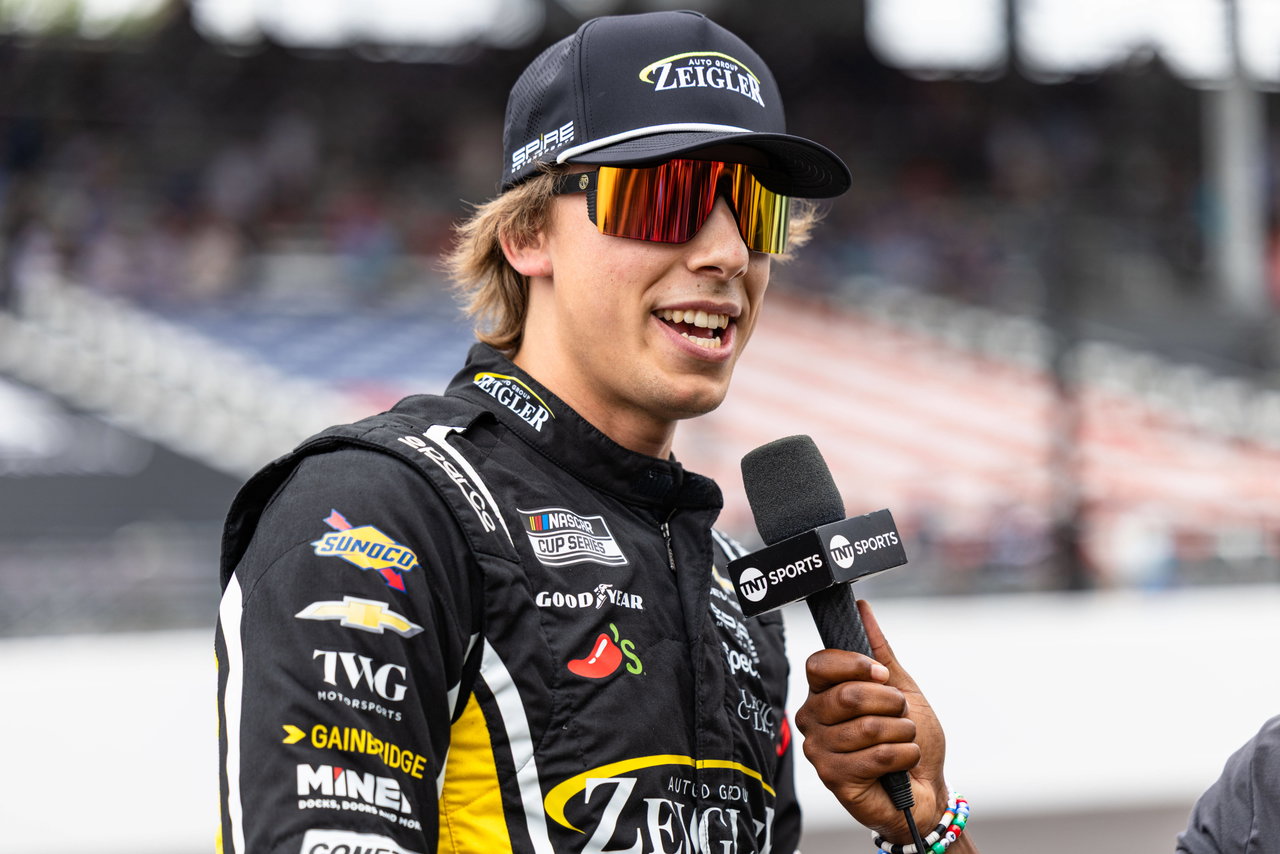
Carson Hocevar has never been interested in making friends at NASCAR’s expense. The Spire Motorsports driver built his reputation on aggressive moves, and even when those decisions leave rivals furious, he rarely backs away from his approach. After spinning Brad Keselowski at Darlington, he dismissed the need for an apology, insisting they were simply racing hard. His clash with Ryan Blaney at Bristol brought even more controversy, ending in a pit-road fight. Now, another Martinsville incident has put Hocevar under scrutiny, but his response suggests he has no intention of changing his ways.
Watch What’s Trending Now!
“They could come drive it. I was driving really hard to try and stay next to or in front of the 24. And my team wanted me to, obviously. And I just got in the marbles. And once I got in the marbles with a corded right rear, there’s no saving it. So, I was just trying really hard, but they can come drive it if they want,” Carson Hocevar was not interested in accepting the criticism coming from rival teams after his spin at Martinsville.
The Spire Motorsports driver insisted he had been pushing hard to keep pace with William Byron when he lost control of his No. 77 Chevrolet. His explanation came after several competitors questioned whether the incident was accidental, with some suggesting the spin had been deliberately triggered at a particularly inconvenient moment.
The incident happened in Stage 2 as Hocevar battled Byron’s No. 24 Chevrolet. The two were fighting for position, and Hocevar said he was trying to stay alongside or ahead of the Hendrick Motorsports driver. But the No. 77 eventually got loose and spun, bringing out a caution. Hocevar blamed the marbles off the racing groove and the condition of his right-rear tire, which he said was already corded. Once the car got into the marbles, he argued, there was little he could do to save it.
The timing of the caution was what made the incident particularly controversial. Christopher Bell was among the drivers caught out by the yellow flag while on pit road. The interruption disrupted his strategy, and the No. 20 team then faced another setback when Bell was penalized for speeding on pit road. For a driver trying to protect his championship position, the sequence was costly.
Bell’s crew chief, Adam Stevens, was openly suspicious over the radio. “Looked like that dumba** spun that car on purpose,” he told Bell. Austin Dillon also questioned Hocevar’s intentions, saying over his radio: “Damn Hocevar, no sh*t. Probably did it on purpose…just trap everybody.” Their comments reflected the frustration among teams that believed the caution had worked against them.
There is an important distinction, however: those were accusations made in the heat of the race, not proof that Hocevar intentionally spun. The fact that Bell was on pit road when the yellow appeared gave the No. 20 team a reason to be unhappy with the timing, but it does not establish that Hocevar caused the caution deliberately. No confirmed finding has shown that the spin was intentional.
Hocevar’s explanation was consistent with what he told reporters afterward. He pointed to the worn right-rear tire, the marbles and the pressure of racing Byron rather than suggesting he had any reason to bring out a caution. He also made it clear that he was not going to accept criticism from teams that believed otherwise. His challenge to them was blunt: if they thought the situation was easy to manage, they could get behind the wheel themselves.
The controversy added another layer to an already eventful Martinsville race. With championship contenders fighting for every available point, an unexpected caution can have a major impact on strategy and track position.
But unless evidence emerges to support the rival teams’ suspicions, Hocevar’s spin remains an on-track incident that he attributes to tire condition and loss of grip. And not a deliberate attempt to disrupt the field.