Imago
NASCAR, Motorsport, USA Cup Series Playoff Media Day Aug 27, 2025 Charlotte, NC, USA Chase Elliott answers questions from the media during NASCAR Cup Series Playoff Media Day at Charlotte Convention Center. Charlotte Charlotte Convention Center NC USA, EDITORIAL USE ONLY PUBLICATIONxINxGERxSUIxAUTxONLY Copyright: xJimxDedmonx 20250827_jla_db2_049
Imago
NASCAR, Motorsport, USA Cup Series Playoff Media Day Aug 27, 2025 Charlotte, NC, USA Chase Elliott answers questions from the media during NASCAR Cup Series Playoff Media Day at Charlotte Convention Center. Charlotte Charlotte Convention Center NC USA, EDITORIAL USE ONLY PUBLICATIONxINxGERxSUIxAUTxONLY Copyright: xJimxDedmonx 20250827_jla_db2_049
While NASCAR announced a new championship format yesterday, it again reopened an old debate that never really went away. During the official press conference, Steve O’Donnell was joined by current stars like Chase Elliott and Ryan Blaney, along with former drivers such as Dale Earnhardt Jr., as the sanctioning body confirmed what fans had long speculated: the NASCAR Chase format is officially back.
Watch What’s Trending Now!
While the move was welcomed by many, it also reignited familiar criticism from outspoken fans online. You really can’t make everyone happy in NASCAR, it seems! That’s where Elliott stepped in. Rather than dodging the noise, the sport’s most popular driver addressed it head-on, delivering a blunt reminder about perspective, patience, and why this moment matters more than constant outrage.
Chase Elliott pushes back as fans criticize the new NASCAR Chase format
Not everyone walked away happy after NASCAR officially confirmed the return of the Chase format. A loud section of fans wanted something far more traditional. A loud section of fans wanted something far more traditional: a full-season points system similar to Formula 1, where every race counts equally from February to November. That frustration even spilled onto the stage during the press conference itself. As Mark Martin revealed bluntly, “The fans were yelling at me, we want full season points.”
Honestly, that sentiment isn’t new. Ever since NASCAR introduced elimination-style playoffs in 2014, there’s been a steady belief among purists that championships should reward consistency over chaos. One bad race shouldn’t erase nine months of work. That argument hasn’t gone away. And NASCAR knows it.
But Chase Elliott wasn’t buying into the doom-and-gloom reaction. Instead of piling on, the sport’s most popular driver challenged fans to pause before tearing the new system apart.


Imago
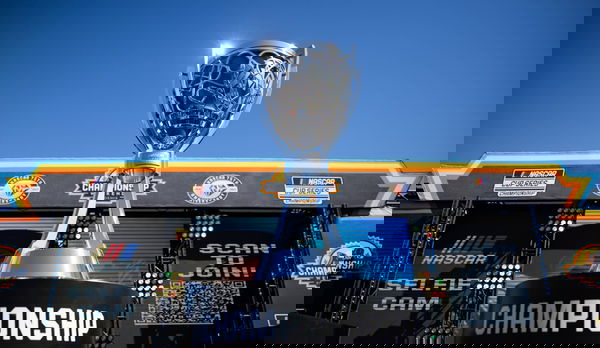
NASCAR, Motorsport, USA NASCAR Cup Series Championship Nov 5, 2023 Avondale, Arizona, USA Detailed view of the The Bill France Cup championship trophy prior to the NASCAR Cup Series Championship Race at Phoenix Raceway. Avondale Phoenix Raceway Arizona USA, EDITORIAL USE ONLY PUBLICATIONxINxGERxSUIxAUTxONLY Copyright: xMarkxJ.xRebilasx 20231105_mjr_su5_018
“Let’s enjoy what we got. We’re so quick to complain about everything, you know, everything that we have and everything that we do. Let’s enjoy what we have because we’re making history, whether you like it or not. Celebrate the champion. Celebrate the guys who went out there and did a good job. I think this format promotes that.”
To understand Chase Elliott’s perspective, let’s understand the NASCAR Chase format first.
Starting in 2026, NASCAR is officially returning to a 10-race Chase format, but this isn’t a carbon copy of the early-2000s version. Sixteen drivers will qualify for the postseason, and the champion will be decided strictly by points accumulated across the final 10 races. This means there will be no elimination rounds, no winner-take-all finale, and no manufactured drama at the expense of season-long excellence.
That alone is a massive philosophical shift from the playoff format fans have criticized for over a decade. But the biggest changes happen before the Chase even begins.
Race wins are no longer golden tickets. Winning a race does not automatically lock a driver into the top 16. Instead, NASCAR is heavily rewarding victories through points. A race win will now be worth 55 points, up from the previous 40. That’s a huge bump and a clear incentive to race aggressively for wins without turning them into playoff guarantees.
At the same time, playoff points are gone entirely. Furthermore, there will be no stage-win bonuses carried over and no padding of the standings before the postseason starts. Once the Chase begins, everyone starts fresh, for the most part.
How the reset works
When the Chase starts, points will reset, but the regular-season champion gets a head start with 2100 points. The second-place driver will start 25 points behind, with third place at 2065, and each subsequent position dropping by another five points.
Crucially, the number of regular-season wins provides no advantage once the Chase begins. You can’t bank victories for later. You still have to execute across those 10 races. Week after week, track after track. That NASCAR Chase format structure is why Elliott and others believe this system lands in the sweet spot.
Why is this the ‘Best of both worlds’?
This format walks a careful line. It keeps the postseason drama NASCAR believes is essential for modern audiences, while restoring the importance of consistency that fans felt was stripped away under eliminations.
It’s not full-season points.
It’s not win-and-you’re-in chaos.
It’s something in between. And that’s intentional.
For longtime fans, it echoes the era of Johnson, Gordon, Stewart, and Kenseth. For newer viewers, it still offers a defined championship stretch with rising tension and real stakes. NASCAR isn’t pretending this will please everyone. But it is signaling something important: they’re listening.
And Elliott’s message is clear: before rushing to tear it down, let it breathe.
Let the season play out. Let drivers adapt. Let rivalries form naturally again. NASCAR didn’t just revive the Chase format to relive the past. Instead, it’s betting that a smarter balance can bring back lapsed fans and hook a younger generation raised on constant change.
Related Newsletters