
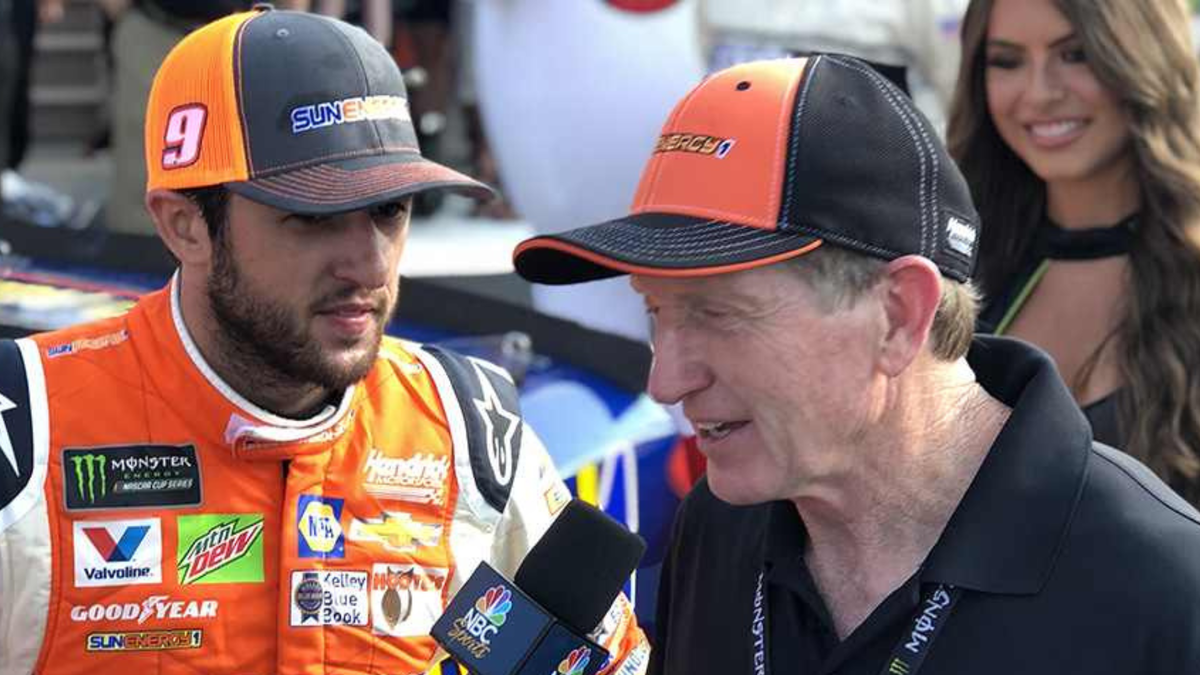
Growing up Chase Elliott was surrounded by greatness as his own father, Bill Elliott, was a NASCAR Cup Series winner. He already had a blueprint to glory, but he had to put in a lot of effort to get to the very top.
Watch What’s Trending Now!
“I’ve learned more from him, I would say, than not,” said Elliott. “Most things that I’ve learned throughout my time have come from him. But truthfully, I would say a lot of it probably away from the racetrack more than on track.”
Despite the influence his father has had on the sport, Elliott came through the ranks, grafting in the Xfinity Series and earning his place in the Hendrik Motorsports team.
What has helped Elliott the most in his NASCAR career has been his ability to stand up against challenges. He credits his father for allowing him to learn through mistakes.
“I will say he’s also let me mess up, you know,” Chase added. He implied three quintessential norms: no interruption, no correction, and, more importantly, no implied access to a safety net. “And he’s let me figure things out on my own, which I think has been important too.”
Despite a quiet career not built on his father’s efforts, many have mistaken Chase Elliott for a legacy child. And that may seem perfect for another headline, yet it is far from the truth.
The leverage myth does not hold up under scrutiny
The charge against Chase Elliott revolves around one claim: that Chase Elliott was simply placed into elite equipment through the influence of Bill Elliott. However, a closer examination of the documented pathway reveals a far more natural progression.
In fact, we must note that Bill Elliott himself has publicly acknowledged that he had tried really hard to secure a role for Chase within Ford’s ecosystem. Mind you, it was an effort that ultimately failed due to a lack of alignment and opportunity.
Elliott Jr. could have been Ford-bound if he wanted to take the easy way out. Instead, opportunity arrived through Rick Hendrick, who emerged as the only one willing to have a conversation, clearly showcasing to all his critics that his transition to racing was a learned one and not one where he skipped the line.
His 2011 integration into Hendrick Motorsports’ development system was followed by competitive exposure across K&N Pro Series, ARCA, and a partial Truck schedule before advancing to a full-time Xfinity campaign with JR Motorsports in 2014. Even that season, where we all know that he broke out, was far from being a guarantee. In fact, it was a lost cause until that last-moment sponsorship from NAPA Auto Parts that became the enabling factor that converted a limited schedule into a championship-winning campaign.
His special achievement of winning the 2014 Xfinity Series title at the age of 18 was really special and proved that he was more than just Bill Elliott’s son.
Therefore, maybe the argument could be that legacy provided early visibility. The record proves that visibility only monetized due to the unyielding talent of Chase Elliott, who faced failed initial pathways and third-party sponsorship dependency that legacy champions don’t, yet challenged their standing through engaging in a merit-based escalation, a claim so rooted in fact that no one can challenge it without sounding like a plain liar.