
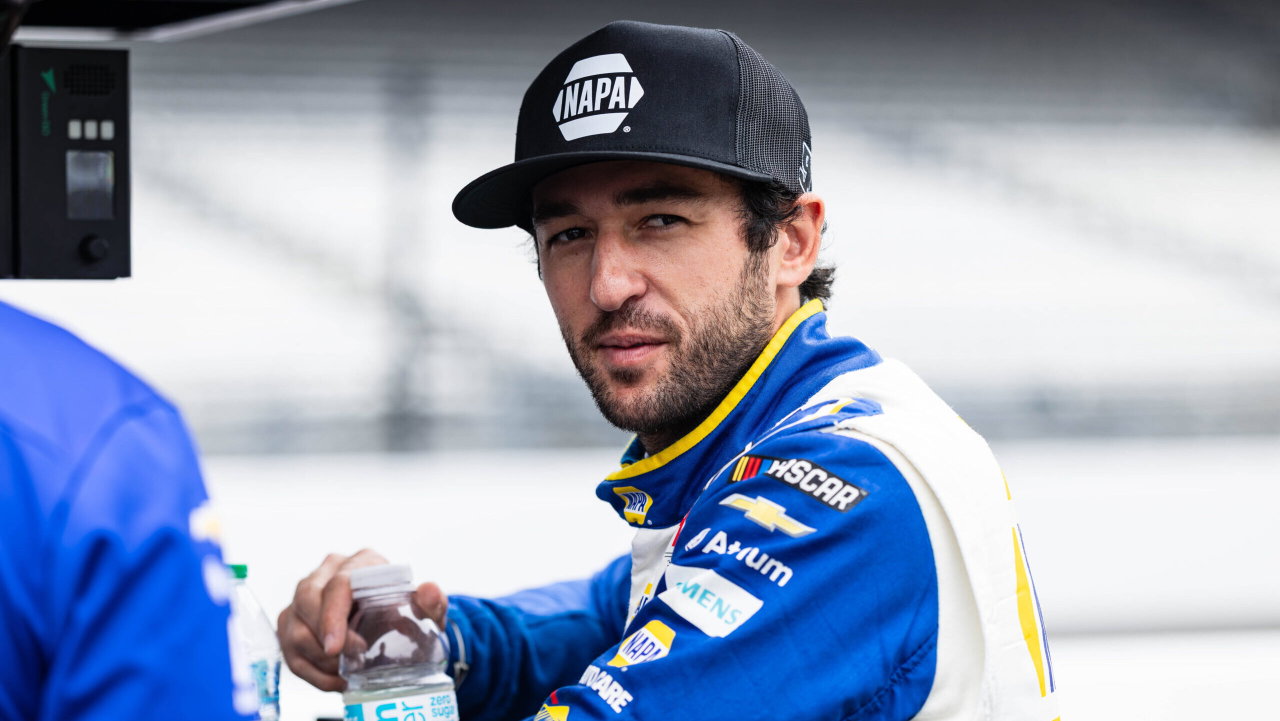
The brakes became a major talking point at Gateway in the second round of the Chase last weekend. Ryan Blaney, Chris Buescher, Noah Gragson, Zane Smith, and Chase Elliott all suffered brake failures during the race. Naturally, heading into Saturday’s Bristol Night Race, the issue was brought up by reporters on track, with Bob Pockrass asking Elliott what steps his team was taking to prevent a repeat.
Watch What’s Trending Now!
“I don’t necessarily think it’s that simple. I knew what we had. I knew the difference between what we had from last week to this week, and then the feel of that compared to other racetracks. The reality of the situation is that we had nothing special,” Elliott said in response to the question, as shared on Pockrass’ X.
Elliott shrugged off the idea that he was unaware of his No. 9 car’s set-up. The team also didn’t try anything new, sticking to what worked for them in 2025, when Elliott finished third in the Enjoy Illinois 300. And the fact that the problems were not limited to his Chevrolet spoke volumes.
The Hendrick Motorsports driver further told Pockrass that he was unsure why other teams and drivers suffered brake failures during the race. Ryan Blaney’s Ford was among the drivers affected as his right-front rotor gave out on Lap 155, sending him into the wall.
Smith suffered a similar crash at the end of Stage 2, while Elliott’s brakes failed on Lap 214 as he was running seventh. Unfortunately, his crash also collected Joe Gibbs Racing’s Chase Briscoe, who became collateral damage. The No. 19 driver understood that what happened was not Elliott’s fault and immediately accepted his apology.
An aggressive set-up was not the reason why Elliott’s outing in Gateway ended in such disappointment. That said, he did provide some insight into what could have caused the problem for his No. 9 team specifically.
“From our standpoint, we changed our rotors from Saturday to Sunday, and we were not allowed to change our pads. Did that play a role? I don’t know. Probably, maybe,” Elliott continued in the same interview.
He also stated that the brake wear on his car was high after practice, which he revealed was a problem across the field. Normally, teams cannot change their pads or rotors unless there is a “visual problem” with them, although Elliott’s team did have an issue with one of the rotors. Looking back, Elliott admitted that if he had known how much wear the brakes were experiencing, he would not have run as many practice laps.
Elliott suggested that teams may have to reconsider how much they run in practice at tracks like Gateway, where braking is demanding. Bristol does not pose the same problem, but when the Chase reaches Martinsville and Phoenix, Elliott may limit his practice time.
There are other solutions that have been discussed since the incident as well. One of them involves exactly what Elliott stated drivers aren’t currently allowed to do. Former Cup Series champion Kevin Harvick said on his Speed podcast that teams deserve more freedom on this front.
“They had an extended practice, probably need to think about next year, maybe letting them change the pads and the rotors or calipers, whatever they need to change after practice in order to go into the race,” Harvick said.
Practice had to be extended at Gateway to give drivers more time to adapt to the track’s heavy braking demands. The issue was further complicated by the technical changes introduced in 2026, which increased horsepower to 750 hp at tracks like Gateway. The added power and reduced aerodynamic grip resulted in higher speeds and placed even more stress on the brakes.
Ryan Blaney, however, feels that NASCAR should not step in to make changes, arguing that brake management is a team-related issue. This is quite different from Elliott’s stance, as the Hendrick Motorsports driver hinted after the race that there could be an issue with the Next Gen cars in general.
Ultimately, Elliott feels that the brake failures at Gateway may be about more than just individual team preparation. With more demanding tracks still ahead, it remains to be seen whether the same concerns will follow the drivers into the next rounds of the Chase.