Imago
Image Credits: Imago
Imago
Image Credits: Imago
“These cars, with essentially little to no underbody because we’re now going to the short track aerodynamic package for Darlington, these cars are out of control. I’m predicting four seconds of fall off, it might be more,” said Denny Hamlin, voicing a concern that has quietly been building in the garage. As teams prepare for the upcoming race at Darlington Raceway, the aerodynamic shift has become one of the biggest talking points. Now, Chase Elliott has weighed in as well, suggesting the upcoming change could bring an adjustment in how drivers handle one of NASCAR’s toughest tracks.


Chase Elliott weighs in on Darlington experiment
Watch What’s Trending Now!
“It might not look any different, but it certainly has potential to be. Darlington has a lot of tire wear as it is. So, it’s been a tough place. So, hopefully it helps. We’ll see,” said Chase Elliott while discussing NASCAR’s upcoming aerodynamic change at Darlington Raceway.
The Hendrick Motorsports driver referenced to NASCAR’s choice to test the short-track aerodynamic package for the first time at Darlington. A three-inch rear spoiler, fewer diffuser strakes, and 750 horsepower are all part of the setup, which aims to decrease aerodynamic grip and increase driver control over the racing line.
This past weekend, the package had its oval premiere at Phoenix Raceway, where many drivers and spectators thought the racing was noticeably better than it has been at the one-mile circuit in the past. That outcome has sparked expectations that the same adjustments would result in even more thrilling racing at Darlington.
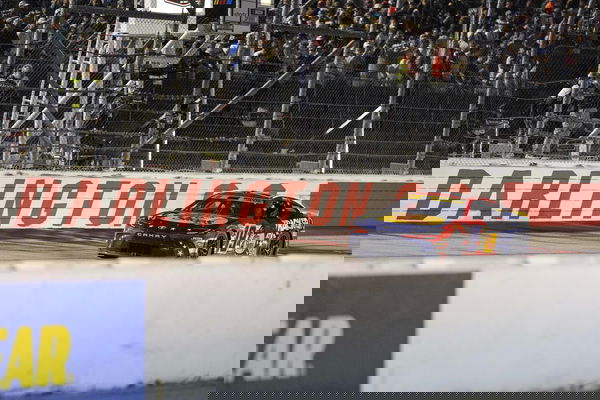
Imago
NASCAR, Motorsport, USA Southern 500 Aug 31, 2025 Darlington, South Carolina, USA NASCAR Cup Series driver Chase Briscoe 19 wins at the Cookouts Southern 500 at Darlington Raceway. Darlington Darlington Raceway South Carolina USA, EDITORIAL USE ONLY PUBLICATIONxINxGERxSUIxAUTxONLY Copyright: xJimxDedmonx 20250831_tdc_db2_208
The reasoning behind the adjustment lies in the 2026 evolution of the Next Gen car, which further reduces downforce. Less downforce means the cars rely more on mechanical grip, causing them to slide more through the corners and chew through tires faster. When drivers move around the track searching for grip, the tires pick up more of the track’s surface texture, accelerating wear.
That dynamic is especially important at Darlington. The historic oval is already known as one of the most demanding tracks on tires, with cars constantly sliding toward the wall at both ends of the track. High corner-exit speeds place even greater stress on the rubber, creating a surface where tire management often decides the race.
If NASCAR’s experiment works as intended, Darlington could turn into a strategy-heavy showdown, where drivers must balance speed with tire conservation throughout the race.
Why the Next Gen car changed Chase Elliott’s road course edge
“This car has changed the trajectory of a number of different drivers,” said Kyle Petty while discussing the struggles of Chase Elliott on road courses during a recent episode of the Inside the Race podcast. His co-host and former crew chief, Steve Letarte, added a similar perspective: “He’s had some really good runs. I think that the car is different. It’s the same sport going to the same tracks, but it takes a different driving style. It has five speeds, not four. It doesn’t have an H pattern. It’s sequential. It has bigger brakes. So I guess this is what this really is.”
For years, Chase Elliott was widely considered the gold standard when the Cup Series turned left and right. Across 42 road-course starts, the Hendrick Motorsports driver has collected seven victories and holds an impressive average finish of 9.2. Yet the last time he celebrated a road-course win came back in 2021 at Road America.
Since then, Elliott has come close (finishing runner-up three times). However, the wins have remained elusive.
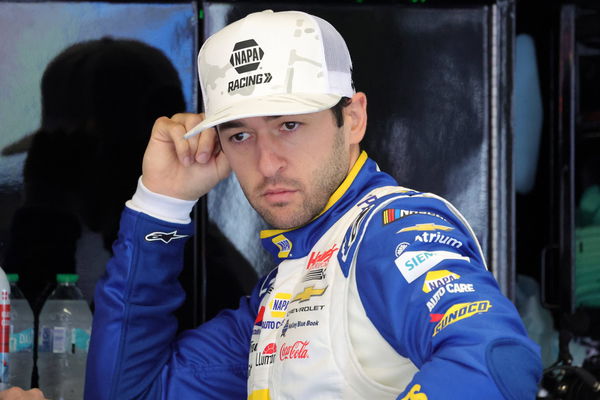
Imago
NASCAR, Motorsport, USA Cup Practice Feb 11, 2026 Daytona Beach, Florida, USA NASCAR Cup Series driver Chase Elliott 9 during practice for the Daytona 500 at Daytona International Speedway. Daytona Beach Daytona International Speedway Florida USA, EDITORIAL USE ONLY PUBLICATIONxINxGERxSUIxAUTxONLY Copyright: xMikexDinovox 20260211_mcd_ad4_33
Petty believes the shift can largely be traced to the arrival of the Next Gen car. As you know, it fundamentally altered how drivers feel the car beneath them. In the previous generation, Chase Elliott had a natural ability to read the car’s behavior through the corners, giving him an edge in braking zones and throttle control.
With the new platform, that feedback loop has changed. The car behaves differently, and the subtle cues drivers once relied on aren’t as pronounced. According to Petty, that adjustment has leveled the playing field, forcing even elite road racers like Elliott to relearn how to extract speed.
The numbers show the challenge. Since the Next Gen car debuted, Chase Elliott has finished outside the top 10 in eight of his last 23 road-course starts. Still, he remains close enough to the front that many believe it’s only a matter of time before NASCAR’s former road-course king finds his way back to victory lane.
Related Newsletters