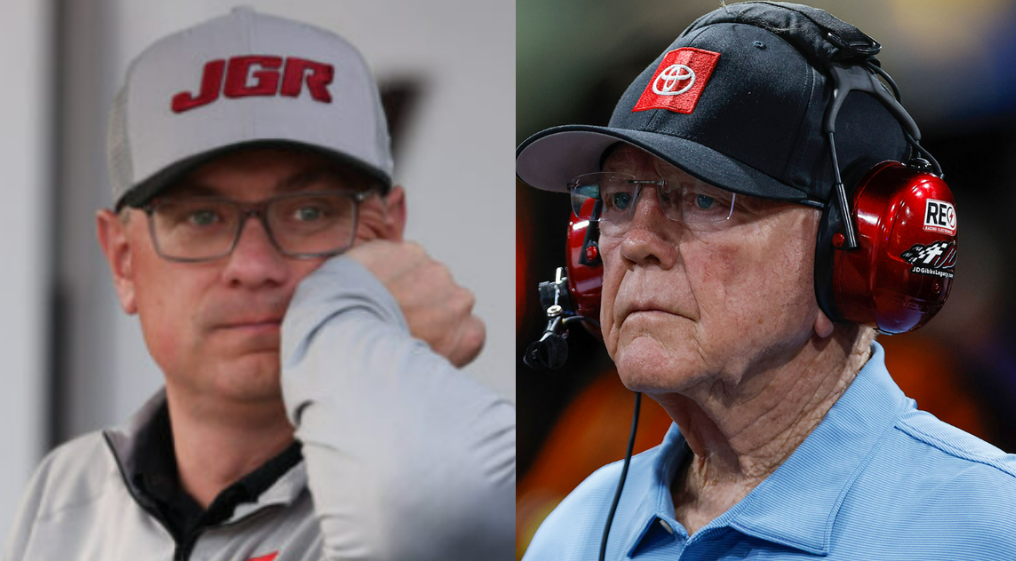
The legal battle between Joe Gibbs Racing and former competition director Chris Gabehart just took a significant turn. A federal judge has approved limited expedited discovery in the ongoing JGR lawsuit, potentially exposing private communications tied to Gabehart’s move to Spire Motorsports. While the ruling allows both sides to begin gathering evidence, it also carefully limits how deep either party can dig. At least for now.
Judge allows limited expedited discovery
Watch What’s Trending Now!
At the center of the ruling is the legal process known as discovery, where both sides gather evidence such as emails, messages, and documents before a trial begins. In this case, the court approved expedited discovery, meaning the process will move quickly due to the temporary restraining order already in place. However, Judge Rodriguez made it clear that the discovery would remain extremely narrow in scope.
Court has let out.
Judge Rodriguez is going to allow for very narrow expedited discovery on Chris Gabehart, but not Spire.
From the proposed motion and the judge’s decision in parenthesis:
“1. All Communications between Defendant Spire and Defendant Gabehart Relating to… pic.twitter.com/NdrwMys3Gw
— Matt Weaver (@MattWeaverRA) March 16, 2026
Most importantly, the materials being requested are limited largely to documents and communications that Gabehart himself possesses. That distinction matters because it prevents Joe Gibbs Racing from immediately digging through the internal records of Spire Motorsports.
In other words, the early stage of this legal fight will focus almost entirely on Gabehart’s own messages, files, and communications rather than a broad investigation of Spire’s operations.
What the judge allowed JGR to see
While the ruling restricted the scope of discovery, it still gives Joe Gibbs Racing access to several potentially important categories of evidence in the JGR lawsuit.
Hiring communications between Spire and Gabehart
First, JGR can review communications between Chris Gabehart and Spire Motorsports regarding his hiring. This includes emails, messages, and documents discussing his recruitment and employment. However, the judge placed a key restriction: JGR can only access copies that Gabehart personally possesses. Spire itself does not yet have to hand over its internal records.
Possible legal protection promises
JGR also wants to determine whether Spire promised to protect Gabehart legally if a dispute with his former employer emerged. Specifically, they are looking for evidence that Spire offered to cover legal costs or shield Gabehart if Joe Gibbs Racing accused him of violating his contract, stealing trade secrets, or sharing confidential information. Again, the ruling allows access only to Gabehart’s own copies of such communications.
Recruitment and employment discussions
The judge also approved discovery of communications related to Gabehart’s recruitment and hiring process at Spire Motorsports. These materials could shed light on how early negotiations began and whether any confidential information from Joe Gibbs Racing was discussed during that process.
Documents about his role at Spire
Another approved category in the JGR lawsuit involves documents describing Gabehart’s responsibilities as Chief Motorsports Officer at Spire. These materials may help determine whether his new role overlaps with duties he previously performed at Joe Gibbs Racing. Once again, the scope remains limited strictly to documents that Gabehart personally has access to.
Documents created between October 2025 and February 2026
The court also granted access to documents Gabehart created between October 1, 2025, and February 17, 2026, that relate to his transition to Spire. However, both legal teams must still agree on the exact cut-off date, since communications after a certain point may fall under attorney-client privilege.
Requests the judge rejected
Not all of Joe Gibbs Racing’s requests were approved. The team attempted to obtain communications between Gabehart, other JGR employees, and Spire Motorsports. The judge rejected that request, saying there was currently no clear evidence showing the material would be relevant.
JGR also attempted to access communications about race setups, strategy, operations, sponsorship, and staffing decisions. The court ruled those requests were too broad.
Instead, the judge suggested narrowing the focus to the term “analytics.” Both sides must now negotiate what exactly qualifies under that category.
Gabehart also gains access to JGR evidence
The ruling didn’t just benefit Joe Gibbs Racing. Chris Gabehart also received permission to request internal communications from his former employer.
Specifically, Gabehart can seek documents related to Section 6, Paragraph 2 of his employment contract, the clause that reportedly became central to the dispute after he expressed interest in leaving the organization. The key issue is how Joe Gibbs Racing interpreted that clause internally after Gabehart announced his plans.
If internal communications reveal that JGR’s leadership had different interpretations (or doubts about the clause’s enforceability), it could weaken their case in court. For Gabehart’s legal team, this discovery could potentially expose inconsistencies in how the contract was understood inside the organization.
Both sides must negotiate details
Before the discovery process fully begins, the judge ordered both parties to meet and finalize the exact parameters of the evidence exchange for the JGR lawsuit. That includes defining which documents fall under terms like “analytics,” as well as confirming the precise timeline for discoverable communications.
Both sides were given a tight deadline to reach an agreement. Once those details are finalized, the judge will issue a formal written order outlining the discovery process.
Temporary Restraining Order (TRO) extended
Another key part of the ruling involves the temporary restraining order currently affecting Gabehart. The judge extended the order, which prevents Chris Gabehart from performing duties similar to his former competition director role at Joe Gibbs Racing while working for Spire Motorsports. The restriction now runs through March 26 at 11:59 PM, temporarily limiting how fully Gabehart can participate in his new position.
What this means for the legal battle
While Gibbs is handed expedited discovery, strategically, the ruling in the JGR lawsuit may slightly favor Gabehart and Spire Motorsports, at least in the short term.
- First, Spire successfully avoided broad discovery requests that could have forced the team to open its internal systems and communications.
- Second, limiting the evidence pool to Gabehart’s own documents significantly reduces the volume of materials JGR can examine during this early phase.
- Third, Gabehart gaining access to internal Joe Gibbs Racing communications introduces a new layer of risk for the organization if those messages reveal conflicting interpretations of his contract.
The temporary restraining order extension keeps the status quo intact for now, but the discovery process could quickly reshape the case.
Related Newsletters