
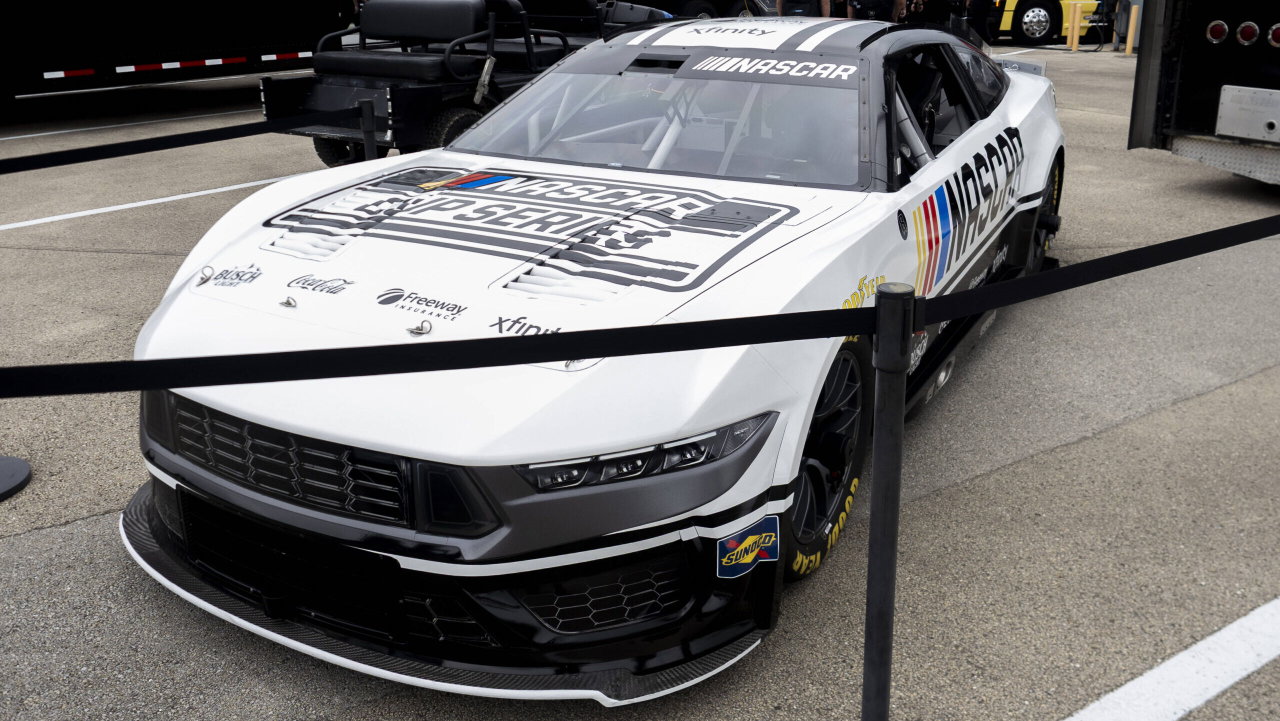
NASCAR wanted to level the playing field. It was arguably the main reason behind the Next Gen cars being introduced in 2022. But as often happens with solutions, a new problem arises. NASCAR drivers soon began complaining about dirty air and the aero-tight handling that made following and passing cars difficult, especially on short tracks.
Watch What’s Trending Now!
The sanctioning body isn’t oblivious to the problem, and many veterans of the sport have proposed solutions. Mark Martin, for instance, has hinted that more horsepower and zero downforce might be a step in the right direction. And now, 2004 Cup champion Kurt Busch has pointed to IndyCar’s track-specific approach.
“So, it should have just like IndyCar. If you watch the Freedom 250 coming up, you’re going to see all this downforce on the cars for street courses, but then when they run the ovals, they have way less of a downforce package,” Busch said on the Rubbin is Racing podcast.
He feels NASCAR doesn’t need to use the same aerodynamic setup at every track. Aero affects a car differently at a superspeedway like Daytona than it does at a short track like Richmond, where the Cup Series heads next. Instead, Busch believes NASCAR can keep the same overall identity while using different setups depending on the track.
IndyCar already does that. They use three primary aerodynamic configurations. One for road and street courses, one for short ovals, and one for superspeedways.
On road and street courses — like the one temporarily built in Washington D.C. for the Freedom 250 — IndyCar focuses on downforce. They have heavy braking zones, elevation changes, and require drivers to change directions frequently, and sometimes suddenly. So, the cars are set up in a way such that they have larger front and rear wings.
Short ovals like the Milwaukee Mile, meanwhile, require aerodynamic grip, but not too much. Excessive downforce can create extra drag. So IndyCar uses a more balanced setup. Traffic and helping drivers manage quick transitions while reducing the effect of dirty air are the priority here.
Then comes the superspeedway package, where the focus is on getting the most speed possible in a straight line. When the drivers line up for mega events like the Indianapolis 500, IndyCar cuts downforce and drag at its biggest and fastest ovals. The cars use smaller wings and simpler aero setups to reach higher speeds while still staying stable through the corners. That matters even more at tracks where speeds can go over 230 mph.
Kurt feels NASCAR should learn from that. And they’re already showing signs that they’re open to having more track-specific configurations, not just for aero, but overall.
The Cup Series increased engine output from 670 to 750 horsepower at road courses and ovals shorter than 1.5 miles. The goal was simple: improve throttle response and make the racing better on tighter tracks.
NASCAR also made a change for the August 2026 Daytona race, cutting the rear spoiler from seven inches to four to reduce drag. That also meant less downforce, so horsepower was reduced from 510 to 465. NASCAR expected single-car speeds to go up by around three mph, while pack speeds would stay about the same.
That’s the kind of track-specific approach Kurt wants to see more of. Instead of making one setup work everywhere, NASCAR could adjust the aero and other parts of the car depending on the track.